
Alorh’s eye on the Motherland
Nigeria at the Crossroads: Democracy Day Reflections Amid Rising Insecurity

By Mary Alorh
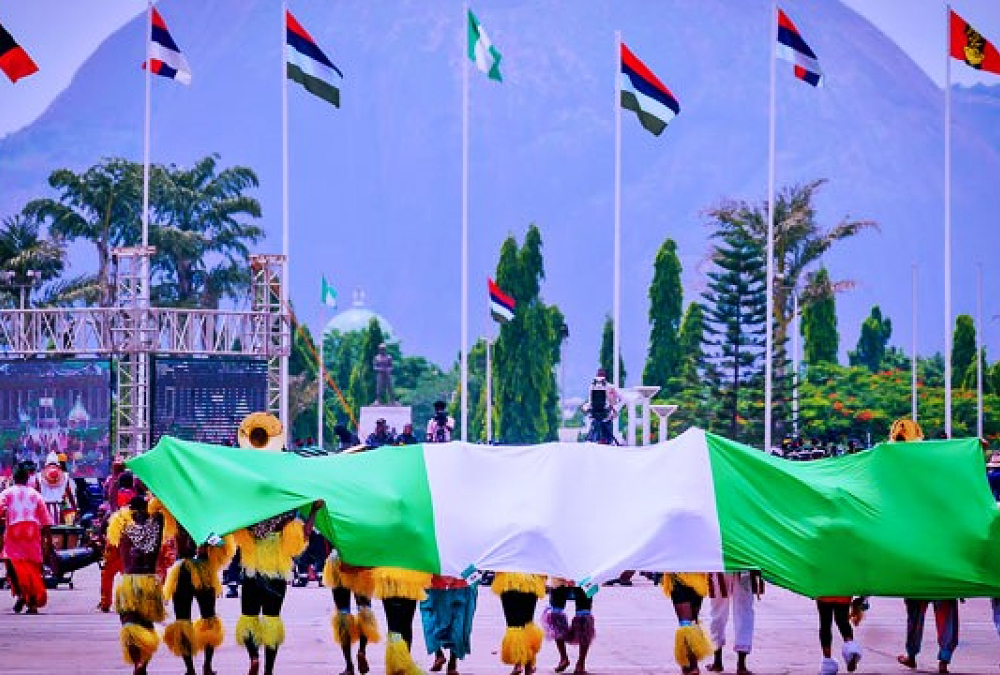
Two weeks ago on June 12, Nigeria – often called the Giant of Africa – celebrated Democracy Day with cautious optimism. Despite enduring a host of national challenges, the country marked the occasion with a spirit of hope and resilience.
Nigerians are among the most determined people in the world – driven by dreams, aspirations, and an unyielding will to thrive against all odds.
I was a college student in 2010 when Nigeria commemorated the 50th anniversary of its independence from British colonial rule on October 1. As a politics student, I vividly remember tuning in to a BBC News Hard Talk interview featuring the iconic Nobel laureate Wole Soyinka, hosted by Zeinab Badawi.
That conversation left a lasting impression on me.
What stood out was Soyinka’s conviction that although Nigeria might be pushed to the brink of war, it would never become a failed state. At the time, as a young African witnessing the turbulence of my nation’s political landscape, his words offered a sense of relief – and a reason to hold onto hope.
Even now, amid hardship, Nigerians continue to draw strength from their national pride, embracing a deep-rooted culture of resilience and appreciation for what they have, no matter the circumstances.
The Weight of Unresolved Crises
But it’s 2025, and many of the same issues that once sparked discussions about Nigeria teetering toward failure remain unresolved – some even more severe than before.
Insecurity, ethnic bigotry, and divisive partisan politics dominate headlines, overshadowing equally urgent national concerns such as widespread poverty and escalating terrorist violence.
Just days ago, the country awoke to the grim news of over 200 lives lost in Benue State. Meanwhile, the federal government reiterates its constitutional responsibility to ensure security, while the state governor insists that insecurity has significantly declined – from 19 affected local government areas to just three.
Yet, even localized violence in three areas can result in catastrophic loss of life – losses that rival the devastation seen in global conflicts like the missile exchanges between Israel and Iran. Clearly, this should not be normalized or minimized.
Leadership remains Nigeria’s greatest challenge. Since independence, the nation has needed visionary leadership to build a prosperous future.
Instead, it has too often descended into conflict – including the brutal Biafran War – that continues to echo through its history.
The lives of these 200 individuals cannot be dismissed as routine casualties. Accountability must follow.
If Nigeria is to live up to its billing as the Giant of Africa, those responsible must be held to account.
We must ask difficult questions and demand honest answers – not only to honor the dead but to uncover the root causes of this recurring violence.
According to the 2025 Global Terrorism Index, Nigeria ranks sixth globally in terrorism impact, with a score of 7.658. This sobering statistic underscores the urgency of action.
A Call for Action and Hope
The presidency must take decisive steps – notably by forming support committees to assist the Benue State government in providing tangible hope to grieving families and the broader community.
While Nigeria may never become a failed state thanks to the resilience of its people, if citizens continue to be slaughtered without meaningful intervention, the very soul of the nation risks being extinguished.
There will soon be no one left to carry the torch of the Nigerian spirit – if we do not act now.
Mary Alorh is Director of Administration at DefSEC Analytics Africa Ltd., and is an expert in Gender, Youth, and Peace & Security initiatives in West Africa.
