
Opinion
How a Continent of Plenty Can Feed Itself
The continent’s forgotten crops could feed it. The obstacle is not agronomy but appetite, for change.

By Wilbert Chaniwa
Africa is rich in the one thing a hungry continent should lack: food. Its soils and savannas shelter thousands of edible plant species, and it holds some 60 percent of the world’s uncultivated arable land. Yet it spends more than US$50 billion a year importing food, and roughly 280 million of its people go undernourished. A continent with that much land and that much biodiversity is not short of food. It is short of will.
A Menu Written Abroad
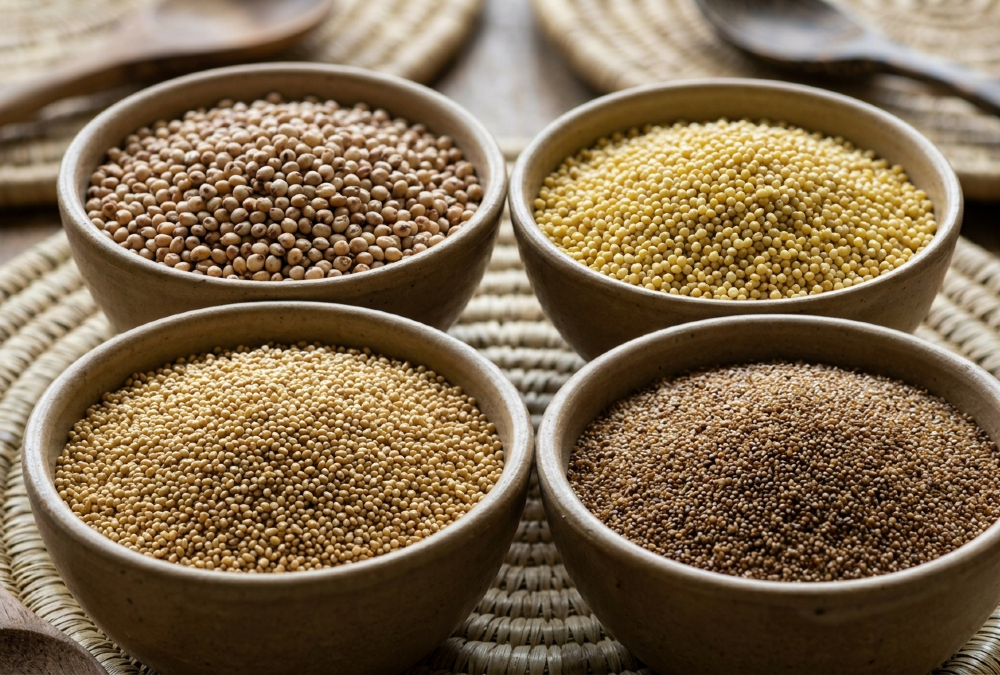
The story begins with colonialism, which treated African agriculture as a supply chain for someone else’s factories. Cash-crop regimes rewarded cotton, cocoa and groundnuts over food. Taxes payable only in cash forced families to sell what they grew. In places, cotton was simply compelled. Sorghum, millet, fonio and teff, grains that had fed whole civilizations, slid from the plate to the margins of the field and then out of official sight.
Independence might have restored the old menu. It mostly kept the new one. Governments inherited colonial marketing boards, colonial extension services and, crucially, colonial tastes. They subsidized maize and kept imported wheat cheap, because the people who could topple a government lived in cities and wanted bread. Nobody has ever been ousted by a sorghum riot. Nobody has ever needed to be, because nobody ever put sorghum on the ballot.
Good Intentions, Familiar Results
The donors who followed brought better intentions but a similar template. The Alliance for a Green Revolution in Africa (AGRA) championed improved maize and chemical fertilizer, a package that raised yields in some places but remains fiercely contested for its modest overall gains and its dependence on purchased inputs. Meanwhile, new seed laws promoted in the name of quality and trade threaten to criminalize or sideline the farmer-saved, farmer-swapped seed that has carried African crop diversity through millennia of drought and disease. Rich countries rarely accept such rules at home. It is fair to ask why Africa should.
The Superfood Trap
A fashion for “ancient grains” now threatens to repeat the pattern in glossier packaging. Ethiopia learned the risk when a Dutch company patented uses of teff flour and held the claim for more than a decade. Baobab, moringa and shea routinely leave the continent as cheap raw commodities and return as premium brands, with the margin captured far from the farmer. African-owned brands, this one included, are not exempt from that test. A made-in-Africa logo on an extractive price chain is still an extractive price chain.
The Mirror
The hardest part of the argument concerns not governments or donors but the people reading this. Urban Africans and the diaspora, those with the means to choose, still reach overwhelmingly for white bread and imported rice. They pass over grains that are more nutritious, more drought-tolerant and better suited to a warming continent. Markets, it is said, reveal preferences. But preferences are shaped by price, availability and prestige, and all three have been tilted for a century against the indigenous.
Questions Worth Answering
None of this is simple, and the honest version of the argument admits as much. Sixty years after independence, at what point does “colonialism did this” become an alibi? Is food sovereignty a realistic goal, or a slogan that raises food costs for the urban poor? If indigenous crops are superior, why haven’t markets chosen them? These are fair challenges, and the answers lie partly in how little has been tried. Governments that can subsidize maize can fund breeding programs for sorghum, fonio and Bambara groundnut. Ministers who want to show confidence in their own farmers could start by serving an indigenous grain at the next state banquet. Donors whose strategies fail should be held to account for the failure, and should be asked whether grandmothers, had they designed the programs, would have chosen maize.
The same scrutiny applies to the new wave of entrepreneurs. What share of the premium paid for “ancient wisdom” reaches the people who hold it? Can any brand prove that its farmers earn more because it exists? And should anyone patent a food that a nation has eaten for millennia?
A Mandate
The remedy is practical rather than romantic:
- Fund African seed. Finance public breeding and protect farmer-saved varieties.
- Buy African first. Make procurement, from school meals to state banquets, a market for local grains.
- Protect crop names and knowledge. Defend them against biopiracy and foreign patents.
- Process at origin. Keep the value-added work, and the jobs, on the continent.
- Publish what reaches the farmer. Make every premium brand disclose the share of its price that goes to growers.Publish what reaches the farmer. Make every premium brand disclose the share of its price that goes to growers.
The seed is still in the soil, as it has been for thousands of years. The question is whether Africa will finally plant it for itself.
Wilbert Chaniwa is an entrepreneur, corporate consultant, and author specializing in African agribusiness, investment advisory, and agri-food value chains. He is the Founder and CEO of RIC Brands, a UK–Africa agribusiness and hospitality company operating in the United Kingdom and Rwanda. His work focuses on food and soil sovereignty, reducing import dependency, restoring soil health, and scaling domestic food production. He also advances indigenous crop commercialization – such as fonio, moringa, baobab, teff, and bambara groundnut – while promoting knowledge transfer, market access, and agri-CPG trade across Africa.
