
Alorh’s eye on the Motherland
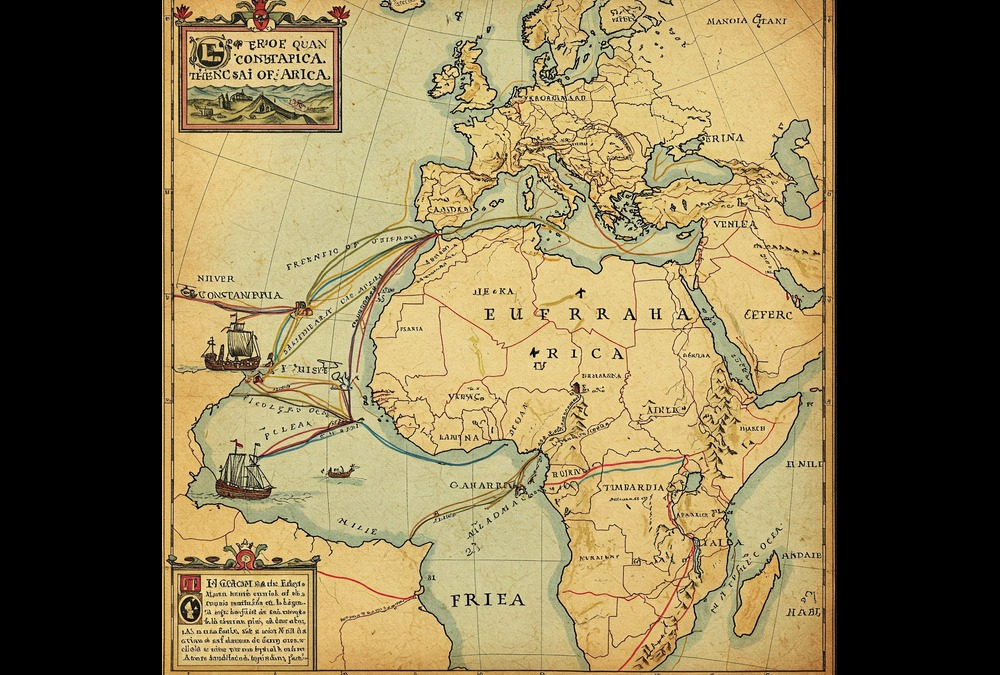
Europeans journey to West Africa

By Mary Alorh
Centuries ago, European elites struggled to access essential goods like silk and spices, which were unavailable in Europe and imported from Asia through the Black Sea and eastern Mediterranean. These items were transported over long, complex routes involving numerous intermediaries, making them scarce and expensive.
By the 11th century, Islamic merchants dominated key trade hubs in regions like Syria and Egypt, limiting European access to these goods. Although trade between Christians and Muslims continued despite religious differences, European Christian merchants faced barriers in reaching Asian supply sources directly.
Muslim control of trade routes and concerns over European influence heightened these challenges.
Eager to bypass Islamic intermediaries, European merchants sought direct trade routes to Asia, inspired by tales of wealth and potential alliances with Ethiopian Christians. Venice and Genoa led this charge, importing Asian goods into Europe while exporting Christian slaves to Islamic nations.
As Mediterranean opportunities dwindled, Genoese merchants turned westward, leveraging their knowledge of Sahara trade routes and West Africa’s gold reserves to expand commerce.
By the 14th century, Genoa’s decline hindered further exploration. Skilled sailors and geographers began supporting Western European nations, particularly Christian kingdoms in the Iberian Peninsula.
Following centuries of Muslim rule, Iberian states like Portugal, Aragon, and Castile emerged as centers of exploration. Unlike Aragon, Portugal and Castile used their North African trade experience to venture into the Atlantic.
However, Castile’s wealthier leaders were more cautious about exploration.
In the 14th century, Portugal, under the House of Aviz, prioritized expansion into West Africa after asserting independence. Free from immediate Islamic threats, Portugal targeted Morocco, a key link in West African trade.
Although initial attempts to conquer Morocco failed, they captured Ceuta. Prince Henry, the king’s son, was tasked with managing Ceuta and gaining knowledge of West African trade routes. Soon after, he organized a broader exploration initiative focused on the region.
More to come.
Mary Alorh is Director of Administration at DefSEC Analytics Africa Ltd., and is an expert in Gender, Youth, and Peace & Security initiatives in West Africa.
