
Opinion
Eritrea: A country on the path to self-reliance after rejecting foreign aid
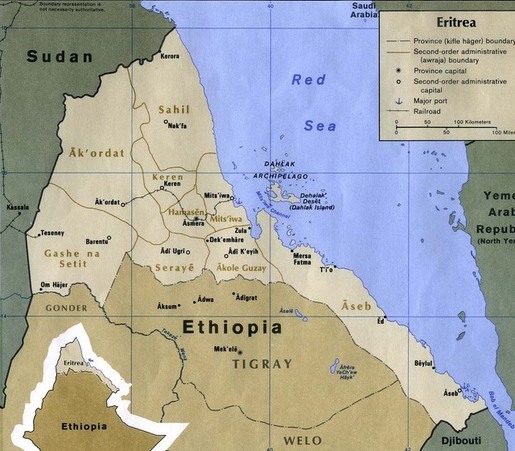
According to president Afwerki, African mineral resources are not sustainable for economic development in the immediacy. Developing infrastructure for this will take generations to come. Comparative advantages are of greater immediate importance. “Your location could be a comparative advantage. If you have a long coastline, then you develop fisheries, develop your services industry – shipping, transportation – air, land. Provide industry and manufacturing.”
“Africa can produce its own food and grow more. Why are we not able to do that?” You have to produce something. Emphasize sustainable sectors. Agriculture is a sustainable sector. You need to put in place agriculture infrastructure. It is a strategy commodity for communities.
Afwerki categorically blames the recent problems on the African continent on the aid trap many countries in Africa find themselves in: “Number one, it is dependency; dependency on aid. If say a community is addicted to food aid coming from outside – and we have gone through this experience for quite a long time – the whole community is paralyzed, year in, year out. The year comes and the year goes, and communities develop a culture of depending on outside help.
“I think it is irresponsible governments, corrupt governments, who misuse local resources, who misuse external aid and support and do not have even an idea on how to tackle this problem on their own.
“And that is where I believe Africa will have to design its own philosophy of development, because we cannot copy the experience of others. We cannot depend on someone else’s experience on this, we know our own realities, we have to really be articulate in designing programmes that suit our own reality.”
The Eritrean leader insists that he has not isolated his country – but was attempting to protect it from foreign influences that he said hurt developing countries. He said Eritrea would rejoin regional and global markets once it developed a manufacturing and production capacity and could compete on an equal footing. Until then, he added, “we say, leave us alone. Let us do our work.”
As part of the self-reliance campaign, Eritrea has also rejected development loads from the World Bank and International Monetary Fund (IMF).
Has the move towards self-reliance in Eritrea paid off?
Here are some statistics:
For a country that is quite poor, Eritrea now provided free education and healthcare to its citizens. Measles and polio have been nearly eradicated, and the childhood mortality rate has dropped by nearly two-thirds since 1995. Evaluating food production has been more difficult. Eritrea, with its hostile climate and rugged terrain, has a history of famine. But Afwerki said his cold-turkey approach to halting food aid was making farmers work harder, without increasing hunger or malnutrition.
