
Business
Why is the West so worried about China’s engagement with Africa?
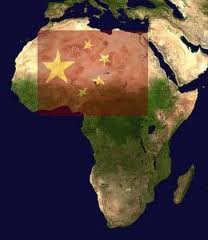
Chinese lessons
Therefore, as China helps restore that opportunity for Africa, it is really vital that this time around the continent plays its cards safely with a view to getting much out of the most favorable circumstances. Africa should not forget how it was left to dry under the sun when most of the Western governments felt that Africa was no longer of great strategic viability following the demise of the former Soviet Union.
It has to be emphasised that China is in Africa primarily because it needs Africa, for its own development and diplomatic standing in the world. With a landmass of over 9.5 billion sq kilometres, China is not just a country that has to address the needs of its 1.4 billion inhabitants. It is also aware of its shortcomings: it has only 7% of the world’s arable land and fresh water; 3% of its forests; and 2% of its oil.
China’s pragmatism became more open when it dumped its ideology of proletarianism, and embarked on the path of home-grown economic reforms, which have largely informed its African policy. Before this, its presence on the world stage was largely dwarfed by the actions of the Western powers, backed by international financial institutions such as the World Bank and the IMF.
However, while Africa was losing its sovereignty to Western imposition, China, under the leadership of Deng Xiao-Ping, was transforming itself from a sleeping dragon to a powerful one, which has now proved to have the best economic teeth on the globe.
Africa can also learn from China’s mastery of international trade. It now plays a dominant role in world trade, yet it was only in 2001 that it became a member of the World Trade Organization (WTO). Today, it stands as the leading trading nation in the world, with an over $262.2bn trade surplus in 2007, breaking yet another record.
China-Africa trade amounted to over $50bn in 2007.
It’s powerful economic status is also reflected in the huge foreign reserves of over $1.5 trillion. With these reserves, China is in a position to mitigate the risks associated with over-exposure to the US dollar.
Africa can also learn from a country that has moved unscathed from a communist past to a de-facto capitalistic one, just by putting in place macro-political conditions that have attracted billions of dollars of foreign direct investment (FDI).
With over $60bn per year of FDI, China has become one of the most enduring darlings for investors the world over.
Africa will benefit from China’s thirst for natural and mineral resources that are needed to sustain its admirable economic growth. On the market front, China is already affecting prices on the world markets, providing many with a new lease of life. For example, many countries are no longer talking about restructuring or closing steel factories or subsidising their minerals. Prices for many minerals, such as cement, iron-ore, petroleum, copper and gold have once again become competitive, in some instances skyrocketing due to China’s eagerness to purchase them anywhere in the world.
For Africa, as a continent in search of a role model, no other nation is more appealing than China. It provides the best example of a nation that has managed to overcome the kind of problems most, if not all African nations are confronted with: foreign domination and humiliation; internal conflicts; economic underdevelopment; political independence and instability. These are some of the problems China has been able to overcome, through home-grown developmental and political strategies that were not borrowed from Western recipes.
By Gaye Adama (NewAfrican)
