
Business
South Africa’s Unemployment Drop Masks a Deeper Economic Reality

By Ajay Wasserman
South Africa’s official unemployment rate has declined. On the surface, that is cause for cautious optimism.
According to Statistics South Africa, the latest quarterly figures show a measurable drop in joblessness – and after years of stubbornly elevated numbers, any sustained downward movement deserves acknowledgment.
But before the headlines celebrate, a more uncomfortable question demands attention: what, precisely, are we measuring?
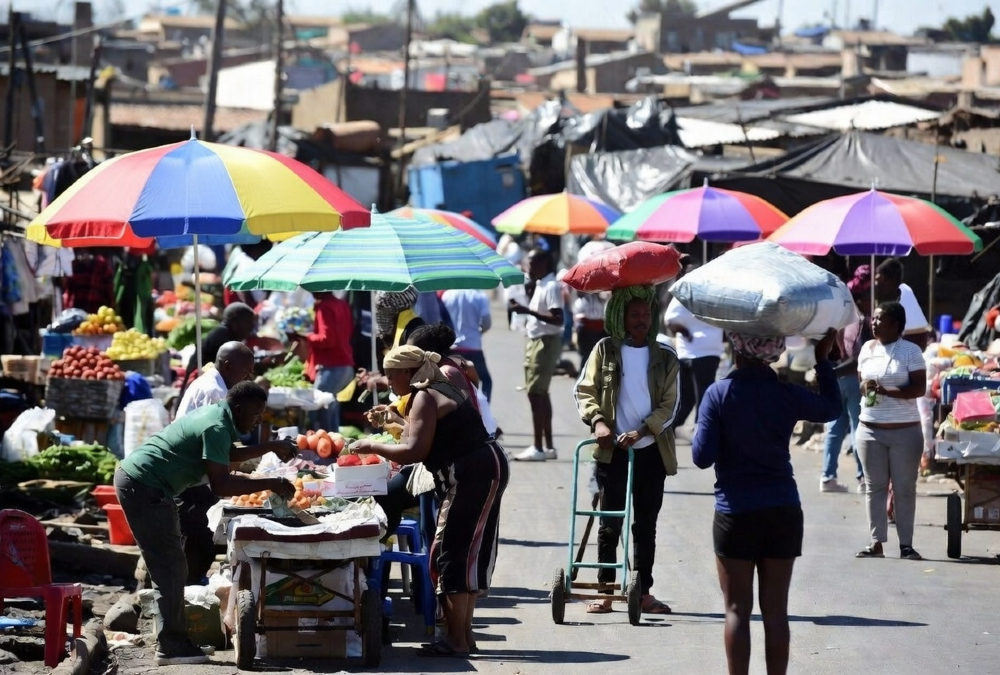
Unemployment statistics, by their nature, capture what is formally recorded – payroll employment, registered businesses, structured labor contracts. What they do not capture, at least not adequately, is the full depth and breadth of South Africa’s informal economy.
And that informal sector is anything but marginal.
The Invisible Economy That Moves Billions
Recent estimates place the value of South Africa’s informal economy at hundreds of billions of rand annually, with some projections approaching R900 billion (US$56 billion) to R1 trillion (US$62 billion) in economic activity per year. That is not a rounding error.
That is a structural reality – one that shapes the daily lives of millions of South Africans who are economically active, productive, and entirely capable of driving growth, yet remain largely invisible to the metrics policymakers rely upon most.
Consider the street traders navigating municipal bylaws, the township manufacturers supplying local demand, the spaza shop owners extending informal credit to their communities, the cash-based service providers whose transactions never touch a bank statement, and the independent contractors operating entirely outside formal systems.
These individuals are not idle. They are working – often ingeniously so – and the economy they sustain is real, even when it goes uncounted.
A Tale of Two Recoveries
This distinction matters enormously for how we interpret falling unemployment figures. The critical question is not simply whether the headline number has improved, but what is driving that improvement.
Are more South Africans entering formal employment, with the protections, benefits, and upward mobility that entails? Or are more people being pushed – by necessity rather than opportunity – into informal survival entrepreneurship, where earnings are precarious and access to capital remains structurally blocked?
The answer has significant implications for investors and capital allocators. Capital flows toward what is visible.
Policy responds to what is measured. Markets price what is understood.
If the scale of informal economic participation is systematically underappreciated, the result is predictable: misallocated investment, poorly targeted policy, and a persistent failure to unlock what may be one of South Africa’s most consequential economic opportunities.
South Africa’s real economy does not reside exclusively in Sandton boardrooms or corporate annual reports. It lives in township ecosystems.
It moves through cash networks. It adapts, often with remarkable speed, to conditions that formal institutions are far too slow to track or serve.
That agility is an asset – one that the financial system has largely failed to integrate.
An Untapped Engine, or a Warning Signal?
The informal sector presents two possibilities, and they are not mutually exclusive. It may represent an untapped engine of inclusive growth, awaiting the structured financial inclusion, regulatory recognition, and targeted investment that would allow it to scale.
Or it may serve as a warning signal – evidence that formal labor markets are not absorbing workers quickly enough, and that the structural reforms required to change that reality remain incomplete. In all likelihood, it is both simultaneously.
Lower unemployment is encouraging, and it would be churlish to dismiss genuine progress. But a falling headline rate should prompt deeper scrutiny, not less.
Better measurement, more inclusive capital allocation, and meaningful integration of the informal economy into mainstream financial systems may ultimately prove to be the more important story – and the more consequential opportunity.
The data is improving. The question is whether our understanding of the economy is keeping pace.
Ajay Wasserman is the Group CEO and Chief Investment Officer of Fio Capital Group, a private family office and investment holding company based in Pretoria. Focused on empowering entrepreneurs and fostering sustainable growth, he believes the future success of global economies depends on the innovation and leadership of private entrepreneurs and businesses.
