
Business
West Africa’s Moment: Why Smart Capital Is Looking Beyond Europe

By Lailla Mutajogera
If Europe hasn’t delivered the returns you were chasing, it may be time to redirect your attention to West Africa – not impulsively or emotionally, but with strategic precision.
West Africa stands at an inflection point that sophisticated investors recognize from previous emerging market cycles.
With over 420 million people and a median age that places more than 60 percent of the population under 25, the region exhibits the kind of demographic profile that historically precedes sustained economic expansion. Young populations don’t simply consume; they form households, launch enterprises, and generate the kind of long-term demand that rewards patient capital.
This is a region still early in its wealth accumulation cycle, and the numbers tell a compelling story.
The Scale of Opportunity
Nigeria alone commands a population larger than Germany, France, and the United Kingdom combined. Meanwhile, Ghana, Côte d’Ivoire (Ivory Coast), Senegal, Guinea, and Benin rank among Africa’s fastest urbanizing markets.
West Africa imports tens of billions of dollars in manufactured goods annually, while housing deficits stretch into the millions of units across all income segments.
Where structural gaps of this magnitude exist, capital eventually follows. The question is not whether opportunity exists, but who positions themselves ahead of the curve.
Four Sectors Driving Returns
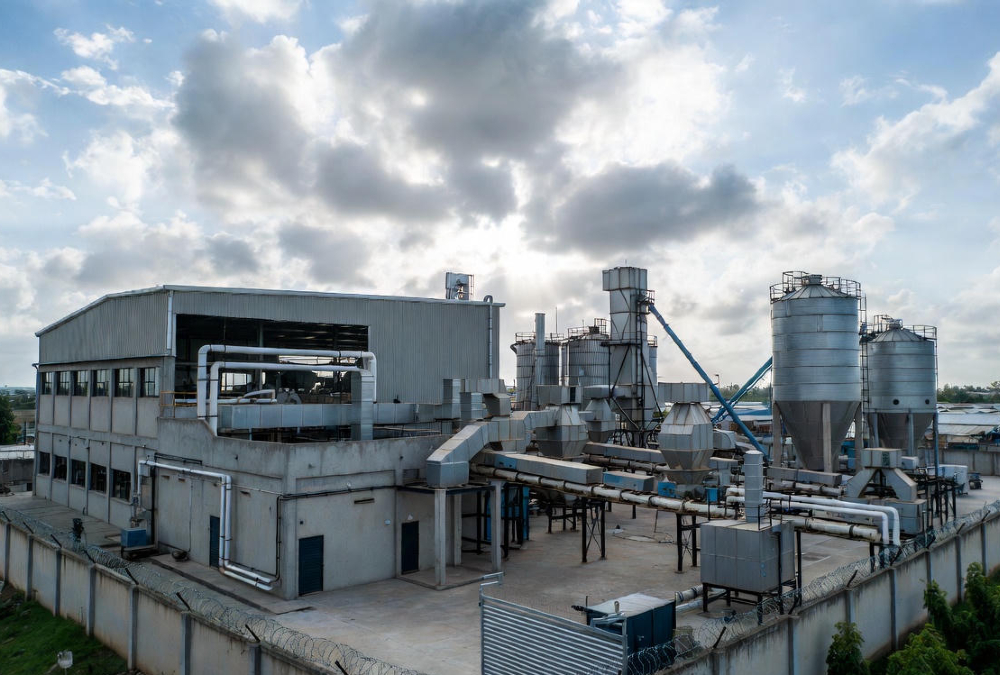
Manufacturing and Local Production
The case for manufacturing is straightforward: demand already exists, imports currently dominate, and local production fundamentally alters cost structures. Food processing, cement, packaging, textiles, and everyday consumer goods represent immediate opportunities.
Import substitution in these categories doesn’t require creating new markets – it means capturing existing demand more efficiently.
Mining and Industrial Materials
West Africa’s mineral wealth – gold, bauxite, lithium, and iron ore – is well documented. But the real value proposition has evolved beyond extraction.
The upside now lies in processing, refining, and building industrial value chains locally. As global supply chains reconfigure and countries seek to secure critical mineral supplies, West Africa’s resource endowment positions it as a strategic player in the energy transition and industrial manufacturing.
Industrial Infrastructure and Logistics
Trade volumes across West Africa are rising faster than infrastructure can accommodate them. Ports, warehouses, cold storage facilities, and industrial parks represent not speculative bets but responses to tangible bottlenecks.
As regional trade integration advances through frameworks like the African Continental Free Trade Area, logistics infrastructure becomes increasingly essential to commerce.
Real Estate Development
This opportunity isn’t about luxury speculation. It’s about housing, mixed-use developments, worker accommodation, and commercial spaces driven by urbanization and population growth.
The fundamentals are simple: cities are expanding, households are forming, and supply lags demand across most price points.
The Path to Compounding Returns
Wealth in emerging markets is built through a consistent approach: entering before markets mature, partnering with local operators who understand regulatory and cultural landscapes, maintaining realistic expectations about ground realities, and staying invested long enough for compounding to work.
West Africa is not a backup plan for disappointed European investors. It’s where serious institutional players and family offices are quietly positioning for the next decade.
The capital flows are already underway – evidenced by increased foreign direct investment, sovereign wealth fund activity, and development finance commitments.
The relevant question is no longer whether West Africa represents opportunity, but rather who has positioned themselves appropriately to capture it. For those exploring manufacturing, mining, industrial projects, or real assets in the region, the time for strategic conversations is now.
Markets don’t wait for consensus before they move.
Lailla Mutajogera is an investor, entrepreneur, and CEO of Muta Investment Firm, a cross-border investment company with operations in Uganda, Rwanda, and Dubai. She specializes in connecting global investors with high-impact opportunities in African markets, focusing on commercial real estate, tourism, agribusiness, and asset management. Committed to practical, growth-driven investments, she champions projects that drive sustainable development across the continent.
