
Business
The Carbon Trap: How Kenya Lost a Climate Unicorn

By Caleb Maru
A few weeks ago, one of Africa’s most ambitious climate-tech startups quietly ceased to exist. KOKO Networks, a Kenya-based company that had spent years building a cleaner cooking future for low-income households, shut down operations and laid off 700 employees.
The reasons behind its collapse reveal something deeply troubling about the fragility of climate entrepreneurship in emerging markets – and the very real human cost when government bureaucracy fails to keep pace with innovation.
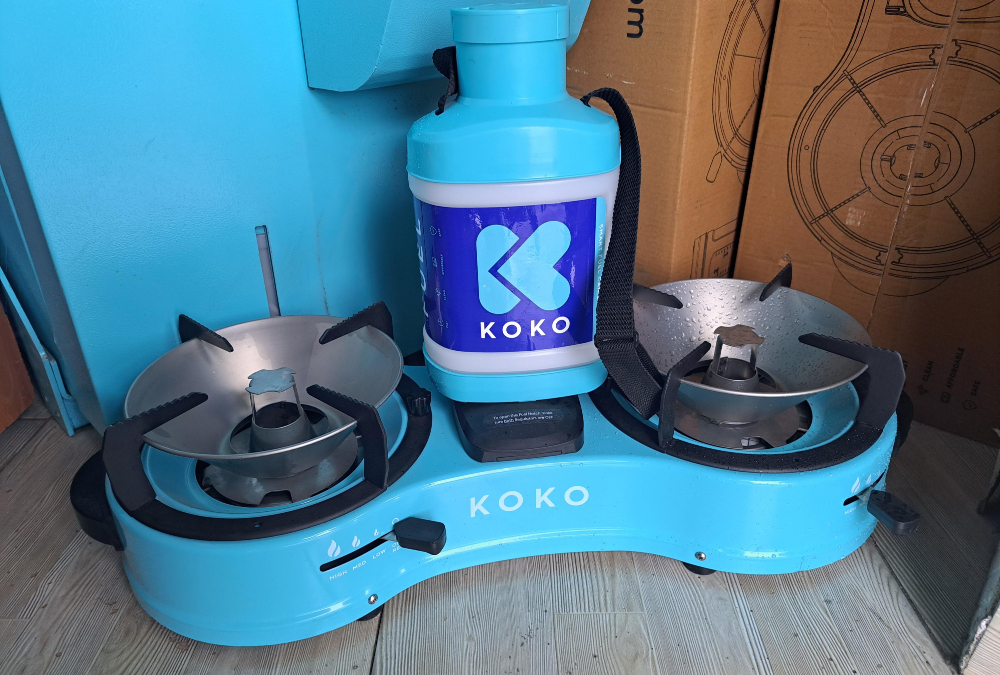
On the surface, KOKO Networks had an elegant model. The company sold ethanol-powered cookstoves and fuel to low-income Kenyan households at dramatically subsidized prices – stoves at roughly 10 percent of their market value, and cooking fuel at half the going rate.
The stoves were cleaner than the charcoal alternatives most households relied on, meaningfully better for respiratory health, and significantly reduced carbon emissions. For millions of Kenyans, KOKO wasn’t just a convenience. It was a lifeline.
But cookstoves and fuel were never where KOKO planned to generate revenue. They were the vehicle. The real business was carbon credits.
A Bet on the Carbon Market
Carbon credits are certificates earned by organizations that demonstrably reduce greenhouse gas emissions, which can then be sold on international markets to corporations and governments seeking to offset their own environmental footprints. For KOKO, every household that switched from charcoal to ethanol represented a quantifiable reduction in emissions – and therefore a credit with real monetary value.
By March 2025, KOKO had supplied clean cookstoves to over 1.3 million low-income households and had issued 10 million carbon credits, each potentially worth US$20 on the international market. At full value, that portfolio represented a US$200 million asset – more than enough to sustain the company’s subsidy model and attract further investment.
There was just one problem. To sell high-value carbon credits on international markets under established trading frameworks, KOKO needed formal authorization from the Kenyan government. Without that approval, the credits were essentially unsellable at scale.
The Signature That Never Came
In 2024, KOKO began actively pursuing that government authorization. Talks with Kenyan officials were initiated. Months passed. The authorization never materialized. And without the ability to monetize its carbon credit portfolio, the financial architecture holding the entire enterprise together simply collapsed.
Last month, KOKO Networks ceased operations. Shortly thereafter, it filed for administration.
A company that had raised over US$300 million in investment – roughly half of which had been channeled directly into subsidies for its customers – was gone.
It is genuinely difficult to overstate how avoidable this outcome appears to have been. A single regulatory approval, already under negotiation, stood between a functioning business model and total collapse.
The human cost – 700 jobs, years of momentum in African climate technology, and a rare proof-of-concept for carbon-financed clean energy – is staggering.
The Nigeria Parallel
The consequences of KOKO’s shutdown, however, extend well beyond its employees and investors. Over a million households across Kenya now face an abrupt and unwelcome transition.
The subsidized ethanol fuel they relied upon is gone. The affordable stoves that came with it are no longer being serviced or supplied.
Many of those households will have little choice but to return to charcoal – more expensive over time, more damaging to health, and far worse for the environment.
This dynamic is not without historical precedent. Nigeria subsidized domestic fuel prices from 1977 all the way through to 2023.
When that subsidy was finally removed, fuel prices spiked violently. An economy conditioned over decades never to bear the true cost of energy was suddenly and brutally priced out.
The social consequences were severe and are still unfolding.
KOKO, in effect, created a localized version of that same dependency – not through government policy, but through a venture-backed business model that required external carbon revenue to remain solvent. The intentions were different. The outcome, for consumers, is painfully similar.
A Warning for Climate Entrepreneurship in Africa
KOKO’s collapse should prompt serious reflection across three distinct communities. For investors, it is a reminder that climate-tech business models dependent on a single regulatory unlock carry existential concentration risk, regardless of how strong the underlying impact metrics appear.
For entrepreneurs, it underscores the danger of building subsidy-dependent customer relationships before the revenue architecture that funds them is fully secured. And for African governments – Kenya’s in particular – it is a cautionary example of what regulatory inertia actually costs: not just one company, but the trust of the international capital that African climate solutions desperately need to attract.
Africa is disproportionately exposed to the consequences of climate change. It is also home to some of the world’s most innovative approaches to addressing it.
KOKO Networks was, by any reasonable measure, one of those approaches. Its technology worked. Its customer adoption was remarkable. Its carbon credit pipeline was substantial. What it could not survive was waiting.
Caleb Maru is Founder and CEO of Tech Safari, Africa’s leading tech community and media company, specializing in tech innovation, market trends, and exclusive insights across the continent. Based in Nairobi, Kenya
