Business
Why is the West so worried about China’s engagement with Africa?
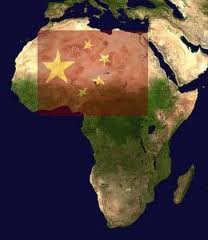
The west’s warnings over China’s involvement in Africa are growing in volume. US Secretary of State Hillary Clinton has described Chinese movements on the continent as a ‘new colonialism’, while British Prime Minister David Cameron has denounced what he calls China’s ‘authoritarian capitalism’. Is this advice the good-natured warnings of a concerned friend? Or is the West worried that they are now paying the price for neglecting investment opportunities in Africa and are scared of the rising Chinese Dragon?
It is true that there have been some localized criticisms of Chinese treatment of workers and worries over the long-term environmental effect of the extraction of Africa’s natural resources. However, many African countries still welcome Chinese investment as it is helping to bridge the infrastructure gap that has had a devastating effect on Africa’s economy:
To date, China has helped build more than:
* 2,000 km of railways
* 3,000 km of highways
* 100 schools and
* 60 hospitals
* reduced or remitted debt worth of more than $3.08 billion
China has also provided aid in the construction of:
* 20 agricultural demonstration centers
* 30 anti-malaria centers and
* 100 renewable energy projects since 2009
It is foolish to suggest that any country in dire need of new infrastructure would ever refuse such large investments. Equally, Chinese officials argue that China does not have a legacy of colonialism in Africa and as such are far more trusted as partners than Western countries could ever be.
All of this paints a more optimistic future for Africa than the warnings of Clinton and Cameron suggest, if not, a more uncertain one for Western countries.
China’s efficiency is a bold challenge to several decades of failed western policies.
The lack of infrastructure such as roads and schools is a huge opportunity for China because the west has failed Africa. So it’s obvious Africa must turn to China. What else can Africa do?”
In Angola, for example, China’s low-interest loans have been tied to a scheme that has ensured that roads, schools and other infrastructure has been built.
China has an impressive track record of lifting its own millions out of poverty and can do the same for Africa. And is the West’s record in Africa as glowing as we like to think? After decades of pouring aid into Africa, how much have we actually achieved in terms of reducing poverty, corruption and war? So which way should Africa look for salvation – to the West, to China, or perhaps to its own people?
China is not an ordinary nation. With a population of over 1.4 billion, China has been in existence for over 5,000 years and is the world’s oldest centralized state. Therefore discussing its relations with any region of the world, including Africa, should be done with great humility. This comprehensive coverage, discusses how Africa stands to gain from a strong, effective and balanced relationship with China. The Chinese resurgence in Africa is not only transforming the continent’s political, economic and social landscapes, but is sending nervous shivers into Western governments, hitherto the dominant forces in Africa. But the ball is now in Africa’s court, to fully embrace the new-kid-on-the-block, or hang on to friendships and policies by maintaining the status quo. This time, Africa needs to play its cards right.
China has surprised everyone. It has created a fait-accompli, not storming Africa as would have been expected from a dragon, but getting into it in a powerful but cautious way. The world woke up in 2006 to face the extent of China’s return to a continent it had virtually deserted for some years. Its resurgence in Africa even caught its traditional Western protagonists off-guard and they are worried – with good reason.
China’s money flowing into Africa is a clear and significant sign of its determination to meet words with deeds on the continent. A symbolic signal in this regard is the fact that in 2007, with over US$9bn worth of investment, it dwarfed the World Bank‘s money flow into Africa, and the Bank, unable to inject more than $2.5bn into the continent, is now, bowl in hand, persuading Beijing to partner with it in financing African projects, so far to no avail.
When one takes into account the huge foreign reserves, now estimated at $1.5 trillion, that it has built as a result of an effective export strategy and the establishment of a sovereign fund – the China Investment Corporation – endowed with $200bn, one can easily expect China to be more than ever the most dominant player in a continent that needs financial resources, which China is ready to provide without conditionalities.
With more than 800,000 Chinese currently living, working and running businesses in Africa, over 800 small and medium businesses involved in manufacturing and bidding for construction of ports, railways, hospitals, administrative buildings and other facilities, usually at a very competitive price, and using comparatively advantageous cheaper labor and other factors of production, it is no surprise that many Western actors with interests in Africa are taking notice of China in Africa, and yes getting very edgy.
Not only do China’s strengths justify this uneasiness, but the fact that China has come up with an economic and political development model that seems to have produced tangible results in terms of poverty alleviation and national control of assets, makes the country more appealing to most African countries.
The Dragon is not on safari
Indeed China’s return to Africa is not a safari. It is also quite different from the previous encounters between China and Africa especially in 1405 when the renowned admiral, Zheng He, leading a fleet of 300 boats, came to the eastern coast of the continent. Exchanges of souvenirs of Chinese porcelains and other gadgets for African animals taken away to China are still remembered as part ofthat naval odyssey. And they left behind an enduring message of peace regarding their motivations.
Then, as now, Chinese visitors to Africa have always strived to define as peaceful their forays in the continent.
Then came the mid-1950s. It was a time when China realized it had no other choice but to break the diplomatic isolation it was in, a by-product of many factors, including its communist inclination and the Korean War. Those years gave China the opportunity to get closer to the developing world, starting with its participation in the 1955 Bandung Conference where the new leaders of Communist China interacted for the first time with the aspiring or newly independent African nations.
Ideology and the display of soft power were the cornerstones of China’s approach to Africa.
But when Prime Minister Zhou En-lai visited Africa, in late 1963, the main tenets of China’s African policy were unveiled.
These included the exclusion of conditional ties for the delivery of its aid, the non-interference in other countries’ affairs, the sovereignty doctrine, and the primacy of the state in the conduct of business and political relations.
This time around, many are realizing how nimble the Chinese dragon can be. It all started after the launch of China’s economic reforms in 1978, which led to the withdrawal of state control from many of its economic entities. This freed the dynamism of the Chinese people, some of whom now spread their wings to Africa.
Visiting Africa in 1982, Premier Zhao Ziyang offered to cooperate with Africa around what is now known as a win-win proposition which began a new shift in rebuilding its ties with the continent.
Since then China has made political gains in Africa that none of the Western nations has achieved, owing to their ambivalent attitude as they remained divided between the pursuit of their narrow national interests and their declared “commitment to promote democracy and human rights”.
For its part, China has continued to discreetly advance its positions by sending envoys to Africa, at the start of every year, from 1992, a tradition that has only been broken in 2008, signalling the changing times. But no matter what the reason may be, no country among China’s Western competitors has done as much as China to engage Africa politically, at high levels.
The current president, Hu Jintao, and his predecessor, Jiang Zemin, have visited Africa on several occasions. Chinese ministers, top diplomats, leading multinational chief executives, and representatives of Chinese non-governmental organisations also frequently visit Africa to confirm the orientation of their country’s African policy.
These have been intensifying since 1993 when China realized that it could no longer satisfy its needs with its own local production. Africa was hence raised to a strategic level. Although politically decided, China’s engagement with Africa is without doubt economically motivated. Doors have since been opened for massive disbursement of important Chinese investments in different sectors of African economies.
Trendsetter
China is increasingly becoming a trendsetter in Africa and Western governments are losing sleep over it, forcing them to become more reactive. China’s position in Africa was one of the major reasons why Europe was so eager this time around to hold the Europe-Africa Summit in Lisbon. A shaken Bush administration in America also attempted to include public diplomacy and soft-power policies, such as support for the fight against HIV/AIDS through the Millennium Challenge Corporation.
China’s stance on sovereignty is being copied by some Western countries who are now willing to do business with nations previously considered as “rogue states” and their leaders are even welcome with open arms. The pretext is that the West is not willing anymore to leave these nations as profitable “niches” for China. Human rights and democratic norms no longer top their foreign policy agendas. China’s willingness to offer non-commercially viable loans to African nations in order to secure long-term strategic and economic interests is no longer generating criticisms from the West but is silently being emulated. China’s financing of infrastructural projects has forced the World Bank and many bilateral donors to revisit this field, which they had in the recent past considered not a matter of urgency for the continent.
And even when Europe organised an African summit in April 2000, it was clearly the Forum on China-Africa Cooperation (FOCAC), organised later by China, that caught the world’s attention. China-Africa summits are also more impressive than the older institutional gatherings such as the Commonwealth summits between the United Kingdom and its former colonies, or those held regularly by France and many African countries.
When the China-Africa meeting, originally a ministerial one, was raised to a strategic level of heads of states and government for the November 2006 summit, the world was left wondering how China did it. Today, everyone wants to be seen as taking Africa as seriously as the Chinese have done. The 2006 summit came up with promises which the Chinese knew they would deliver, as opposed to those emanating from Africa’s traditional European and American partners. For example, China promised to double its development assistance to Africa by 2009; put in place a $5bn loan and credit programme; increase its two-way trade with Africa to over $100bn by 2010; set up anti-malaria clinics across the continent; establish five trade and investment centres to train 15,000 African professionals in various fields and, of course, to cancel debt.
This represented a defining moment in the political dialogue between the world’s most populous nation and Africa. Building on the two ministerial meetings of FOCAC held respectively in Beijing in 2000 and Addis Ababa, in 2003, the FOCAC summit was different from the many jamborees in which Africa has been involved over the past years. In contrast with the big shows, the charity-business and other high profile humanitarian diplomacy promoted by the West, the United Nations, Non Governmental Organizations (NGOs) and the international financial institutions, China ensured that deeds preceded words. From the foregoing and without being caught in any China promotion, it can be observed that China today stands in sharp contrast to the Western governments whose inconsistencies and lack of tangible results in their African development efforts are rather quite too obvious.
China brings a model of economic recovery that works without the involvement of foreign advisors, institution or bilateral tutors. Discipline, hard work and enlightened leadership make the difference.
China also brings money and technological know-how which is easily and widely transferable on the continent. The Chinese model would have been strongly challenged a few years back when many in Africa expected Western-style democratization to produce the long-awaited economic development. Now, many see that it makes more sense to emulate China which, at least, has lifted more than 400 million of its people out of poverty and is now poised to lead a world economic boom.
What compounds the West’s worries is the fact that everyone can now clearly see through its inconsistencies, such as the colonial legacy which contradicts claims of democratization in Africa, its notable Cold War protection and support of corrupt dictators and, even worse, its stark failure to come up with any real economic success story in Africa, despite decades of policies devised by its technocrats.
The West and its multilateral institutions are in crisis – when compared with China, which seems to have an unstoppable momentum. Europe is confronted with an identity crisis and, is in a pension and employment trap, and remains ambivalent in its approach to Africa. The way it treats African immigrants on its soil or at its borders is a clear indication that despite the recent Lisbon Europe-Africa Summit, the former colonial powers, such as France, Britain, Portugal, Belgium or Spain, have clearly lost their African touch.
The situation is even worse with America. Despite the introduction of huge signature projects by the Bush administration to fight AIDS and improve governance, America is now only seen in Africa as a violent nation keen on using mainly its military power to impose its unilateral views on Africa.
With the World Bank and the International Monetary Fund (IMF) in disarray, China has been able to move its African agenda with both money and mastery of public relations. Soft power (non-military) has become a key component of China’s Africa policy.
A win-win relationship
China uses words that make it easy to conduct business, talking about a win-win relationship that prescribes friendship, cooperation and goodwill. This, with soft-power, explains why China has come to be seen in many circles across Africa as an alternative model for the continent.
China’s multi-millennium civilization and the magnitude of the challenges it has faced, internally and externally, combine to explain why it is strategically-driven in its attempts to address its huge internal demands and those linked to its relations with the rest of the world. Like the powerful dragon it has come to symbolize, China is drawing attention all over Africa, raising eyebrows and generating mixed reactions.
There are those who point out that China is a new version of colonial power, while others look at what it has achieved and how the country has become a blessing and opportunity which Africa should grab without delay. It does not matter though, which argument is right or wrong, the fact is that China is already producing meaningful changes in Africa.
Thanks to China, suddenly Africa is today becoming attractive again, just like a pretty young woman being assiduously courted by many admirers. Many of those now tirelessly courting Africa are forgetting how just a few years ago, had totally given up on it as beyond redemption.
This unfolding evolution brings to the fore various questions that call for debate that should focus on assessing the consequences of China’s entry into Africa – good or bad. This debate is undoubtedly a step in the right direction and the best way to fill the gap that has been identified in Africa’s response, or lack of it, to addressing either the opportunities or threats that come with China’s presence in Africa.
Today the world over, and in all walks of life, from leading universities, think-tanks, media institutions and diplomats to intelligence agencies, the China-Africa relationship has arguably become one of the most debated issues. Although until now, Africa seemed to have been left out in this melee of “China-fever”.
The time has come to formulate an adequate African agenda on China, which should be a sustained, open, vigilant and an intellectual effort, to benefit the future evolution of the continent.
Indeed, the China-Africa issue cannot be restricted to its bilateral dimension. Many other issues abound and call for discussion. Among them, the controversial Economic Partnerships Agreements (EPAs) being promoted by the European Union, the vexing question of African immigrants in relation to the role of the African Diaspora on the continent’s development, the political leadership challenges, democratic failures, a model of continental political integration, and Africa’s stance on the war on terror. Beijing matters to all the 49 African countries that have diplomatic ties with China. But even the remaining four: Burkina-Faso, Gambia, Sao Tome and Principe and Swaziland, which still have diplomatic relations with Taiwan, cannot ignore the China factor.
In order to shed light on the worries that China’s continuing rise in Africa is generating in the West, it is necessary to highlight the main characteristics of this presence against the background of China’s past role on the continent as well as its global positioning and re-branding as a rising peaceful nation.
The temptation to jump into the arms of China as Africa’s saviour is real, but it should be avoided. In economy as in state relations, there is no free lunch and the first proposition one has to always bear in mind is that Africa’s development will be a product of its own efforts and initiative.
When one adds to this already complex puzzle the growing ambitions of nations such as Russia, Brazil, India and Venezuela, one can only see that Africa now has a wider choice than it has ever had in recent times. During the years of the Cold War between the then allies of the Soviet Bloc and those of America, Africa could play one of them against the other or use them simultaneously. The sad thing is that most African countries, and especially their leaders, did not use that opportunity for their long-term interests. It mainly provided the best card for dictators and cash-strapped governments to get political coverage or financial handouts from the Eastern or Western blocs.
Chinese lessons
Therefore, as China helps restore that opportunity for Africa, it is really vital that this time around the continent plays its cards safely with a view to getting much out of the most favorable circumstances. Africa should not forget how it was left to dry under the sun when most of the Western governments felt that Africa was no longer of great strategic viability following the demise of the former Soviet Union.
It has to be emphasised that China is in Africa primarily because it needs Africa, for its own development and diplomatic standing in the world. With a landmass of over 9.5 billion sq kilometres, China is not just a country that has to address the needs of its 1.4 billion inhabitants. It is also aware of its shortcomings: it has only 7% of the world’s arable land and fresh water; 3% of its forests; and 2% of its oil.
China’s pragmatism became more open when it dumped its ideology of proletarianism, and embarked on the path of home-grown economic reforms, which have largely informed its African policy. Before this, its presence on the world stage was largely dwarfed by the actions of the Western powers, backed by international financial institutions such as the World Bank and the IMF.
However, while Africa was losing its sovereignty to Western imposition, China, under the leadership of Deng Xiao-Ping, was transforming itself from a sleeping dragon to a powerful one, which has now proved to have the best economic teeth on the globe.
Africa can also learn from China’s mastery of international trade. It now plays a dominant role in world trade, yet it was only in 2001 that it became a member of the World Trade Organization (WTO). Today, it stands as the leading trading nation in the world, with an over $262.2bn trade surplus in 2007, breaking yet another record.
China-Africa trade amounted to over $50bn in 2007.
It’s powerful economic status is also reflected in the huge foreign reserves of over $1.5 trillion. With these reserves, China is in a position to mitigate the risks associated with over-exposure to the US dollar.
Africa can also learn from a country that has moved unscathed from a communist past to a de-facto capitalistic one, just by putting in place macro-political conditions that have attracted billions of dollars of foreign direct investment (FDI).
With over $60bn per year of FDI, China has become one of the most enduring darlings for investors the world over.
Africa will benefit from China’s thirst for natural and mineral resources that are needed to sustain its admirable economic growth. On the market front, China is already affecting prices on the world markets, providing many with a new lease of life. For example, many countries are no longer talking about restructuring or closing steel factories or subsidising their minerals. Prices for many minerals, such as cement, iron-ore, petroleum, copper and gold have once again become competitive, in some instances skyrocketing due to China’s eagerness to purchase them anywhere in the world.
For Africa, as a continent in search of a role model, no other nation is more appealing than China. It provides the best example of a nation that has managed to overcome the kind of problems most, if not all African nations are confronted with: foreign domination and humiliation; internal conflicts; economic underdevelopment; political independence and instability. These are some of the problems China has been able to overcome, through home-grown developmental and political strategies that were not borrowed from Western recipes.
By Gaye Adama (NewAfrican)