
Business
Why is the West so worried about China’s engagement with Africa?
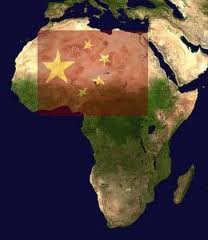
Trendsetter
China is increasingly becoming a trendsetter in Africa and Western governments are losing sleep over it, forcing them to become more reactive. China’s position in Africa was one of the major reasons why Europe was so eager this time around to hold the Europe-Africa Summit in Lisbon. A shaken Bush administration in America also attempted to include public diplomacy and soft-power policies, such as support for the fight against HIV/AIDS through the Millennium Challenge Corporation.
China’s stance on sovereignty is being copied by some Western countries who are now willing to do business with nations previously considered as “rogue states” and their leaders are even welcome with open arms. The pretext is that the West is not willing anymore to leave these nations as profitable “niches” for China. Human rights and democratic norms no longer top their foreign policy agendas. China’s willingness to offer non-commercially viable loans to African nations in order to secure long-term strategic and economic interests is no longer generating criticisms from the West but is silently being emulated. China’s financing of infrastructural projects has forced the World Bank and many bilateral donors to revisit this field, which they had in the recent past considered not a matter of urgency for the continent.
And even when Europe organised an African summit in April 2000, it was clearly the Forum on China-Africa Cooperation (FOCAC), organised later by China, that caught the world’s attention. China-Africa summits are also more impressive than the older institutional gatherings such as the Commonwealth summits between the United Kingdom and its former colonies, or those held regularly by France and many African countries.
When the China-Africa meeting, originally a ministerial one, was raised to a strategic level of heads of states and government for the November 2006 summit, the world was left wondering how China did it. Today, everyone wants to be seen as taking Africa as seriously as the Chinese have done. The 2006 summit came up with promises which the Chinese knew they would deliver, as opposed to those emanating from Africa’s traditional European and American partners. For example, China promised to double its development assistance to Africa by 2009; put in place a $5bn loan and credit programme; increase its two-way trade with Africa to over $100bn by 2010; set up anti-malaria clinics across the continent; establish five trade and investment centres to train 15,000 African professionals in various fields and, of course, to cancel debt.
This represented a defining moment in the political dialogue between the world’s most populous nation and Africa. Building on the two ministerial meetings of FOCAC held respectively in Beijing in 2000 and Addis Ababa, in 2003, the FOCAC summit was different from the many jamborees in which Africa has been involved over the past years. In contrast with the big shows, the charity-business and other high profile humanitarian diplomacy promoted by the West, the United Nations, Non Governmental Organizations (NGOs) and the international financial institutions, China ensured that deeds preceded words. From the foregoing and without being caught in any China promotion, it can be observed that China today stands in sharp contrast to the Western governments whose inconsistencies and lack of tangible results in their African development efforts are rather quite too obvious.
China brings a model of economic recovery that works without the involvement of foreign advisors, institution or bilateral tutors. Discipline, hard work and enlightened leadership make the difference.
China also brings money and technological know-how which is easily and widely transferable on the continent. The Chinese model would have been strongly challenged a few years back when many in Africa expected Western-style democratization to produce the long-awaited economic development. Now, many see that it makes more sense to emulate China which, at least, has lifted more than 400 million of its people out of poverty and is now poised to lead a world economic boom.
What compounds the West’s worries is the fact that everyone can now clearly see through its inconsistencies, such as the colonial legacy which contradicts claims of democratization in Africa, its notable Cold War protection and support of corrupt dictators and, even worse, its stark failure to come up with any real economic success story in Africa, despite decades of policies devised by its technocrats.
The West and its multilateral institutions are in crisis – when compared with China, which seems to have an unstoppable momentum. Europe is confronted with an identity crisis and, is in a pension and employment trap, and remains ambivalent in its approach to Africa. The way it treats African immigrants on its soil or at its borders is a clear indication that despite the recent Lisbon Europe-Africa Summit, the former colonial powers, such as France, Britain, Portugal, Belgium or Spain, have clearly lost their African touch.
The situation is even worse with America. Despite the introduction of huge signature projects by the Bush administration to fight AIDS and improve governance, America is now only seen in Africa as a violent nation keen on using mainly its military power to impose its unilateral views on Africa.
With the World Bank and the International Monetary Fund (IMF) in disarray, China has been able to move its African agenda with both money and mastery of public relations. Soft power (non-military) has become a key component of China’s Africa policy.
A win-win relationship
China uses words that make it easy to conduct business, talking about a win-win relationship that prescribes friendship, cooperation and goodwill. This, with soft-power, explains why China has come to be seen in many circles across Africa as an alternative model for the continent.
China’s multi-millennium civilization and the magnitude of the challenges it has faced, internally and externally, combine to explain why it is strategically-driven in its attempts to address its huge internal demands and those linked to its relations with the rest of the world. Like the powerful dragon it has come to symbolize, China is drawing attention all over Africa, raising eyebrows and generating mixed reactions.
There are those who point out that China is a new version of colonial power, while others look at what it has achieved and how the country has become a blessing and opportunity which Africa should grab without delay. It does not matter though, which argument is right or wrong, the fact is that China is already producing meaningful changes in Africa.
Thanks to China, suddenly Africa is today becoming attractive again, just like a pretty young woman being assiduously courted by many admirers. Many of those now tirelessly courting Africa are forgetting how just a few years ago, had totally given up on it as beyond redemption.
This unfolding evolution brings to the fore various questions that call for debate that should focus on assessing the consequences of China’s entry into Africa – good or bad. This debate is undoubtedly a step in the right direction and the best way to fill the gap that has been identified in Africa’s response, or lack of it, to addressing either the opportunities or threats that come with China’s presence in Africa.
Today the world over, and in all walks of life, from leading universities, think-tanks, media institutions and diplomats to intelligence agencies, the China-Africa relationship has arguably become one of the most debated issues. Although until now, Africa seemed to have been left out in this melee of “China-fever”.
The time has come to formulate an adequate African agenda on China, which should be a sustained, open, vigilant and an intellectual effort, to benefit the future evolution of the continent.
Indeed, the China-Africa issue cannot be restricted to its bilateral dimension. Many other issues abound and call for discussion. Among them, the controversial Economic Partnerships Agreements (EPAs) being promoted by the European Union, the vexing question of African immigrants in relation to the role of the African Diaspora on the continent’s development, the political leadership challenges, democratic failures, a model of continental political integration, and Africa’s stance on the war on terror. Beijing matters to all the 49 African countries that have diplomatic ties with China. But even the remaining four: Burkina-Faso, Gambia, Sao Tome and Principe and Swaziland, which still have diplomatic relations with Taiwan, cannot ignore the China factor.
In order to shed light on the worries that China’s continuing rise in Africa is generating in the West, it is necessary to highlight the main characteristics of this presence against the background of China’s past role on the continent as well as its global positioning and re-branding as a rising peaceful nation.
The temptation to jump into the arms of China as Africa’s saviour is real, but it should be avoided. In economy as in state relations, there is no free lunch and the first proposition one has to always bear in mind is that Africa’s development will be a product of its own efforts and initiative.
When one adds to this already complex puzzle the growing ambitions of nations such as Russia, Brazil, India and Venezuela, one can only see that Africa now has a wider choice than it has ever had in recent times. During the years of the Cold War between the then allies of the Soviet Bloc and those of America, Africa could play one of them against the other or use them simultaneously. The sad thing is that most African countries, and especially their leaders, did not use that opportunity for their long-term interests. It mainly provided the best card for dictators and cash-strapped governments to get political coverage or financial handouts from the Eastern or Western blocs.
