
Business
The “Informal” Economy Isn’t Informal – It’s Just Formal in a Different Language

By Ajay Wasserman
What if the so-called “informal sector” in South Africa isn’t informal at all – but simply formalized in a different register? One that speaks in handshakes instead of contracts, in trust instead of tax IDs, and in community accountability rather than corporate compliance?
Too often, the term “informal economy” conjures images of disarray: unregulated stalls, off-the-books cash transactions, and chaotic street vending. But this framing misses a crucial truth.
South Africa’s informal economy is not a shadow – it’s a system. A sophisticated, resilient, and deeply organized network that generates jobs, circulates wealth, and sustains millions far more effectively than many formal institutions ever could.
Numbers That Redefine “Informal”
Consider the numbers:
- More than 2.5 million South Africans – roughly one in five working adults – earn their livelihoods in the informal sector.
- Collectively, these enterprises contribute an estimated 24.8 percent of the country’s GDP.
- Around 1.9 million micro-businesses operate without VAT registration, yet they hire staff, honor debts, serve customers reliably, and reinvest in their communities.
This isn’t informality. It’s entrepreneurship, stripped of bureaucracy but rich in ingenuity.
Now look at housing – a key proxy for economic participation. About 81.9 percent of South African households reside in formal dwellings, while 12.7 percent live in informal settlements.
But “informal” doesn’t mean disconnected: the majority have access to electricity, piped water, and mobile internet. In major metros like Johannesburg and Cape Town, one in five residents lives in such neighborhoods – and many run thriving micro-enterprises from their homes.
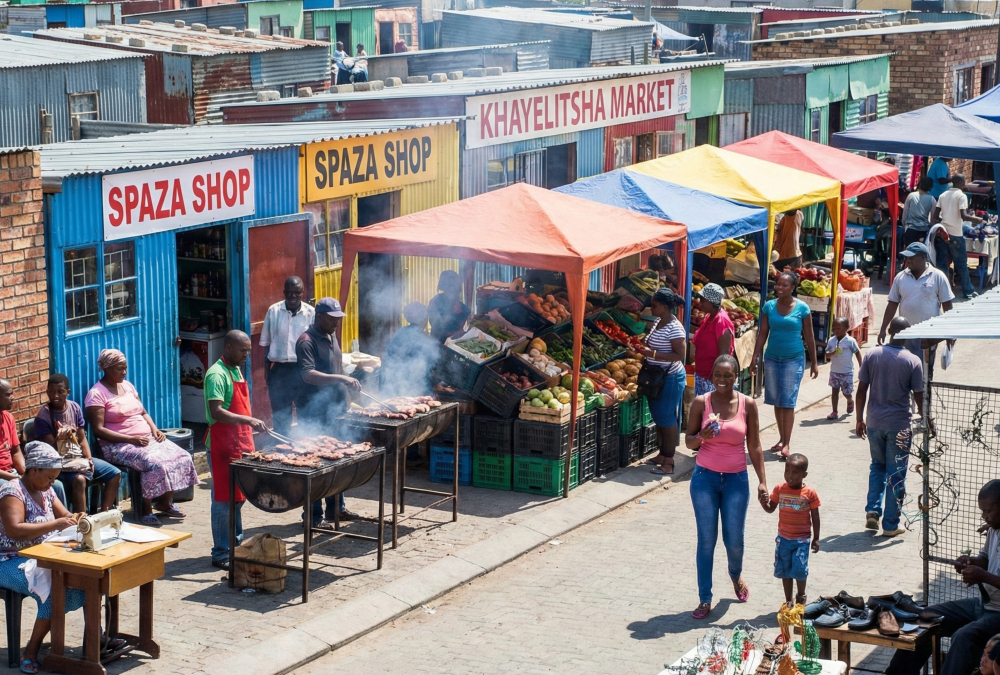
From spaza shops and street-side salons to solar technicians, welders, food vendors, delivery riders, and digital freelancers, these entrepreneurs are stitching together a parallel economy that pulses with productivity. They don’t wait for permits; they create value where it’s needed most.
And in doing so, they add not just to GDP – but to social cohesion, dignity, and local resilience.
The Real Gap Isn’t Structure – It’s Recognition
The real issue isn’t a lack of structure. It’s a failure of recognition.
Policymakers, investors, and development institutions continue to treat the informal sector as a problem to be formalized – rather than a platform to be empowered. But what if we flipped the script?
What if we saw these networks not as gaps in the system, but as the system itself – adapting, scaling, and innovating in real time?
South Africa’s informal economy isn’t waiting for permission to grow. It’s already building the future of inclusive capitalism – one backyard workshop, one street-corner stall, one mobile money transaction at a time.
If you are serious about job creation, inclusive growth, and economic transformation, the place to start isn’t in boardrooms or policy white papers. It’s here: in the vibrant, overlooked, and profoundly functional ecosystems that keep the country running.
So, let’s retire the misleading label of “informal.” Because when 2.5 million people are feeding families, paying suppliers, and serving customers every single day – that’s not chaos. That’s commerce. And it deserves to be seen, supported, and scaled on its own terms.
Ajay Wasserman is the Group CEO and Chief Investment Officer of Fio Capital Group, a private family office and investment holding company based in Pretoria. Focused on empowering entrepreneurs and fostering sustainable growth, he believes the future success of global economies depends on the innovation and leadership of private entrepreneurs and businesses.
