
Business
Why is the West so worried about China’s engagement with Africa?
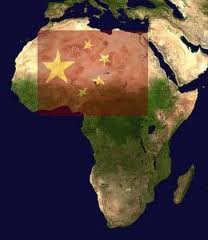
The Dragon is not on safari
Indeed China’s return to Africa is not a safari. It is also quite different from the previous encounters between China and Africa especially in 1405 when the renowned admiral, Zheng He, leading a fleet of 300 boats, came to the eastern coast of the continent. Exchanges of souvenirs of Chinese porcelains and other gadgets for African animals taken away to China are still remembered as part ofthat naval odyssey. And they left behind an enduring message of peace regarding their motivations.
Then, as now, Chinese visitors to Africa have always strived to define as peaceful their forays in the continent.
Then came the mid-1950s. It was a time when China realized it had no other choice but to break the diplomatic isolation it was in, a by-product of many factors, including its communist inclination and the Korean War. Those years gave China the opportunity to get closer to the developing world, starting with its participation in the 1955 Bandung Conference where the new leaders of Communist China interacted for the first time with the aspiring or newly independent African nations.
Ideology and the display of soft power were the cornerstones of China’s approach to Africa.
But when Prime Minister Zhou En-lai visited Africa, in late 1963, the main tenets of China’s African policy were unveiled.
These included the exclusion of conditional ties for the delivery of its aid, the non-interference in other countries’ affairs, the sovereignty doctrine, and the primacy of the state in the conduct of business and political relations.
This time around, many are realizing how nimble the Chinese dragon can be. It all started after the launch of China’s economic reforms in 1978, which led to the withdrawal of state control from many of its economic entities. This freed the dynamism of the Chinese people, some of whom now spread their wings to Africa.
Visiting Africa in 1982, Premier Zhao Ziyang offered to cooperate with Africa around what is now known as a win-win proposition which began a new shift in rebuilding its ties with the continent.
Since then China has made political gains in Africa that none of the Western nations has achieved, owing to their ambivalent attitude as they remained divided between the pursuit of their narrow national interests and their declared “commitment to promote democracy and human rights”.
For its part, China has continued to discreetly advance its positions by sending envoys to Africa, at the start of every year, from 1992, a tradition that has only been broken in 2008, signalling the changing times. But no matter what the reason may be, no country among China’s Western competitors has done as much as China to engage Africa politically, at high levels.
The current president, Hu Jintao, and his predecessor, Jiang Zemin, have visited Africa on several occasions. Chinese ministers, top diplomats, leading multinational chief executives, and representatives of Chinese non-governmental organisations also frequently visit Africa to confirm the orientation of their country’s African policy.
These have been intensifying since 1993 when China realized that it could no longer satisfy its needs with its own local production. Africa was hence raised to a strategic level. Although politically decided, China’s engagement with Africa is without doubt economically motivated. Doors have since been opened for massive disbursement of important Chinese investments in different sectors of African economies.
