
Life
Why Don’t Black People Visit National Parks?
This is so random, but interesting nonetheless!
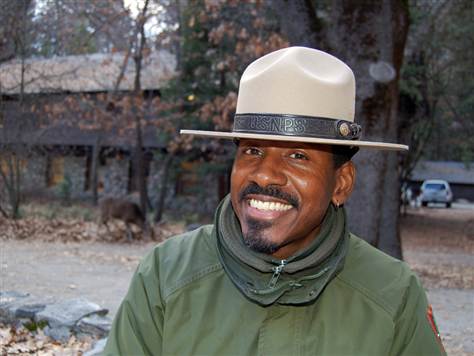
The U.S. has grown more diverse, but park visitors remain overwhelmingly white.
The National Park system is often called “America’s Best Idea,” but according to a new report, it remains more like terra incognita for many people of color.
Released Wednesday, “The National Park System Comprehensive Survey of the American Public,” conducted by the Wyoming Survey & Analysis Center at the University of Wyoming, is a follow-up to a much-cited report on race/ethnicity among park visitors conducted in 2000.
Taken together, the two surveys show that while the American public has grown increasingly diverse in the last decade, black and Hispanic-Americans remain underrepresented in visits to the 394 National Park Service (NPS) properties.
“Despite efforts by the National Park Service and its partners to engage underserved populations,” wrote the researchers, “visitation differences by race/ethnic group seem not to have changed much over the past decade.”
Conducted by telephone in 2009, the survey queried 4,103 respondents across the U.S. The results showed that non-Hispanic whites comprised 78 percent of park visitors in 2008–2009. By comparison, Hispanics accounted for 9 percent of visitors, while African-Americans were 7 percent of visitors.
In contrast, the U.S. population in 2010 was 64 percent non-Hispanic white, 16 percent Hispanic, 13 percent African American and 5 percent Asian, with American Indians, Alaska Natives and Pacific Islanders accounting for less than 1 percent each.
“The national parks represent the American story, and there are groups of people who don’t identify with that,” said Carolyn Finney, assistant professor in the College of Natural Resources at the University of California, Berkeley. “For some people, there’s a sense that the parks are pretty white.”
Visitation figures are skewed even further when the visits in question are to parks that showcase wilderness and outdoor recreation. For example, at Yosemite National Park in California, a 2009 visitation survey showed that African Americans totaled just 1 percent of visitors, compared to 77 percent white and 11 percent each for Hispanics and Asians.
The reasons would easily fill a book; Finney, in fact, is currently completing one called “Black Faces, White Spaces: African Americans and the Great Outdoors”; but the end result is that the national parks run the risk of losing their connection to the American public.
