
Business
‘Unemployed need not apply’ stigma keeps blacks jobless
OPINION – Employment advocates maintain that unemployment discrimination could be illegal if there is a disparate impact on groups such as blacks, Latinos, women and the disabled…
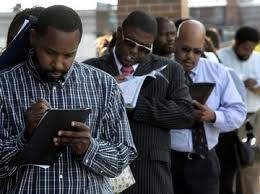
They say you need a job to get a job. It is an unfortunate reality for many in this bad economy. And some say it is a form of discrimination that should be stopped.
The new national unemployment figures are coming out for July, and it is no surprise that the economy is going nowhere fast. America’s official jobless rate stands at 9.1 percent. However, when the underemployed and those who stopped looking are factored in the mix, the real unemployment rate these days is well in the double digits, hovering somewhere between 16 percent and upwards of 20 percent.
Black official unemployment last month came in at a typically high 15.9 percent. The average unemployed worker must wait over nine months to find his or her next paycheck. Plus, to make things worse, most of the jobs lost to the recession were mid-wage, while the new jobs created are low-wage.
Moreover, with nearly five job seekers chasing every job, it is a seller’s market. That means employers can be picky, maybe too picky. And the message to the jobless from many businesses is “unemployed need not apply.”
According to a new report from the National Employment Law Project (NELP), hiring bans on the unemployed are commonplace, despite high public disapproval and increased scrutiny regarding the practice. And the report — called “Hiring Discrimination Against the Unemployed: Federal Bill Outlaws Excluding the Unemployed from Job Opportunities, as Discriminatory Ads Persist” — points out that many qualified candidates are missing out solely because of their employment status.
“A snapshot sampling of recent online job postings disclosed a large number of ads explicitly limited to those who are ‘currently employed’,” said Christine Owens, executive director of NELP. “This perverse catch-22 requires a worker to have a job in order to get a job, and it means highly qualified, experienced workers who want and need work can’t get past the starting gate in the application process simply because they lost their jobs through no fault of their own. As a business practice, this makes no sense, and as a way to rebuild the economy, it only debilitates workers, particularly the long-term unemployed.”
And a number of the reasons employers use to discriminate fail to pass muster. There is a misconception that if you’re unemployed there must be something wrong with you, since employers keep their top performers, and let their subpar workers go. The currently employed are viewed as harder workers, and the jobless are stereotyped as lazy
Further, some employers are concerned that the skills of the unemployed atrophy with time and are rendered obsolete, thereby increasing an employer’s training costs. This creates a stigma. But in reality, with the massive amounts of people out of work, many qualified individuals are simply out of luck and out of a job through no fault of their own.
And aside from the fact that a bias toward hiring the employed has existed long before the economic downturn, the practice allows companies who are inundated with resumes to cut through the number of applicants and streamline the hiring process.
A sampling of discriminatory job postings from 72 businesses in the NELP report tells the story. Typically, the ads use language such as “currently employed,” “must be currently employed,” “actively employed,” “fewer than two terminations in 5 years,” “must currently be working,”
