
Opinion
The Capital Africa Built – Why Addis Ababa Matters More Than You Know

By Dishant Shah
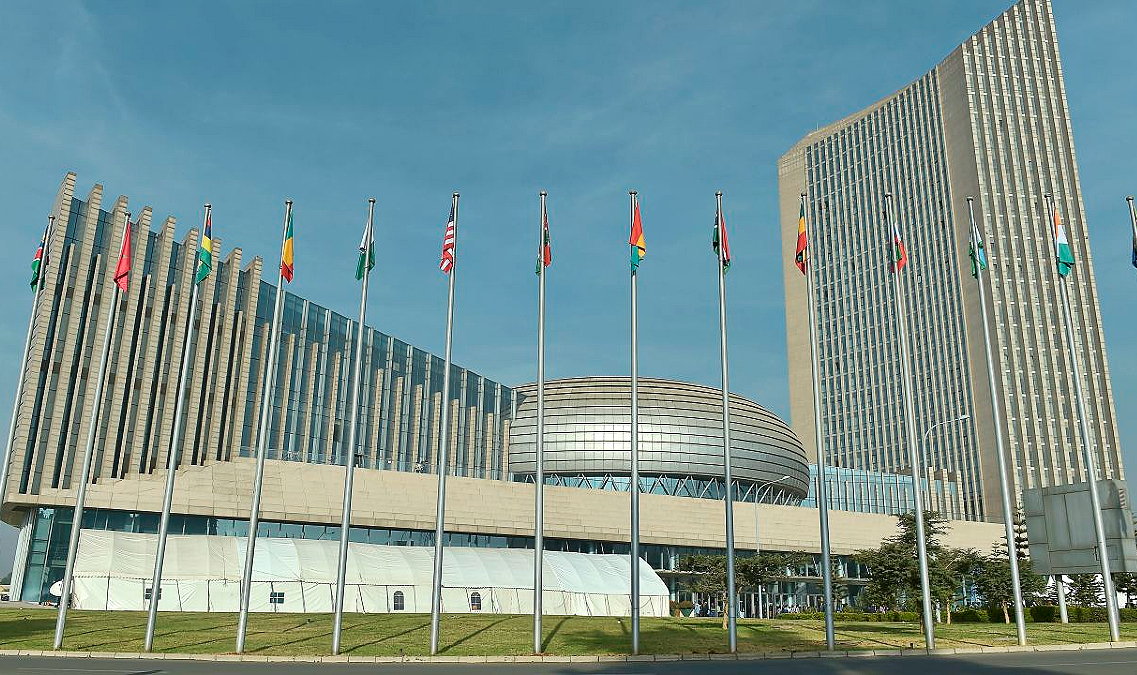
There is a city in Africa where the foreign ministers of 54 countries regularly gather to negotiate the future of more than 1.4 billion people. It is where the African Union maintains its headquarters – an institutional symbol of continental self-determination – and where the diplomatic footprint rivals that of Geneva or Brussels in its density of embassies, missions, and multilateral organizations.
That city is Addis Ababa, and it is often far less understood than its global significance warrants.
The Capital of African Diplomacy
Its modern political role traces back to 1963, when the Organisation of African Unity was founded in the Ethiopian capital and established its permanent seat there. The decision was not merely administrative. Ethiopia’s unique status as one of the only African states never formally colonized gave Addis Ababa a symbolic weight that few other cities could match at the time.
It was, in effect, a declaration that African diplomacy would be anchored in a place that had never fully ceded its sovereignty.
More than six decades later, that symbolism has been layered with institutional reality. The African Union now operates from a landmark headquarters complex – gifted by China – an architectural reminder of how external partnerships have become intertwined with Africa’s modern infrastructure development.
The city also hosts the United Nations Economic Commission for Africa, along with a wide range of continental and international bodies that have chosen Addis Ababa as their operational base. Heads of state and senior diplomats pass through frequently enough that high-level political traffic has become part of the city’s routine rhythm.
A City of Contrasts
Yet Addis Ababa is not defined by diplomacy alone. It is a city of striking contrasts, where the administrative machinery of a continent coexists with the turbulence and creativity of rapid urban change.
On one hand, there is the Addis Ababa Light Rail, the first of its kind in sub-Saharan Africa, moving thousands of commuters daily through a landscape that shifts constantly between construction sites, informal settlements, and newly erected high-rises. On the other hand, there is a city still deeply rooted in older rhythms of life – where centuries-old coffee ceremonies continue to structure social interaction even as a modern specialty coffee industry gains international recognition and investment.
Coffee itself, which originated in Ethiopia before becoming one of the world’s most traded commodities, is both heritage and export engine. In Addis Ababa, it is at once ritual and industry.
The Mercato, one of Africa’s largest open-air markets, operates as a sprawling economic system that defies easy categorization. Within its dense network of stalls and informal exchanges, goods move through supply chains that are often more adaptive than formal retail systems.
It is commerce at scale, but without the visual order typically associated with modern marketplaces.
Food, too, reflects this blend of continuity and evolution. Ethiopian cuisine – anchored in injera and a rotating range of richly spiced stews and legumes – has developed a global audience in recent years, though it remains underrepresented relative to its cultural depth and complexity.
Growth, Pressure, and Urban Dynamism
Underlying all of this is demographic pressure. Addis Ababa’s population continues to expand rapidly, placing strain on housing, transport, and public services. Yet this same density generates a kind of urban dynamism that is difficult to engineer artificially. It produces friction, but also innovation; constraint, but also cultural and economic experimentation.
In this sense, Addis Ababa is more than a seat of continental governance. It is a living laboratory of African modernity – part administrative capital, part cultural engine, part rapidly evolving megacity.
It is where Africa conducts its formal diplomacy, but also where it negotiates its informal futures. It is where policy is debated, but also where urban reality continually tests the limits of that policy.
To understand Addis Ababa is not simply to understand one capital city. It is to gain a clearer view of how a continent governs itself, adapts under pressure, and imagines what comes next.
Dishant Shah is a partner at Legion Exim, a company specializing in facilitating the export of high-quality engineering products directly sourced from manufacturers in India to Africa. His areas of expertise include new business development and business management.
