
News
Sudan: Bashir forced to step down after mass protests
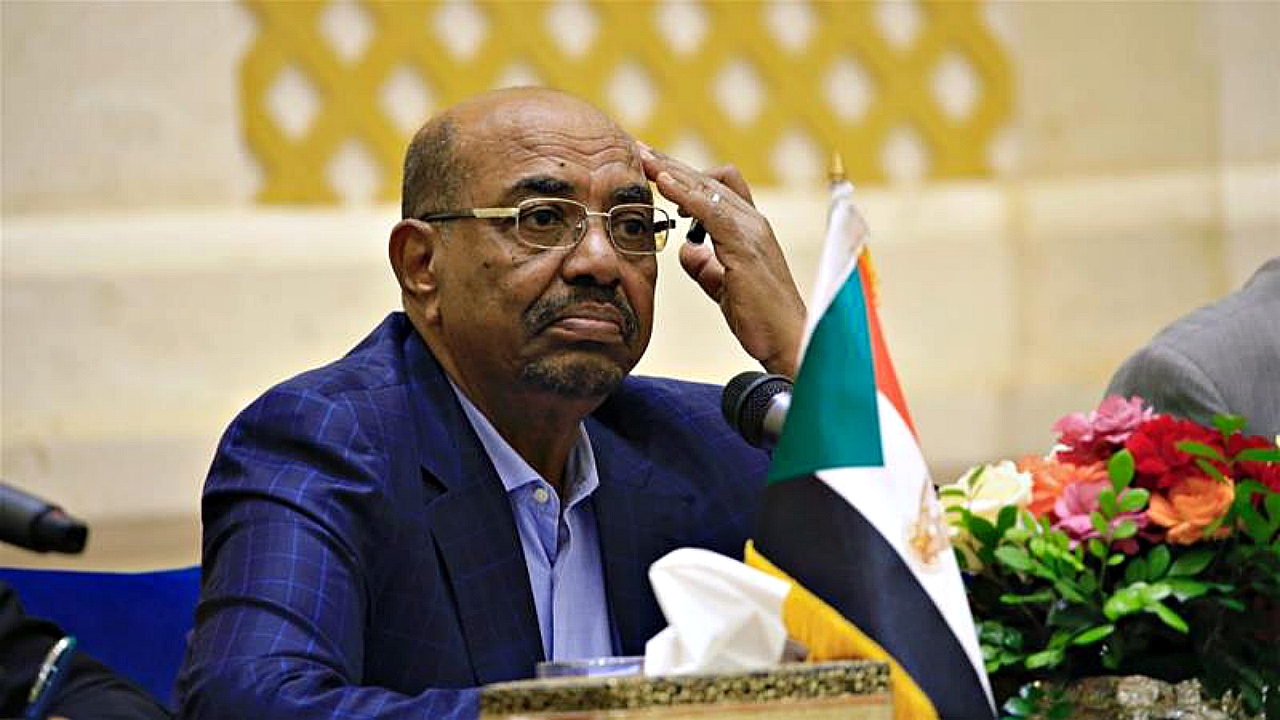
AP | Tens of thousands of Sudanese marched toward the center of the capital Khartoum on Thursday, cheering, singing and dancing in celebration as two senior officials said that longtime autocratic President Omar al-Bashir has stepped down after 30 years in power.
The circumstances of al-Bashir’s ouster after months of intensifying protests against his rule were not clear, however, and his whereabouts were unknown. The military told the nation to expect an “important statement” soon in an announcement on state TV in the morning.
Word of al-Bashir’s removal comes just over a week after Algeria’s President Abdelaziz Bouteflika, in power for 20 years, resigned in response to similar demonstrations. The mass protests bear striking resemblances to the popular uprisings in 2011 that swept across several Arab nations and ousted leaders in Tunisia, Libya, Egypt and Yemen.
The developments raised speculation that, behind the scenes, the military aimed to install one of its one in place of al-Bashir. Organizers of the protests that have drawn tens of thousands into the streets reject that, seeing it as a way for the armed forces to keep the power that it has held under al-Bashir. Instead, they demand a civilian transitional government.
One main organizer, the Sudanese Professionals Association, said the protest leaders were in talks with the military over the transition. Sarah Abdel-Jaleel, a spokeswoman for the association, told The Associated Press they will not accept a military coup and insist on an “unconditional stepping down of al-Bashir and his regime.”
Meanwhile, the movement called on protesters to keep up the pressure by continuing their main sit-in outside the military’s headquarters in Khartoum. “We are not leaving. We urge the revolutionaries not to leave the sit-in,” the association said, warning against attempts to “reproduce the old regime.”
Two officials in high positions in Sudan’s government and military, told the AP that the military was in talks about a transitional government after forcing al-Bashir to step down. They spoke on condition of anonymity because they were not authorized to talk to the media.
In an apparent concession to a demand of the protesters, the National Security and Intelligence Service said in a statement that all political detainees would be released. It did not indicate when the release would take place.
Sudan’s protests initially erupted last December with rallies against a worsening economy, but quickly escalated into calls for an end to embattled al-Bashir’s rule. They gained new momentum last week after Bouteflika’s resignation.
As the Khartoum sit-in surged in size, the government responded with an increased crackdown. Security forces tried repeatedly to break up the sit-in since Saturday.
Ahead of the expected army statement, Sudanese radio played military marches and patriotic music. State TV ceased regular broadcasts, showing only the statement promising the statement and urging the public to “wait for it.”
Thousands waited at the sit-in as crowds of protesters moved through the city converging on the site. The marchers waved flags, flashed “V for victory:” signs and sang and danced. Some rode on the roofs of cars, moving slowly and honking horns in celebration.
Al-Bashir came to power in a 1989 coup, leading an alliance of the military and Islamist hard-liners. Since then, the military has stuck by him, even as he was forced to allow the separation of South Sudan.
The protests that erupted in December have been the biggest challenge to his rule. Security forces responded from the start with a fierce crackdown. Al-Bashir banned unauthorized public gatherings and granted sweeping powers to the police since imposing a state of emergency in February. Security forces have used tear gas, rubber bullets, live ammunition and batons against demonstrators.
The military, however, has seemed more equivocal, stating its support the country’s “leadership” and pledging to protect its “achievements” — without mentioning al-Bashir by name. Army troops have not tried to stop protests and, in some cases, appeared to offer a measure of protection for the demonstrators.
Some in the protest movement have seen that as a willingness in the military to drop al-Bashir.
