
News
South Africa: President Zuma facing impeachment as top court rules he failed to uphold constitution
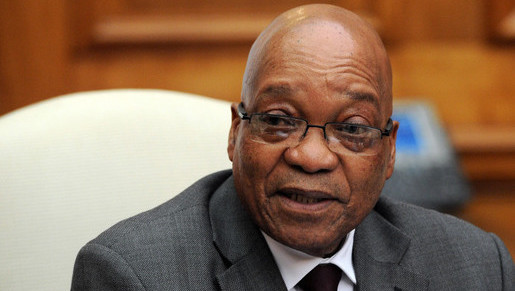
South African President Jacob Zuma “failed to uphold” the constitution when he did not pay back some of the state funds used to upgrade his private home, South Africa’s constitutional Court ruled on Thursday.
The ruling could significantly weaken the leader, who is fending off multiple accusations of alleged misconduct at the highest levels of government, though he still retained the support of powerful factions in his party, the African National Congress (ANC).
The main opposition party, the Democratic Alliance, said it would immediately begin impeachment proceedings against Zuma. While parliament has the power to remove him, ruling party lawmakers defeated a no-confidence vote against Zuma earlier this year.
Constitutional Court Chief Justice Mogoeng Mogoeng also said that parliament, which is dominated by the ANC, had failed in its obligations by not holding Zuma to account in the spending scandal.
Speaking for South Africa’s highest court, Mogoeng said Zuma should not have ignored a state watchdog’s recommendations that he should reimburse state funds spent on his rural home, known as Nkandla. The national treasury must calculate costs of upgrades unrelated to security at Zuma’s home within 60 days, and the president must repay that amount within 45 days thereafter, the court said.
Zuma “failed to uphold, defend, and respect the constitution as the supreme law of the land,” Mogoeng said.
In a statement, the ANC said it respects the unanimous judgment by the constitutional Court and that it has “full confidence in the judiciary” and the rule of law in South Africa. In a separate statement, the South African government said Zuma also respects the ruling and “will in consultation with other impacted institutions of state determine the appropriate action.”
Zuma is already under scrutiny because of allegedly improper links to the Guptas, a wealthy business family in South Africa. Questions about the extent of the Guptas’ influence have exposed some divisions within the ruling party, particularly after the country’s deputy finance minister said the Gupta family directly offered him the finance minister job in December, around the time that the incumbent, Nhlanhla Nene, was fired in a move that rattled markets.
Much of the Nkandla case hinged on whether the findings of the state watchdog, the Public Protector’s office, were legally binding. The court said the watchdog’s office, established in line with South Africa’s post-apartheid constitution, was designed to be a champion of good governance.
“The Public Protector is thus one of the most invaluable constitutional gifts to our nation in the fight against corruption,” Mogoeng said, comparing the office to David fighting on behalf of the citizenry against the “most powerful and very well resourced Goliath – the impropriety and corruption by government officials.”
Zuma’s office had said he was willing to reimburse some of the money spent on Nkandla. His critics said the offer was an attempt to avoid a court hearing, and opposition lawmakers took the case to court anyway.
The constitutional Court also ruled that the president must reprimand ministers involved in the matter. In 2014, a parliamentary committee, boycotted by opposition party lawmakers, had cleared the president.
“Public office bearers ignore their constitutional obligations at their peril,” Mogoeng said.
Copyright 2016 The Associated Press
