
Business
Nigeria opens ‘game changer’ billion-dollar deep seaport
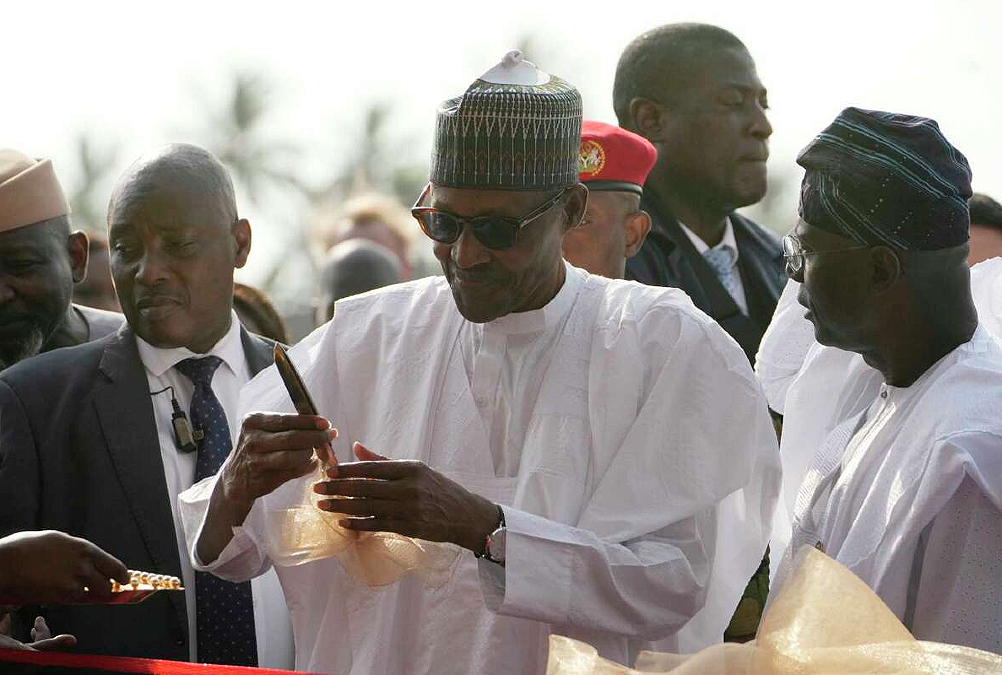
AP | Nigerian President Muhammadu Buhari has marked the opening of a US$1.5 billion, Chinese-funded deep seaport in the commercial hub of Lagos that authorities hope will help grow the West African nation’s ailing economy.
The Lekki Deep Sea Port is one of the biggest in West Africa and will create hundreds of thousands of jobs in addition to easing cargo congestion that costs billions of dollars in annual revenue, Lagos Gov. Babajide Sanwo-Olu said Monday.
The port – whose container terminal is able to handle at least 2.5 million 20-foot standard containers per year – will be operated as a joint venture between the Nigerian government, Lagos state, Singapore-based Tolaram Group and state-owned China Harbor Engineering Company.
Nigeria is Africa’s largest economy but growth has been stalled for many years because of poor infrastructure and mismanagement. Although it has 6 major seaports, more than 80 percent of the country’s imports are handled by just 2 of the ports in Lagos, where congestion has led to a massive loss in revenue as cargoes are often diverted to other West African nations.
Authorities say the new deep seaport on the eastern edge of Lagos would divert traffic from congested ports and shore up earnings, with expected economic benefits of more than US$360 billion.
As the port begins to operate with the first commercial vessel arriving Sunday, the Lagos governor said ships docking at the port “could be up to 4 times the size of vessels that currently berth at both Tin Can and Apapa ports,” the other two ports in Lagos.
The project would drive economic development not just for Lagos but for the entire country, according to Cui Jianchun, Chinese ambassador to Nigeria.
“This is (the) engine of the economy not only for Lagos but also for the Federal Republic of Nigeria,” Jianchun said. “This is equity of investment. This is not a loan, this is not borrowing – this is an investment.”
Agriculture and trade are key drivers of Nigeria’s economy, but widespread insecurity in the agricultural-rich north, dwindling foreign direct investments and endemic corruption have slowed economic growth amid reduced earnings from crude oil.
The federal government has turned to international lenders and funders to help grow the economy through critical projects, among them China, whose footprint is on some of Nigeria’s most important infrastructure such as rail networks and airport terminals.
