
Business
Dangote Refinery Aims for Global Dominance with Output Doubling
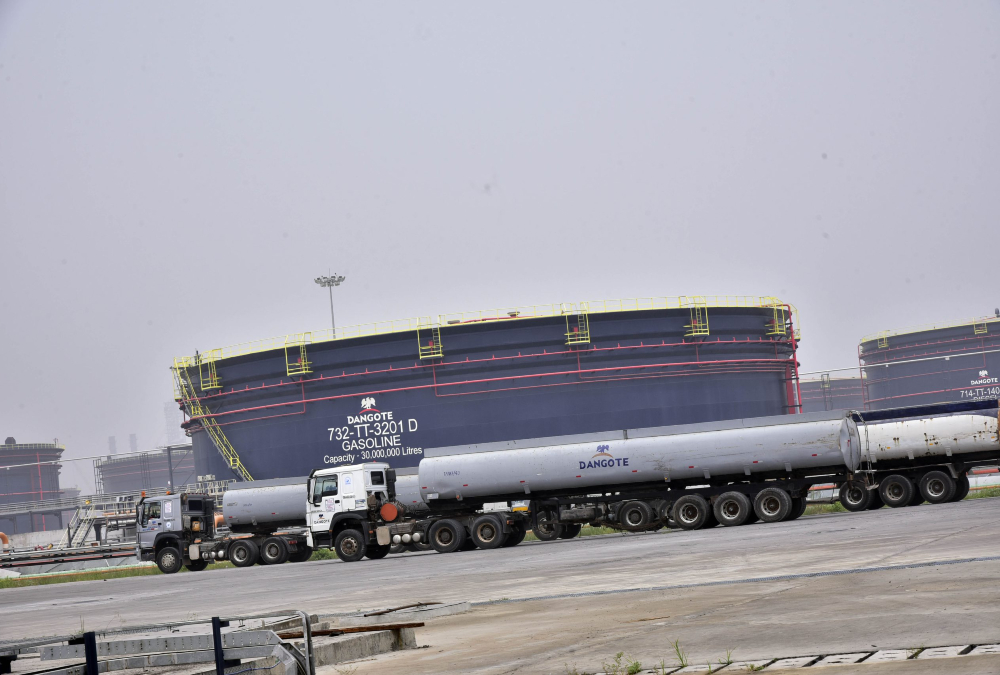
Aliko Dangote, Africa’s foremost industrialist, plans to more than double the capacity of his Lagos-based refinery – from 650,000 barrels per day (bpd) to 1.4 million bpd – potentially making it the world’s largest, surpassing India’s 1.36 million bpd Jamnagar complex.
Speaking with S&P Global, Dangote confirmed ambitions to secure Middle Eastern financing for the expansion, part of a broader vision to end Africa’s reliance on imported refined fuels. “We have to build the refinery again – here, not elsewhere,” he said, citing existing infrastructure at the Lekki site as a strategic advantage.
Since beginning operations, the Dangote Refinery has already turned Nigeria into a net exporter of diesel and jet fuel and significantly reduced petrol imports once sourced from Europe.
Engineers note the site was designed for scalability, with space for a second refining train and potential additions like a vacuum distillation unit to boost light product yields.
The company also plans to expand its petrochemical footprint, increasing polypropylene output from 1 million to 1.5 million metric tonnes annually and exploring linear alkylbenzene and base oil projects.
Despite global refining overcapacity – projected to exceed demand by 11.4 million bpd by 2030, mostly in Asia – Dangote rejects a model that leaves Africa dependent on foreign fuel. “Most African governments can’t build refineries,” he said, dismissing smaller national projects as “a drop in the ocean.”
To fund growth, Dangote secured a critical US$4 billion financing deal in August and is now pursuing strategic partnerships with Middle Eastern firms. The group will also list 5 – 10 percent of the refining business on the Nigerian Stock Exchange within a year, retaining 65 – 70 percent ownership.
The Nigerian National Petroleum Company Limited, which holds a 7.2 percent stake, may increase its share – but only after the refinery proves its operational and commercial viability.
Recent operational hiccups, including a September shutdown of the residue fluid catalytic cracker (RFCC), have raised concerns. However, Dangote’s team confirmed the unit restarted in early October and plans a month-long maintenance window – timed to avoid year-end demand peaks – without halting the entire complex.
As Africa’s energy demands swell – with Nigeria’s gasoline imports projected to double by 2030 – Dangote’s refinery could become the continent’s cornerstone for energy self-reliance, backed by private capital and industrial ambition.
