
Business
George Elombi Takes Helm at Afreximbank, Vowing a New Era for African Trade
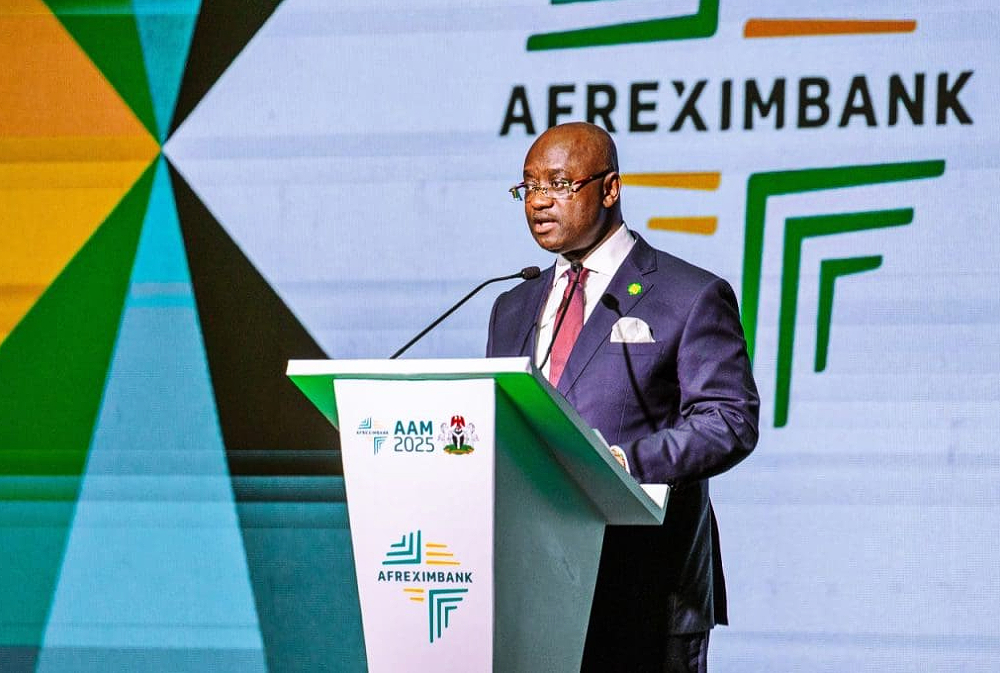
George Elombi was sworn in Saturday as the fourth president of the African Export-Import Bank (Afreximbank), succeeding Benedict Oramah at a high-profile ceremony in Cairo attended by African heads of state, global dignitaries, and business leaders.
Administered by Nigeria’s Finance Minister Wale Edun, Elombi’s oath marks the start of a new chapter for the pan-African multilateral institution – one defined by a sharp focus on value addition, strategic mineral processing, and deeper regional integration.
In his inaugural address, Elombi declared that Africa must move beyond raw commodity exports to “produce, process, and trade on its own terms.” To that end, he unveiled a new high-impact financing window dedicated to transforming raw minerals into semi-finished and finished goods through a Strategic Minerals Development Programme – aimed at capturing more value domestically and creating skilled jobs.
Central to his agenda is accelerating the African Continental Free Trade Agreement (AfCFTA). “Our value-added products need markets,” Elombi stressed, pledging intensified efforts to dismantle trade barriers, enhance cross-border infrastructure, and enable the seamless flow of goods, services, people, and capital.
Other priorities include catalyzing trade-enabling infrastructure, advancing financial innovation – including a potential Pan-African Digital Currency – and mobilizing diaspora and global African capital. He also reaffirmed Afreximbank’s commitment to maintaining robust capitalization, calling it essential for scaling transformative interventions.
Notably, Elombi defended the bank’s preferred creditor status as a treaty-based right – not a concession – underscoring the growing geopolitical scrutiny facing successful African-owned institutions. “We are targeted not because we fail, but because we succeed,” he said.
With a decade-long roadmap centered on production, partnership, and pan-African self-reliance, Elombi’s leadership signals a strategic pivot toward economic sovereignty for Africa.
