
Business
The Billion-Naira: Why Real Business Wisdom Often Lies Outside the Classroom

By John Dale
A few years ago, if someone had told me I would soon sign a billion-naira palm oil export contract with a business partner who never set foot in a formal classroom, I would have dismissed it as fiction.
Yet that’s exactly what happened.
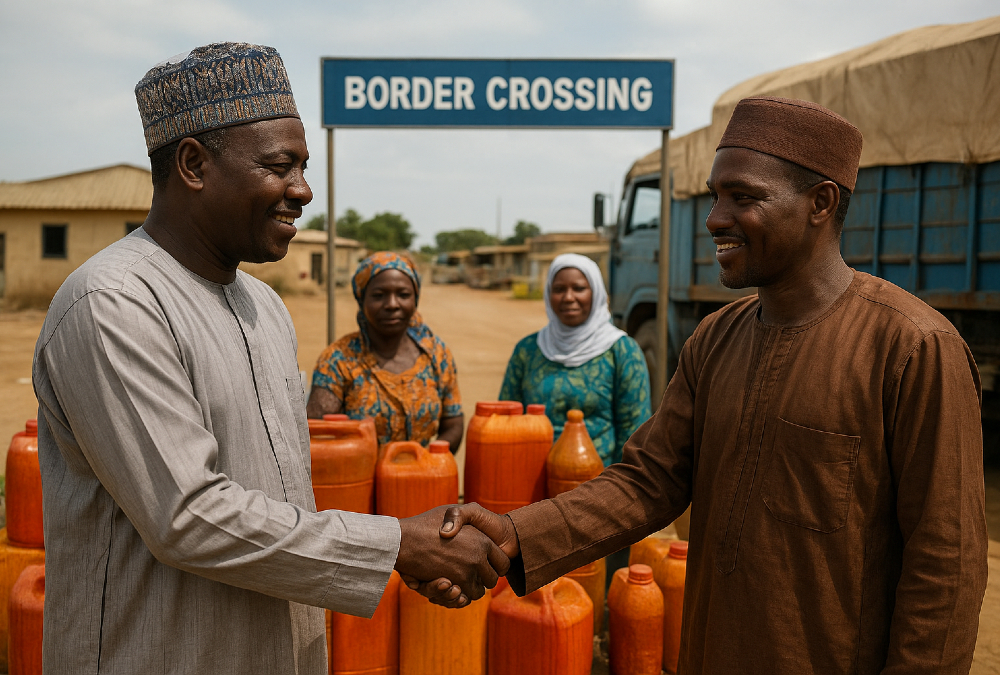
My co-signatory – a man with no formal education – now oversees the cross-border delivery of thousands of kegs of Nigerian palm oil into Niger Republic. He manages logistics, coordinates suppliers from multiple states, and calculates margins in his head with a speed and accuracy that rivals seasoned financial analysts armed with spreadsheets.
He can’t draft a business plan in Microsoft Word. But he reads markets like a strategist.
He doesn’t speak polished English. Yet traders across West Africa trust him more than they do many MBA-holders.
This paradox lies at the heart of Africa’s informal yet immensely powerful traditional trade networks – especially in commodities like palm oil, where real value is built on trust, consistency, and an intuitive grasp of supply and demand.
The Quiet Power of Traditional Trade
Palm oil is not a glamorous commodity. It doesn’t trend on LinkedIn or attract venture capital.
But it moves economies. In Nigeria alone, it supports millions of livelihoods – from smallholder farmers to cross-border traders – and remains one of the continent’s most resilient agro-commodities.
What makes this sector thrive isn’t slick pitch decks or digital dashboards. It’s grounded in fundamentals: real goods, real demand, and real relationships.
There’s no room for speculation when your inventory is sitting in kegs under the sun and your buyers expect delivery in 72 hours.
In this world, “uneducated” doesn’t mean uninformed. Many of the most successful palm oil traders possess a form of commercial intelligence honed through decades of market immersion – what economists might call tacit knowledge.
They understand risk not through Monte Carlo simulations, but through lived experience. They build trust not via LinkedIn endorsements, but through consistent delivery and handshake deals that hold more weight than written contracts.
The Education Illusion
Meanwhile, many formally educated entrepreneurs struggle to gain traction in this space – not for lack of intellect, but because they overcomplicate what is essentially a straightforward business. They wait for perfect data, ideal conditions, or institutional validation, while their “unlettered” counterparts act decisively, adapt quickly, and reinvest profits with discipline.
This isn’t to diminish the value of formal education. Far from it. But it is a reminder that credentials alone don’t guarantee commercial acumen.
True business wisdom often emerges not in lecture halls, but in the bustling alleys of Ogbete Main Market in Benin City or the dusty border towns between Kebbi and Niger – where every transaction is a lesson in human behavior, logistics, and resilience.
A Lesson for Africa’s Aspiring Entrepreneurs
As Africa seeks to industrialize and integrate its markets under frameworks like the African Continental Free Trade Area (AfCFTA), there’s much to learn from these traditional trade ecosystems. They demonstrate that scale doesn’t always require formal structure, and that integrity can be a more powerful currency than capital.
My billion-naira partnership stands as proof: real intelligence isn’t measured by diplomas, but by results. And sometimes, the most valuable business education happens not in boardrooms – but in the heat of the marketplace, with your hands on the product and your eyes fixed firmly on the margin.
John Dale is an agricultural expert, procurement specialist, and export entrepreneur with 20+ years of experience in Nigeria’s agro-commodity value chain. He has deep expertise in farming, sourcing, storage, and international trade of commodities such as cashew, palm oil, ginger, and cocoa. As Co-Founder of Storgit Ltd., an agro-fintech company, he develops innovative solutions for commodity storage, trading, export, and livestock investment. Passionate about reducing post-harvest losses, strengthening procurement systems, and improving export infrastructure, John is dedicated to building a digital, efficient, and inclusive future for African agriculture.
