
Business
Kenyan Farmers Ditch Coffee For Bananas as a Cash Crop
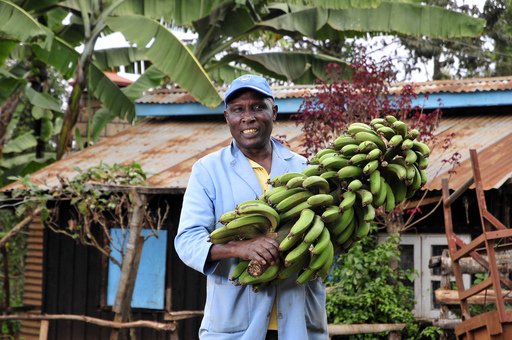
After years of struggling to make their living growing coffee, smallholder farmers around the Mt. Kenya region are shifting their focus to bananas and investing in irrigation in the hopes of taking the thirsty crop to the export market. Coffee has long been the main cash crop in the area, grown alongside maize, one of Kenya’s staple foods.
“But with the unreliable rainfall that has affected the maize yield, and brokers who have cut off the cash flow from coffee, we have settled for bananas, which give us food for our children and money to take care of our families,” said Jacinta Mugo, chairperson for the Ramini Banana Farmers Association.
Banana is a major staple among a variety of communities in Kenya, but until recently the crop was never considered to have commercial potential, with farmers only growing small patches for family use. Mugo decided to try her hand at growing bananas on a full acre of land in 2009. After realizing the potential of the crop, she uprooted coffee from her remaining two acres to concentrate on bananas.
Though it takes much more water to grow bananas than to grow coffee, farmers say that the crop generates enough income to pay for irrigation, to buy maize grown elsewhere, and to cater for other family needs.
Higher Incomes
“The monthly income from bananas is ten times more than I used to get from coffee,” said banana farmer Canon Jean Munene, a member of the Ndieni Banana Growers group. In order to increase the crop’s commercial potential, half a million farmers belonging to Kirinyaga County’s 86 banana growers’ associations have joined together to take out a bank loan worth 11 million shillings ($130,000) to invest in a 23 million shilling ($271,000) irrigation project that should be more stable, cost effective and reliable than the systems they currently use.
“We have decided that with or without rainfall, we will scale up farming of the crop,” said Mugo of the Ramini group. Under the umbrella of the Karia Water Project, the groups have already paid a 10 percent down payment on the loan. The rest of the project will be funded by a grant from the Small-Scale Irrigation Scheme, a local nongovernmental organization.
“This is going to take our farmers to a different level,” said Flecia Wambui, chairperson for the Kirinyaga arm of the Banana Growers Association of Kenya, which trains smallholder banana farmers on best practices and links them to the markets through its networks. She also added, “We have already initiated discussions with the Foreign Affairs Ministry as we eye the export market,” she said.
