
A Diaspora View of Africa
Is There African Blood in the British Royal Family?

By Gregory Simpkins
Those of us who consume British television shows and movies often see a multicultural society in which Black and White citizens mix easily and Blacks hold high positions in government, but is that a true picture of the reality on the ground? Some experts argue that Great Britain remains a racist country, citing ongoing disparities in education, employment and law enforcement.
For instance, Black people in the UK are more likely to face police stop-and-search and experience racial discrimination in education and employment.
Andrew Young, the last of the great civil rights leaders and former UN Ambassador, has made statements criticizing racism in various countries, including the United Kingdom. While there’s no direct evidence of him explicitly calling Great Britain a racist nation, his comments and actions suggest he acknowledged systemic racism in the UK.
Ambassador Young’s criticism of British policies and attitudes toward racial minorities is well-documented. He has spoken out against racism and advocated for human rights, often drawing parallels between the US civil rights movement and struggles against apartheid and colonialism in Africa.
The Meghan Markle Controversy
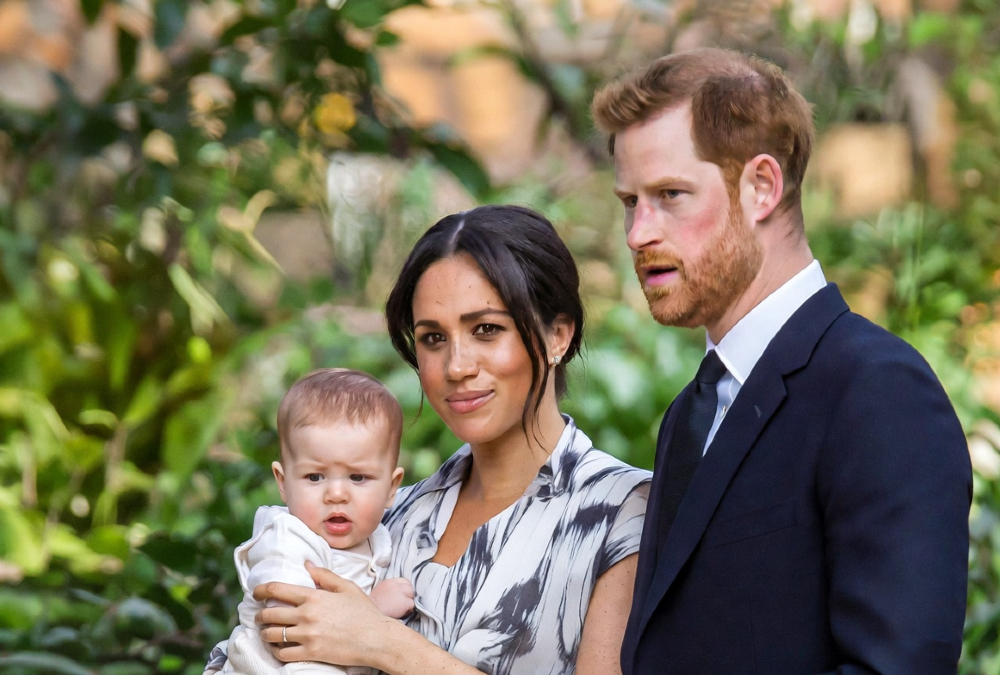
The racial controversy a few years ago surrounding Meghan Markle, Duchess of Sussex, again raised the issue of British racism – this time at its highest levels, It stems from her experiences with racism and colorism within the British royal family and media. In an interview with Oprah, Meghan revealed that some members of the royal family expressed concerns about the skin tone of her unborn child, Archie, suggesting the child would be “too dark”.
This sparked widespread outrage and accusations of racism.
Markle, who is biracial and very light-skinned, had previously spoken about feeling like she didn’t fit into either Black or White communities and facing pressure to choose between her identities. Critics argue her comments on biracialism have been alienating and rooted in colorism, while others see her experiences as a reflection of systemic racism.
The backlash against Markle also highlighted issues of representation, likability stereotypes and White supremacy. Many see her treatment as a manifestation of anti-Black racism and sexism, with some arguing the royal family’s response perpetuates racist narratives.
But is there a hidden reason for their sensitivity about skin color connected to the royal family?
The portrayal of British Queen Charlotte as Black in the television show Bridgerton is a creative choice made by the show’s producers, inspired by historical debates about her ancestry.
Is There African Heritage in the British Royal Family?
The genetics of racial traits is complex, involving multiple genes and environmental factors. Here’s a breakdown:
Polygenic inheritance: Traits like skin color, hair texture and facial features are influenced by multiple genes, making it hard to predict their inheritance.
Incomplete dominance: Genes from each parent can blend, resulting in a mix of traits.
Genetic variation: Populations have genetic variations that contribute to differences in traits.
In real life, genetic principles have led to:
Mixed-race offspring: Children of parents from different racial backgrounds often exhibit a combination of traits.
Genetic diversity: Populations with a history of intermarriage, like Brazil or South Africa, show a wide range of physical characteristics.
Ancestry and admixture: Genetic testing reveals complex ancestry patterns, with many people having ancestors from multiple regions.
A child of a Black and White parent may inherit a mix of skin tones, influenced by multiple genes. A person with one Black and one Asian parent may have curly or straight hair, depending on the genes inherited.
Racial characteristics can appear to “skip” generations due to recessive genes that allow traits to be hidden in one generation and reappear in the next or succeeding generations. Shuffling of genes during reproduction can lead to unexpected combinations.
Blending of traits can mask or reveal characteristics.
For example, a grandchild might have a darker or lighter skin tone than their parents, due to inherited genes. A child also might inherit curly hair from a grandparent, even if their parents have straight hair.
This phenomenon is more noticeable in populations with complex ancestry and intermarriage.
Racial intermarriage in early and medieval Europe was relatively rare, but it did occur, particularly along trade routes, where merchants and travelers from Africa, Asia and the Middle East interacted with Europeans, leading to some intermarriage. In border regions, areas like Spain, Sicily and the Balkans had mixed populations due to conquests and cultural exchange.
Royal marriages often involved foreign partners, sometimes with African or Asian ancestry.
The Roman Empire had African and Asian connections, with some intermarriage. In Moorish Spain, Muslims, Jews and Christians coexisted, with some intermarriage. Even Norse explorers interacted with people from Africa and Asia, potentially leading to intermarriage.
Under Moorish rule (711-1492 CE), the Iberian Peninsula (modern-day Spain and Portugal) saw significant racial intermarriage and cultural exchange. Mudejars, Muslims living under Christian rule, often intermarried with Christians.
This period shaped the Iberian Peninsula’s unique cultural heritage, influencing language, art and architecture.
Queen Charlotte’s Lineage and Legacy
The portrayal of British Queen Charlotte as Black in the television show Bridgerton is a creative choice made by the show’s producers, inspired by historical debates about her ancestry, but some historians argue that Queen Charlotte had African ancestry through her descent from Margarita de Castro y Sousa, a 15th-century Portuguese noblewoman, who was related to King Afonso III of Portugal and his Moorish lover, Madragana.
However, others dispute this claim, citing the lack of conclusive evidence and the fact that the term “Moor” was often used broadly to refer to people from North Africa, regardless of their specific ancestry. Many also argue that even if Queen Charlotte had some African ancestry, it’s unlikely to have had a significant impact on her appearance, given the distance between her and her presumed African ancestor.
Queen Charlotte had 15 children with King George III, and their descendants have gone on to shape European royal history. Here are her children:
- George IV (1762-1830) – became King of the United Kingdom
- Prince Frederick, Duke of York and Albany (1763-1827)
- William IV (1765-1837) – became King of the United Kingdom
- Charlotte, Princess Royal (1766-1828) – married King Frederick of Württemberg
- Prince Edward, Duke of Kent and Strathearn (1767-1820) – father of Queen Victoria
- Princess Augusta Sophia (1768-1840)
- Princess Elizabeth (1770-1840) – married Frederick VI, Landgrave of Hesse-Homburg
- Ernest Augustus, King of Hanover (1771-1851)
- Prince Augustus Frederick, Duke of Sussex (1773-1843)
- Prince Adolphus, Duke of Cambridge (1774-1850)
- Princess Mary (1776-1857) – married Prince William Frederick, Duke of Gloucester and Edinburgh
- Princess Sophia (1777-1848)
- Prince Octavius (1779-1783) – died in childhood
- Prince Alfred (1780-1782) – died in childhood
- Princess Amelia (1783-1810)
Some notable descendants of Queen Charlotte include:
- Queen Victoria – granddaughter of Queen Charlotte and mother of many European monarchs
- King George V – great-grandson of Queen Charlotte and father of Kings Edward VIII and George VI
- Queen Elizabeth II – great-great-granddaughter of Queen Charlotte
- King Felipe VI of Spain – descendant of Princess Beatrice, Queen Charlotte’s daughter
I have stated all that to explain that the strain of African blood in the British royal family, if accurate, would not be pronounced. One can have African blood despite how light your complexion is.
In my life, I have known several people who could have easily passed for white had they chosen to do so. It didn’t mean they lacked African heritage.
It’s worth noting again that the Bridgerton’s producers have acknowledged that their portrayal of Queen Charlotte is fictionalized, with Shonda Rhimes stating that they took “one possible fact” and built a world around it.
Still, it’s legitimate to wonder whether members of the British royal family felt that a more obviously Black child would uncover something in their lineage they would prefer to stay hidden. They needn’t have worried, though, Both of Meghan Markle’s children look quite White even though they are at least one-quarter Black.
Gregory Simpkins, a longtime specialist in African policy development, is the Principal of 21st Century Solutions. He consults with organizations on African policy issues generally, especially in relating to the U.S. Government. He further acts as a consultant to the African Merchants Association, where he advises the Association in its efforts to stimulate an increase in trade between several hundred African Diaspora small and medium enterprises and their African partners.
