
Business
Is Africa Finally Rising?: Determining Myth or Reality
Growth in Public and Private Sector Initiatives

Governments, corporations, non-profits, and international organizations seem to be partnering together to tackle different challenges. The prevailing wisdom focuses on integrated solutions, while recognizing that each country has its own strengths and weaknesses.
The World Bank unveiled a new Africa strategy addressing:
1) competitiveness and employment, covering all traded goods and services, and
2) vulnerability and resilience, covering macroeconomic shocks.
Underlying these priorities is an emphasis on governance and public sector capacity. The World Bank seeks to strengthen citizens’ voices using communications technologies and is building capacity of African leaders through training and peer networks. The strategy will be implemented in partnerships among governments, businesses, Non-governmental organizations (NGOs), and other aid bodies.
The United Nations recommends regional integration as a means to achieve economic development, such as integrating infrastructure, harmonizing standards and regulations, developing common approaches to macroeconomic policy, and sharing management of natural resources. Integrating would lead to a regional industrial policy because of the presence of market scale, large labor pools, diversified resources and a production base, which taps into the trend of growing urbanization in Africa. Integration will be achieved through policy decisions and initiatives made by African leaders and by African regional bodies.
A number of investment firms are investing heavily in Africa. Helios Investment Partners, an investment firm founded by Nigerians, is nearly fully subscribed to its $900 million fund, the largest private equity fund for Africa. The US-based Carlyle Group is setting up offices in South Africa and Nigeria.
The continent has seen a major expansion of the banking, telecommunications, and other services sectors, fueling growth across the continent. In Angola, retail banking is expected to grow 6.8 percent a year and telecommunications 5.5 percent until 2020. Nigerian telecommunications subscribers grew from 0 in 2000 to 63 million in 2008. Since 2000, Africa has added 316 million new telecommunication subscribers. Penetration of banking, telecommunications and other services has been less substantial in transition economies, such as Ghana and Senegal, and lower income countries, such as Ethiopia, and Mali.
A new $650 million West Africa Cable System (WACS), funded by consortium of foreign and African telecommunications operators will be connecting the continent. With 15 stations in West African countries; the system is expected to go commercial in early 2012, providing for Africa’s present and future telecommunications needs, including broadband. A 17,000-km Africa Coast to Europe (ACE) cable is also expected to be launched in 2012, connecting even more of West Africa. Countries that do not have cable access rely on expensive satellite connections and have limited Internet bandwidth.
Only five percent of global foreign direct investment (FDI) flows go to Africa. FDI in Africa is increasing though. It is expected to reach $40.8 billion in 2011, up from $32 billion in 2010.
Conclusion
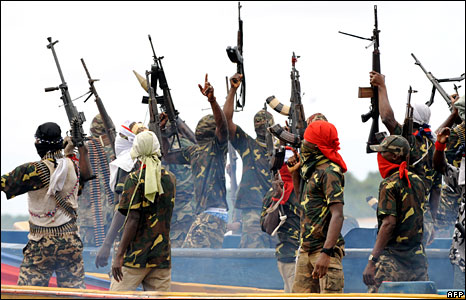
After an examination of Africa’s multitude of challenges and opportunities, the answer to the question “Is Africa Rising?” is “Yes, but…” The “but” reflects that work needed to be done by Africa’s governments, private sectors leaders, NGOs, and all the international partners to make the growth sustainable. Growth will only be maintained across the continent when peaceful conditions exist. Investors need to know that a change in government will not results in the nationalization of their companies or in sustained violence, precluding the business from operating. More of the wealth from the commodities market also needs to reach the people living in the regions where the commodities are produced because corruption and lack of opportunity will lead to violence.
Source: Globalization 101
