
News
Holness calls for end of ties between gang leaders and politicians
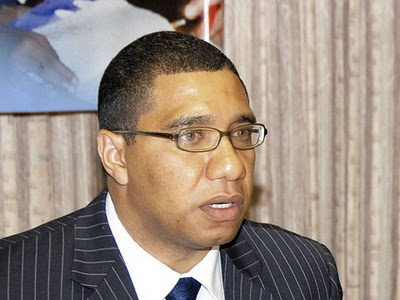

Jamaica Prime Minister., Andrew Holness
In the battle-scarred slum of Tivoli Gardens, Latoya Brown lavishes thanks on two powerful men who have taken care of her: a former top politician and a drug kingpin.
Brown, 30, credits ex-Prime Minister Edward Seaga for building her housing project in the 1960s and promptly filling it with partisans of his Jamaica Labor Party. Her other patron is gang leader Christopher “Dudus” Coke, who for decades ran the slum by doling out public services the government could never offer and enforcing a lawless, violent order. Come election time, Coke’s brutal Shower Posse gang made sure residents voted for Seaga’s party.
“We’re always going to keep it Labor,” said Brown, on a landing of the sun-parched complex, long the most notorious ghetto in a bleak gash of gritty neighborhoods in West Kingston.
Such symbiotic relationships between politicians and criminals have long been, in fact, the rule in Jamaica’s sprawling slums, which are separated into areas loyal both to underworld bosses and one of the island’s two clanlike parties. With elections looming in weeks, Jamaica’s new prime minister, Andrew Holness, is saying it’s time to finally cut the link between the country’s legal and illegal power brokers.
His predecessor, Bruce Golding, resigned last month in part due to controversy over his reluctance to carry out a U.S. extradition request for Coke, whose slum stronghold was the heart of the Jamaican leader’s constituency.
“Jamaica is yearning, crying out, for a new politics to emerge,” Holness said at the start of his inaugural speech. “Zones of political exclusion are incompatible with freedom, and aspects of our politics are an affront to liberty. It is time to end garrison politics.”
Holness has invited opposition leader Portia Simpson-Miller of the People’s National Party to walk with him through one-party areas in a symbolic gesture of change. He maintains that this will lead to concrete steps, as yet unidentified, to remove slum neighborhoods known as garrisons from the political landscape.
But Simpson Miller insists that Holness must first agree to a program of “social transformation” to help the slums before any symbolic walks can happen. Simpson Miller is a former prime minister who represents a powerful garrison constituency and whose party controls more politicized slums than Labor. She’s complained that Holness’ use of the word “garrison” only serves to stigmatize inner city communities.
