
Life
Haiti: Debate rages as to source of cholera
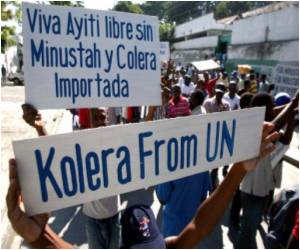

The death rate from the Haiti cholera epidemic that has killed more than 7,000 people over the past two years has finally ebbed, but the debate about the source of the disease has only grown more heated.
That renewed controversy came into sharp focus following the recent release of a study led by a University of Maryland cholera expert renowned in the scientific community.
Challenging prevailing wisdom, the study found that Haiti had not just one cholera strain but a second one that may have been lurking undetected prior to the arrival of a United Nations peacekeeping battalion from Nepal. Many finger the battalion as the chief culprit for a disease that has sickened more than half a million people. The study fell short of explicitly blaming the epidemic on the newly discovered strain but said it was a factor.
It was enough to re-ignite discussion about the disease and heighten political tensions between two camps who have argued over whether it was humans or the environment that could have introduced cholera to Haiti.
The report added that a “perfect storm” of environmental circumstances in 2010 enabled the bacteria to surface, as Haiti was hit by a massive earthquake, a hurricane and a “very hot summer season.”
Only a few months after a massive earthquake hit the country, cholera had popped out of seemingly nowhere even though there had been no previously documented cases of cholera.
Following the outbreak in Haiti’s biggest river, the Artibonite, the disease raged through the country’s waterways and appeared in all 10 administrative departments a month later.
