
Life
Haiti: Debate rages as to source of cholera
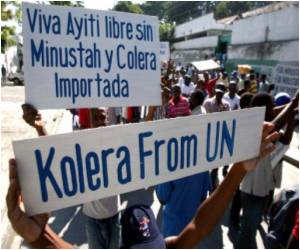
The report is being put under the microscope not just by public health experts and officials but by advocates of various political stripes who want to either blame the U.N. peacekeeping force for the epidemic or absolve the mission of responsibility. The world body is at the center of a legal complaint even though it enjoys immunity in Haiti and other countries because of a Status of Forces Agreement. The outcome could change the way the U.N. missions can be held legally accountable.
The investigations come as Haiti sees cholera fatalities taper amid a widespread sanitation campaign, coupled with vaccinations.
Meanwhile, the U.S. Centers for Disease Control and Prevention (CDC) in Atlanta and the U.N.’s World Health Organization argued that the source might never be found and that finding the answer wasn’t a priority. Still, suspicion grew that peacekeepers were at fault amid reports of sanitation problems at a base that was housing U.N. troops from Nepal. Anti-U.N. protests followed, and U.N. Secretary General Ban Ki-moon ordered an investigation.
The resulting report revealed that there was a “perfect match” between cholera strains found in Haiti and Nepal.
(More: Haiti: Clinton affirms that UN Peacekeeper was cholera carrier)
A study published in a CDC journal, however, said evidence strongly indicated U.N. involvement: “Our findings strongly suggest that contamination of the Artibonite and 1 of its tributaries downstream from a military camp triggered the epidemic.”
Led by Renaud Piarroux, the article also said there is “an exact correlation” in time and place between the arrival of the Nepalese battalion from an area of its South Asian homeland that was experiencing a cholera outbreak and the appearance of the first cases in a river near a U.N. base a few days later.
