
Opinion
Eritrea: A country on the path to self-reliance after rejecting foreign aid
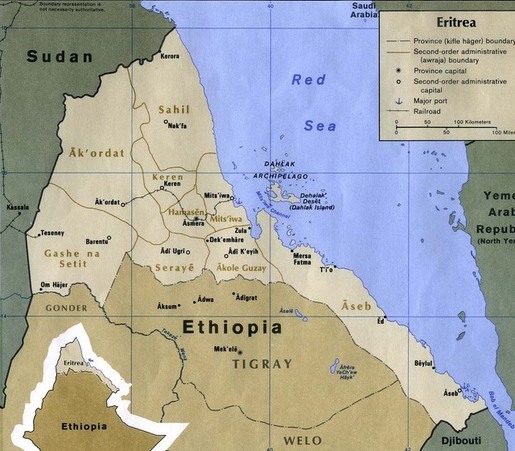
Eritrea – a small east African country implemented its self-reliance initiative – it did something that at the time, was virtually unheard of in sub-Saharan Africa. It turned down foreign aid.
With a president who vows not to lead another “spoon-fed” African country “enslaved” by international donors, Eritrea, a small, nation on the Horn of Africa, walked away from more than US$200 million in aid in 2006, including food aid from the United Nations, development loans from the World Bank and grants from international charities to build roads and deliver healthcare.
The country’s president Isaias Afwerki, a former Marxist rebel who has led Eritrea since its independence from Ethiopia, defends the nation’s exercise in self-reliance, even if it results in short-term hardships. He says it is crucial not only to the long-term survival of his country, but also to that of his continent.
“We need this country to stand on its 2 feet,” Isaias said in an interview. Fifty years and billions of dollars in post-colonial international aid have done little to lift Africa from chronic poverty, he said.
“These are crippled societies,” Isaias said of countries whom he described as relying on donors rather than developing their economies. “You cannot keep these people living on handouts because that does not change their lives. Anyone who takes aid is crippled. Aid is meant to cripple people. Governments in Africa and elsewhere are not allowed to write their own programs. And when it comes to implementing programs, it deprives you of building institutions and the capacity to implement your programs.
We need to write our own programs in the first place. We need to articulate on the projects we write. We need to have a comprehensive strategy, plans on how to implement those programs. Unless we do that on our own, we cannot possibly imagine that we are achieving any of the goals – millennium or non millennium.”
But can Eritrea’s government fill the void?
The self-reliance program began over a decade ago but accelerated sharply in 2005. Relying on its meager budget and the conscription of about 800,000 of the country’s citizens, the program so far has shown promising results. Measured on a variety of U.N. health indicators, including life expectancy, immunizations and malaria prevention, Eritrea scores as high, and often higher, than its neighbors, including Ethiopia and Kenya.
It might be one of the most ambitious social and economic experiments underway in Africa. But unfortunately, Eritrea is not getting much credit. Instead, the government increasingly finds itself in the international doghouse.
The Eritrean government asked all U.S. based non-governmental organizations (NGOs) to leave the country – a move that was not taken to well by Washington. The United States responded by labeling Eritrea a pariah state and included it to its’ list of state sponsors of terrorism.
