
Business
Dealer Franchise Retail vs Agency Models: Africa’s Automotive Future at a Crossroads
Why Africa’s shift from the franchise dealer model to agency-based automotive retail could reshape the continent’s car industry – and who stands to benefit most.

By Des H Rikhotso
For the better part of a century, the franchise dealership has served as the backbone of automotive retail worldwide. Manufacturers built cars; dealers sold them. The arrangement seemed immovable – cemented by capital, regulation, and the sheer inertia of an industry allergic to disruption.
Yet across Africa, that edifice is showing cracks, and a new commercial architecture is beginning to take its place.
The agency model – in which Original Equipment Manufacturers (OEMs) retain control of pricing, inventory, and customer data while dealers transition from independent stockists to brand-commissioned agents – is no longer a theoretical exercise. It is arriving on the continent, and the questions it raises are urgent: Will it work in markets defined by infrastructure deficits and vast geographic complexity?
And critically, could it finally lower the drawbridge to a generation of African entrepreneurs who have long been locked out of the industry?
The Franchise Model’s High Walls
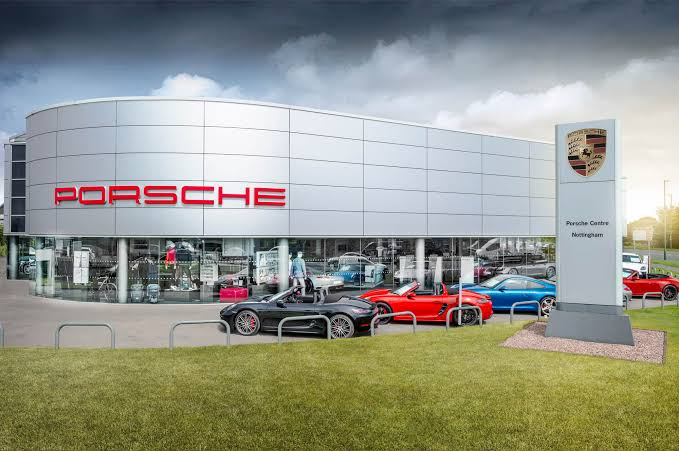
The traditional franchise dealership model has never been a low-barrier business. Entering the sector demands substantial capital: purpose-built showrooms conforming to exacting brand standards, large vehicle inventory held on credit, proprietary diagnostic equipment, and trained technicians.
In Europe or North America, where credit is accessible and real estate markets are mature, ambitious entrepreneurs can navigate these hurdles. In most of sub-Saharan Africa, they cannot.
The numbers tell the story. OEM franchise agreements routinely require upfront investment commitments running into the millions of dollars – sums that place ownership firmly in the hands of established conglomerates, foreign-owned groups, and a narrow domestic elite.
For the overwhelming majority of aspiring African business people, the dealership door has simply never been open. This is not merely an economic inefficiency; it is a structural barrier with deep historical roots.
What the Agency Model Actually Means
Under the agency model, the OEM steps to the center of the transaction. It sets the price – non-negotiable, transparent, and uniform across all touchpoints. It owns the inventory until the moment of sale. It collects and controls the customer data.
The dealer, recast as an “agent,” handles the physical side of the relationship: the test drive, the handover, the aftersales service. In exchange, the agent earns a fixed commission per vehicle sold, rather than the margin-based profit of the traditional franchise.
For the customer, the promise is significant: no more haggling, no showroom-floor pressure tactics, no price discrepancies between one dealership and the next. For the OEM, the gains are equally compelling – direct access to buyer data, greater control over brand experience, and the ability to manage inventory dynamically across a network rather than having unsold stock siloed at individual dealers.
The model does, however, impose demands of its own. A functioning agency network requires robust digital infrastructure: reliable e-commerce platforms, integrated inventory management systems, seamless payment processing, and customer relationship management tools that can operate consistently across diverse markets.
In a continent where internet penetration remains uneven and power supply unreliable in many regions, these are not trivial requirements. The transition also demands a fundamental reorientation of dealer culture – from entrepreneurial risk-takers managing their own P&L to service-oriented brand representatives working within tightly defined parameters.
Opening the Door: The Agency Model and Black Entrepreneurship
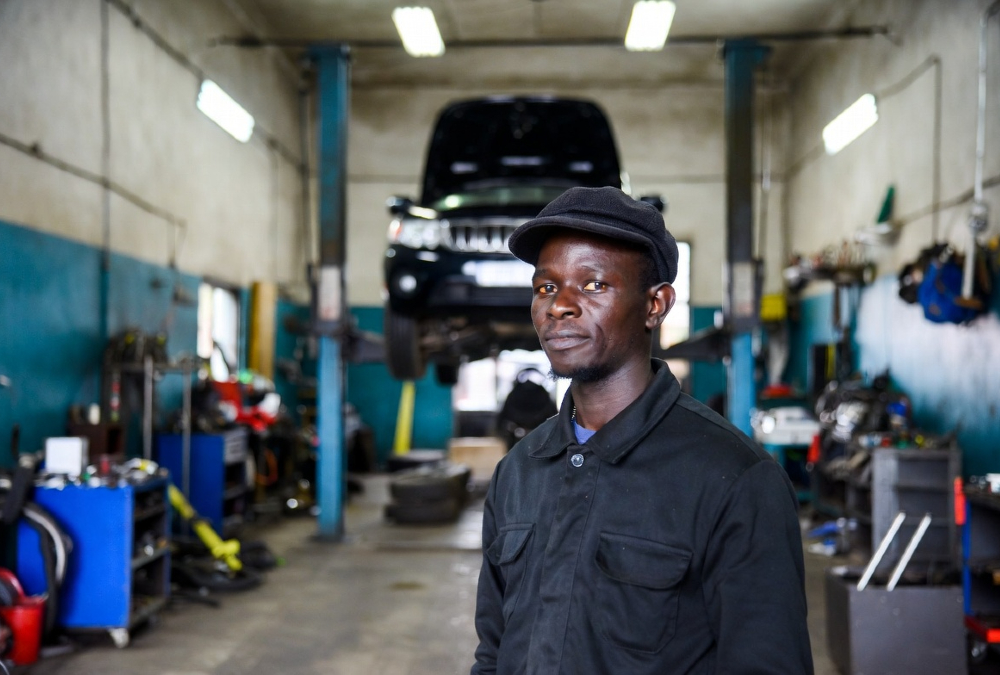
Perhaps the most transformative – and underappreciated – dimension of the agency model’s arrival in Africa is its potential to democratize automotive retail in ways the franchise model never could. Because the OEM absorbs inventory risk and removes the need for agents to finance large vehicle stockpiles, the capital threshold for market entry collapses dramatically.
An entrepreneur in Lagos, Accra, Nairobi, or Lusaka no longer needs to secure millions in credit lines or hold a complex franchise agreement to participate meaningfully in automotive retail. Instead, a well-located premises, a trained team, and a credible service capability can be sufficient.
This structural shift has profound implications for black entrepreneurs across the continent, many of whom have historically possessed the commercial acumen, customer relationships, and local market knowledge that the industry needs – but have lacked the capital to qualify for traditional franchise ownership.
Beyond lower entry costs, the agency model also addresses a subtler but equally important barrier: information asymmetry. Under the franchise system, dealers’ profitability often depended on their ability to navigate complex manufacturer rebate structures, manage floor plan financing, and leverage buying power that newer or smaller operators simply could not match.
The result was a market that rewarded scale and incumbency, entrenching existing ownership patterns across South Africa, Nigeria, Kenya, and beyond. The agency model levels this playing field.
With fixed commissions, standardized processes, and OEM-managed inventory, a first-generation automotive entrepreneur in Cape Town, Dakar, or Dar es Salaam competes on the same commercial terms as a decades-old dealership group. Combined with targeted financing schemes, mentorship programs, and government procurement policy that increasingly favors black-owned businesses, the agency model could prove to be the catalyst that finally brings genuinely representative ownership to one of Africa’s most capital-intensive retail sectors.
The Infrastructure Imperative
Enthusiasm for the model’s potential must be tempered by an honest assessment of the infrastructure required to support it. Digital automotive retail – the engine room of the agency model – presupposes connectivity, device penetration, and consumer trust in online transactions.
Africa’s digital economy has grown with remarkable speed, but it remains deeply uneven. Urban centers from Cairo to Johannesburg increasingly resemble their counterparts in Western Europe in terms of digital fluency; rural and peri-urban markets do not.
OEMs and their agent networks will need to invest heavily in bridging this gap – not merely to comply with brand standards, but to make the model commercially viable across the full geographic scope of Africa’s automotive market. Mobile-first platforms, offline-capable systems, and creative solutions for vehicle delivery logistics in markets with poor road infrastructure will all be essential. Those OEMs that treat digital investment in Africa as an afterthought, rather than a strategic prerequisite, risk replicating the inequalities of the system they are ostensibly replacing.
A Verdict Still Being Written
The agency model is not a silver bullet. Existing dealers who have built profitable businesses under the franchise system face genuine disruption: margin compression, loss of pricing autonomy, and the psychological adjustment of transitioning from owner-operator to commissioned agent.
Labor implications are real and should not be minimized. Regulatory frameworks in many African jurisdictions have yet to adapt to the new commercial reality, creating legal ambiguity that will need to be resolved before the model can scale with confidence.
And yet, the direction of travel is unmistakable. Across Europe, where the agency model is already well advanced, the evidence suggests that consumers broadly welcome transparency and price consistency, even if they mourn the loss of the negotiating theater that defined the old dealership experience.
Africa’s consumers, many of whom have been underserved and overcharged by opaque pricing structures for decades, may welcome it even more enthusiastically.
The question for Africa is not whether the agency model will arrive – it is already here – but whether the continent’s policymakers, OEMs, and entrepreneurs will seize the opportunity it presents. Done right, the transition could do something the franchise model never managed: make automotive retail a genuinely inclusive industry, one in which the next generation of African business leaders has a seat at the table – and a vehicle in the showroom.
Des H Rikhotso is a seasoned C-Suite Multi-Industry (Automotive – OEM + Retail, Logistics, Oil & Gas, etc) business executive with 25+ years of Business Leadership Experience across the South, East and Western Sub-Sahara Africa Region. Based in Kampala, Uganda he serves as East Africa Region Country Director and Business Executive, driving Business Strategic Growth and Operational Excellence – contributing his Business Leadership Experience to the Region. Des has held Business Leadership roles at BMW Group Africa, Volkswagen Group Africa, Peugeot Motors South Africa, Toyota/Lexus South Africa, Lexus East Rand (Unitrans/CFAO), Nissan Group of Africa, G.U.D Holdings (Africa Exports Operations Division),The HDR Group of Companies and The Ezra Group of Companies (a Leading Uganda & East Africa Conglomerate). He holds Under-Graduate and Post-Graduate business degrees from the University of the Western Cape, Wits University (Wits Business School) and the University of South Africa.
