
Business
Kenya’s EV Revolution Poised to Create 100,000 Jobs, Forge New E-Mobility Hub

By Des H Rikhotso
Nairobi is quietly powering a continental transformation. As global markets pivot toward sustainable transport, Kenya is emerging not just as a participant – but as a potential leader – in Africa’s electric vehicle (EV) revolution.
With bold policy moves, abundant clean energy, and a dynamic private sector, the country is positioning itself to become East Africa’s e-mobility hub – and in doing so, could generate up to 100,000 new jobs by 2030.
According to projections from the Kenya Investment Authority (KenInvest), the EV sector’s expansion could contribute significantly to national employment, with a nuanced breakdown: approximately 5,900 direct jobs in manufacturing, assembly, and maintenance; 10,300 indirect roles in supporting industries such as logistics and component supply; and a remarkable 83,000 induced jobs spurred by increased household spending and economic activity linked to the sector’s growth.
A Clean Energy Backbone Built for Electrification
This isn’t speculative optimism – it’s grounded in Kenya’s unique competitive advantages. The nation already generates over 93 percent of its electricity from renewable sources, among the highest rates globally.
Its geothermal capacity stands at 940 megawatts (MW), with untapped potential in the Rift Valley Basin estimated at a staggering 10,000 MW. Complementing this are 436 MW of wind, 210 MW of solar, and 838 MW of hydropower – creating a clean, stable, and scalable energy backbone perfectly suited for EV adoption.
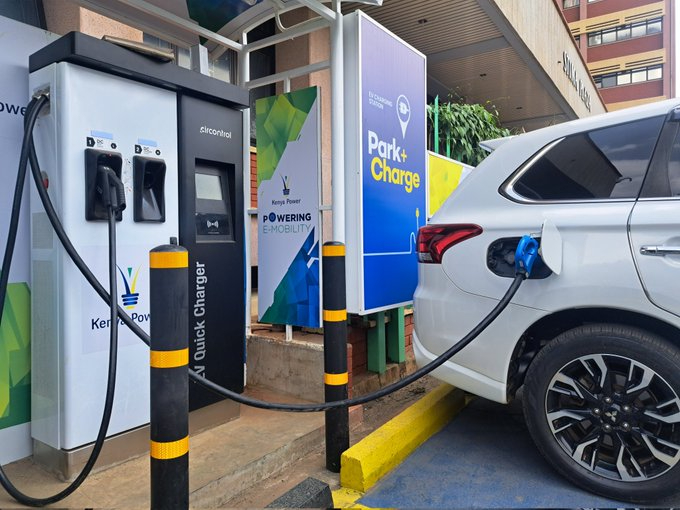
President William Ruto’s administration has further accelerated momentum through targeted incentives, including tax breaks on EV imports, reduced duties on charging infrastructure, and support for local assembly plants. These measures are already yielding results.
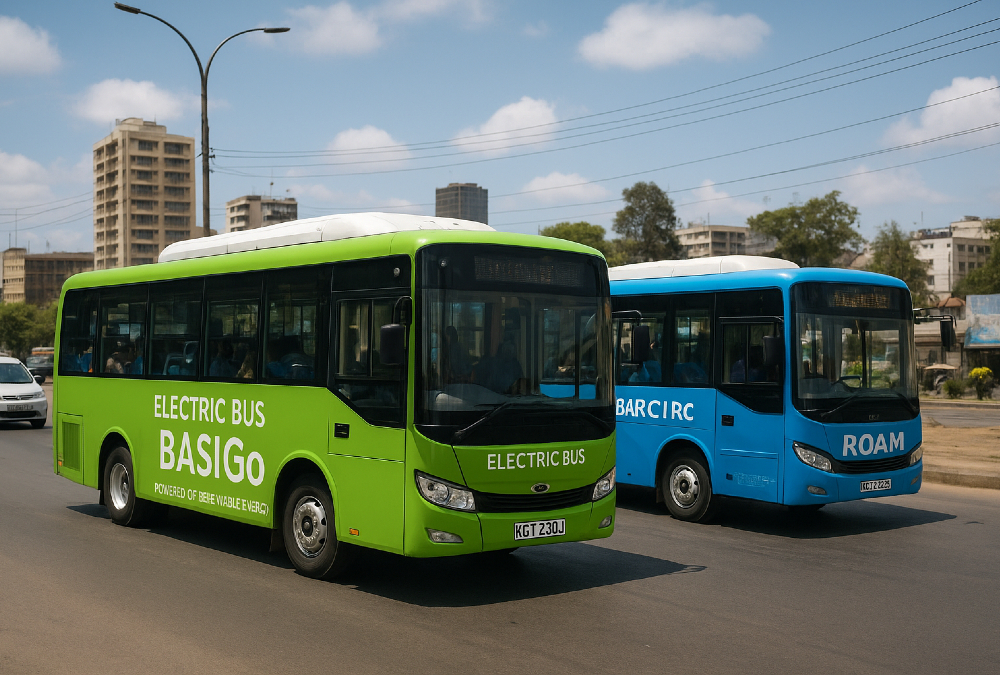
Nairobi’s streets now host electric buses from BasiGo and Roam – homegrown firms that exemplify how public policy and private innovation can converge to drive real-world impact.
From Charging Stations to High-Skill Manufacturing
In the near term, job creation will be concentrated in EV charging infrastructure deployment and vehicle assembly – areas requiring moderate technical skills and offering rapid entry points into the green economy. But as the ecosystem matures, higher-value manufacturing roles will emerge, demanding advanced engineering, battery technology expertise, and software integration capabilities.
This evolution promises not just employment, but upskilling and industrial upgrading across Kenya’s workforce.
The timing couldn’t be better. Globally, EVs are projected to account for more than 80 percent of new vehicle sales by 2050. Africa, long seen as a laggard in automotive innovation, now has a chance to leapfrog legacy systems – much as it did with mobile money.
Kenya, with its strategic location, regulatory foresight, and clean energy endowment, is uniquely placed to lead that charge.
Yet success is not guaranteed. Sustained investment in grid resilience, vocational training aligned with green jobs, and regional harmonization of EV standards will be critical. Moreover, ensuring that job growth is inclusive – reaching women, youth, and rural communities – must remain central to policy design.
If Kenya navigates these challenges wisely, its EV ambition could do more than decarbonize transport. It could catalyze a new era of industrialization, export-led growth, and climate-resilient development – proving that in the race to electrify Africa, the starting line may well be in Nairobi.
Des H Rikhotso (PgDip-BA, MBL) is a seasoned C-suite Multi-Industry business executive with 25+ years of Business Leadership Experience across the South, East and Western Sub-Sahara Africa Region. Based in Kampala, Uganda he serves as East Africa Region Business Executive, driving Business Strategic Growth and Operational Excellence – contributing his Leadership Voice and Clarity to the Region. Des has held Business Leadership roles at BMW Group Africa, Volkswagen Group Africa, Peugeot Motors South Africa, Toyota/Lexus South Africa, Nissan Group of Africa, G.U.D Holdings (Africa Exports Operations Division) and The HDR Group of Companies. He holds Under-Graduate and Post-Graduate business degrees from the University of the Western Cape, Wits University (Wits Business School) and the University of South Africa.
