
News
COVID-19: South Africa nears lockdown; cases almost 1,000
Our people are terrified right now and we should not do anything to make their situation worse,” President Cyril Ramaphosa told police earlier Thursday. “Psychologically they are already scared that they could get the virus, lose income, lose jobs, get sick without medication.
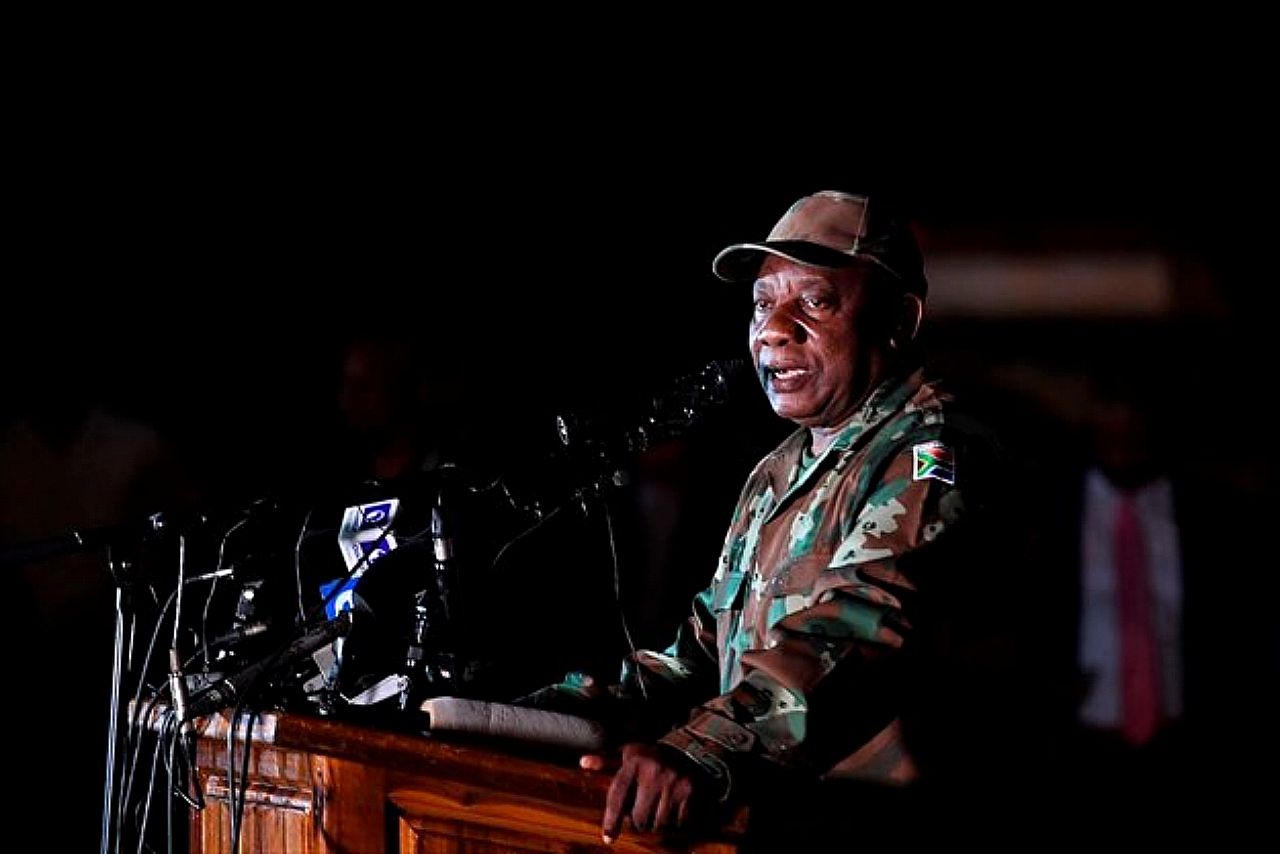
AP | South Africa’s president appeared in full military uniform for the first time since the end of apartheid and told troops to be a “force of kindness” as a 3-week lockdown begins at midnight and they ensure that 57 million people stay home. The mission is the “most important in the history of our country” as Coronavirus cases near 1,000, the highest in Africa.
“Our people are terrified right now and we should not do anything to make their situation worse,” President Cyril Ramaphosa told police earlier Thursday. “Psychologically they are already scared that they could get the virus, lose income, lose jobs, get sick without medication.”
Anxiety has been especially high for low-income South Africans squeezed into townships, sometimes with an extended family sharing a shack of corrugated metal and little income. Fears of economic pain is widespread, with a recession and unemployment at 29 percent. South Africa remains one of the world’s most unequal countries a quarter-century after the racist apartheid system ended in 1994.
South Africa has 927 virus cases, with no reported deaths. Africa’s total cases are now 3,037 with South Africa’s latest cases added to the toll of the Africa Centers for Disease Control and Prevention. Forty-six of the continent’s 54 countries have the virus.
South Africa’s lockdown is one of the world’s strictest, with alcohol sales, running and dog-walking banned. Citizens should expect to be sober for 21 days, authorities have said, but sales at liquor stores were brisk on Thursday. Borders have closed except for transport of essential goods.
Without naming countries, the World Health Organization (WHO) regional chief for Africa, Matshidiso Moeti, told reporters that “draconian” restrictions must include strong public health measures to truly contain the virus’ spread. Humanitarian corridors might be needed as well, she said.
The window is “narrowing every day” but there’s still a chance to contain the virus’ spread in many countries, Moeti said. About half of African nations with the virus have only imported cases from abroad.
More countries are expected to impose lockdowns. On Thursday, the president of Botswana, who has been in self-isolation as a precaution after a weekend trip to Namibia, told citizens to “Please prepare yourselves” for an imminent one.
Rwanda locked down over the weekend – in that capital, Kigali, streets were empty while authorities used megaphones to urge people to stay indoors. The government has promised to provide food to vulnerable people.
Elsewhere, Nigeria said it would ban travel between its states in Africa’s most populous country. Eritrea closed schools and public transport. Kenya reported its first death. And Somalia, with one of the world’s most fragile health systems after nearly three decades of conflict, reported its second virus case.
For most people, the new Coronavirus causes mild or moderate symptoms, such as fever and cough that clear up in 2 to 3 weeks. For some, especially older adults and people with existing health problems, it can cause more severe illness, including pneumonia and death.
African officials have showed varying levels of sensitivity to their own health measures. While South Africa’s president said he tested negative for the virus as a precaution, some people in Kenya were appalled after national health officials met to discuss the Coronavirus and then shared a group photo — with people standing shoulder-to-shoulder.
