
A Diaspora View of Africa
Connecting the African Diaspora
By Gregory Simpkins
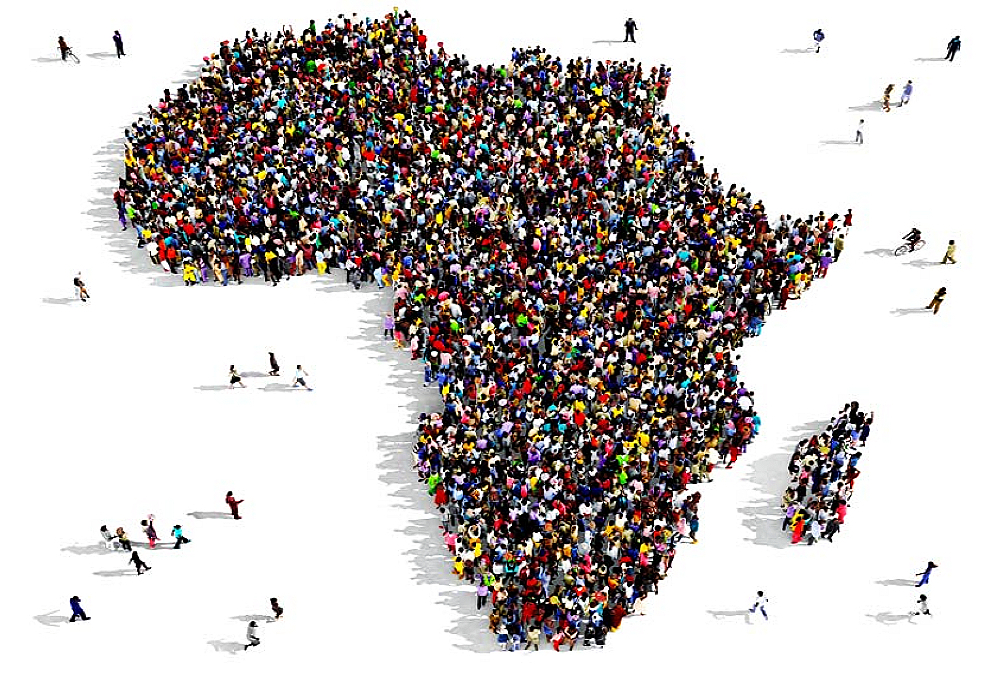
It has been my great honor to work on the goal of connecting the elements of the African Diaspora for more than a quarter of a century, and I have worked with various individuals and organizations to facilitate such a connection. Although this outreach could be more robust, it does indeed exist. Unfortunately, we all generally know relatively little about who the other members of the African Diaspora are or where they live today.
As African Americans, some of us vainly consider ourselves the preeminent sector of the African Diaspora. Generally, people who feel this way have had limited contact or relationships with Africans, and in many cases, they have not spent any significant time on the continent. Most of us have not been taught properly about Africa or Africans. When you grow up seeing primitive black people “rescued” by white people, you might understandably mistakenly believe that you can be God’s gift to Africa. Moreover, the notoriety and influence of Diasporans in the United States has inflated our global importance in the minds of too many of us.
In terms of size, we are only number two. Brazil has 55.9 million people of African descent who comprise 45 percent of that country’s population. African descendants comprise about 13 percent of the American population and about 46 million people. Of course, the African liberation and civil rights movements in America have enabled Diasporans living here to flex their political muscles and impact the continent far more than black Brazilians have been able to do.
In Brazil, people we would consider to be Diasporans are divided into pretos (blacks) and pardos (mixed race or brown). Centuries of racial mixtures means that many Brazilians have African ancestry that is not easily recognizable, thus the invention of the term moreno (tanned or of olive complexion). The result of Brazil’s ethnic history is that many Brazilians do not really consider themselves to be African descendants; they are as likely to describe themselves as Brazilian descendants.
This was only the case with a smaller portion of American Diasporans – those who were quadroon (one-quarter black) and octoroon (one-eighth black) back in the 1800s when those were distinct racial categories. When those classifications were nullified by U.S. law that declared anyone with one drop of black blood to be black, many of the lighter ones passed as whites to avoid the bitter discrimination faced by those more easily identified as black, as well as the lack of acceptance by black people. Over time, they intermarried with whites and are the ones surprised nowadays to find they have African heritage when they take the DNA tests.
The old color lines among blacks in the United States have lessened but not completely disappeared, although there are no legal categories dividing us. There is much more collaboration among us no matter what shade our skin is. Too bad that collaboration is not yet as strong as it should be between those born in the United States and those born elsewhere. That should come once we realize we are all part of a group of people descended from Africa, as Marcus Garvey, George Padmore and others realized long ago.
Dispersed Diaspora
We know about the Diasporans who live in the Caribbean. Countries such as Haiti (10.1 million), the Dominican Republic (9.19 million) and Jamaica (2.7 million) have large Diasporan populations who we can see represented in North America. They are very obviously black, and we associate those countries with being largely black. Yet there are other countries in this hemisphere with significant black populations: Columbia (4.9 million), Venezuela (3.15 million) and Ecuador (680 thousand).
Most of the islands of the Caribbean are, of course, majority black countries: St. Kitts & Nevis (98 percent), Antigua & Barbuda (95 percent) and Grenada (91 percent).
But did you know that the Cayman Islands, the noted destination for offshore funds, is 60 percent black? French Guiana is 66 percent black, and Suriname is 47 percent black? Have you ever met a black person from one of these countries? Perhaps you did, but did not know where they were from, or you thought they were a small minority in their country of origin.
Europe is only 1.2 percent black, but France has 3.8 million Diasporans, and the United Kingdom has 2.49 million. Italy has 1.1 million Diasporans, Germany has 817,000 and Spain has 690,000. People from Africa and the Caribbean are playing increasingly visible and important roles in these countries. Famous black people from Europe include former NBA player Tony Parker, who was born in Belgium, and former heavyweight boxing champion Lennox Lewis, who was born in the United Kingdom. They are but two of the many Diasporans born and raised in Europe.
We may know about the 200 thousand Diasporans (mostly from Ethiopia) who live in Israel because of the famous airlift of Jewish Africans, but what about the other black populations in the Middle East? Egypt and the rest of North Africa, which are considered part of the Middle East, are African, of course, but there are significant, identifiable black populations in Saudi Arabia, Yemen and Oman.
I used the term identifiable because while they may look black, many Afro-Arabs do not identify themselves as African descendants. Being African is akin to being identified as slaves. That remains a persistent issue in countries such as Sudan today. On one visit there with a Congressional delegation, a Sudanese official tried to convince members that they considered themselves to be black, but that belied their treatment of blacks who weren’t Arabs as well. I have met Sudanese who had been held in bondage, including one young man who was blinded by a cruel master before he was forced to free him.
Those purely African blacks were held in slavery in repeated periods of history, such as in Mauritania, which abolished slavery repeatedly only for some slave owners to continue the practice into the 20th century despite the laws.
Africa Union Charter
Semitic languages such as Arabic and Hebrew are believed to have their origin in Ethiopia, which at one time in their history controlled territory on both sides of the Red Sea. Kiswahili, the widely popular East African language, contains much Arabic and was once the language used by traders in the region.
Although many scholars doubt the claims of African ancestry among people in the Pacific, it is quite clear that Melanesians and many other Pacific Islanders have strong African features. There are the Australian aboriginal people, the Semang people of the Malay peninsula, the Aeta people of Luzon and the Ati of Panay. Again, these people have little connection to Africa today and most likely do not identify themselves as members of the African Diaspora.
In early 2002, I managed a conference sponsored by the African Union (AU) to examine the Diaspora here in the Western Hemisphere. When we began, AU officials still held to the concept of those born on the continent who lived outside as being the African Diaspora. However, these officials were impressed by the breadth of the Diasporan participants, who not only came from across North America and the Caribbean, but also a few from Europe. One participant was appointed as the Diaspora advisor to Brazilian President Lula during the conference and had to return home before it ended. I don’t think these AU officials had encountered either the number of Diaspora participants or their passion for being linked to the continent before then.
Mere weeks after the conference, the charter of the AU was changed to make the Diaspora the sixth region of Africa. Unfortunately, the lack of coordination and leadership has meant that this change has never been put into practice. Again, too many of us in the Diaspora just do not know each other or work together.
The dimensions of the African Diaspora are broad, but the linkages in practice are tenuous. We may look alike, but we do not all identify ourselves as having the same ethnic origin. Companies such as African Ancestry perform DNA tests that over time have become quite accurate in identifying the specific African ethnic group from which one is descended and the countries your ancestors came from depending on the particular strain of DNA. As the company will tell you, one is more likely to find a linkage to Africa through your mother’s lineage than your father’s. During a Leon H. Sullivan Foundation conference in Atlanta in 2010, we tested Marcus Garvey’s son and Martin Luther King’s son using the patrilineal test and came up with results that linked them to Portugal and Spain. The earlier matrilineal tests had already linked them to Africa.
I and others I know, having been tested by African ancestry, found enduring links to specific countries. Now when we encounter people from those countries or hear or read accounts from there, it has much more meaning. We just must remember that being raised outside of those countries, we are cousins and not brother and sisters. We were not raised to think the same way instinctively. We can learn one another and relate better once we accept the gaps in our upbringing that must be overcome.
So, while some members of the African Diaspora are reaching back to a connection with Africa, many others still don’t for various reasons. Nevertheless, they are kin whether they know it or accept it or not. What becomes of that truth remains to be seen, but the African Diaspora is a sleeping giant and if it ever awakens fully, it can change the world.
Gregory Simpkins, a longtime specialist in African policy development, is the Principal of 21st Century Solutions. He consults with organizations on African policy issues generally, especially in relating to the U.S. Government. He also serves as Managing Director for the Morganthau Stirling consulting firm, where he oversees program development and implementation. He further acts as a consultant to the African Merchants Association, where he advises the Association in its efforts to stimulate an increase in trade between several hundred African Diaspora small and medium enterprises and their African partners.
