
Business
Black Economic gains reversed in Great Recession
BALTIMORE (AP) – For the black community, where unemployment continues to rise, job loss has knocked them out of the middle class and back into poverty…
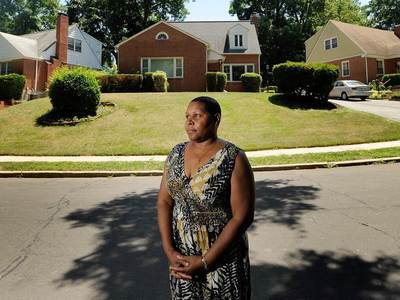
Horace Davis did become a drug dealer. He illustrates another dimension of the recession’s impact on blacks: While law-abiding folks are falling out of the middle class, those who got in trouble with the law are further than ever from a second chance.
After serving four years for drug trafficking, Davis walked out of prison into the middle of the recession in 2008. “I thought to myself, I’m older, I need to get a job, move on. The dope game was dead to me,” Davis says, sitting on a concrete porch in an Asheville, N.C., housing project.
In the past few decades of the “War on Drugs,” harsh sentencing laws have sent a disproportionate number of black people to prison, even though blacks are not more likely than whites to sell or use drugs, according to a 2008 report by the Sentencing Project. Today, about 280,000 African-Americans emerge from behind bars each year. They are often the last of the last to be hired.
After Davis got out, he spent months applying for dozens of jobs mopping floors or flipping burgers. He carried a letter from the state offering a $2,500 tax credit for hiring ex-offenders. He got one call back, from a chicken restaurant. “We’ll be in touch,” Davis remembers them saying. They weren’t.
“Nobody wants black felons in their businesses,” says Davis, 26.
A 2003 University of Chicago study by Devah Pager sent young white and black “testers” to apply for real low-wage jobs. Some of the testers were randomly assigned felony convictions. The study found that whites with felonies were slightly more likely to get callbacks than black applicants without criminal records.
“The penalty of a criminal record is more disabling for black job seekers than whites,” Pager and other researchers wrote in a follow-up study in 2009.
Davis says he learned skills in prison: “How to cook, clean, horticulture, janitorial. I can do it. I’ve been trained. Tile, carpentry, mortar, edging and trimming, all that. I can operate a backhoe, a roller. Any opportunity to do something that would show my talents, I’d do it. It would be my ticket out the streets.
“I just need someone to give me that chance. A nice construction job, anything. I would hold onto that until
I die.”
Some economists say the real black unemployment rate is as high as 25 or 30 percent, because government figures don’t count “discouraged” workers who have stopped looking for jobs and dropped out of the labor force.
Davis now falls into that category — partly due to societal forces and partly, he knows, because of his own bad decisions.
Recently, police said they caught Davis with a half-ounce of marijuana. His trial date is approaching. As a habitual felon, he could get a 10-year sentence.
