
Opinion
Africa: The Strategic Battlefield for the Next Global Economy
Washington and Beijing are bidding for its minerals, railways and ports. The real contest is over who will own the upside, and whether Black American capital will be at the table.

By Carter Rankin
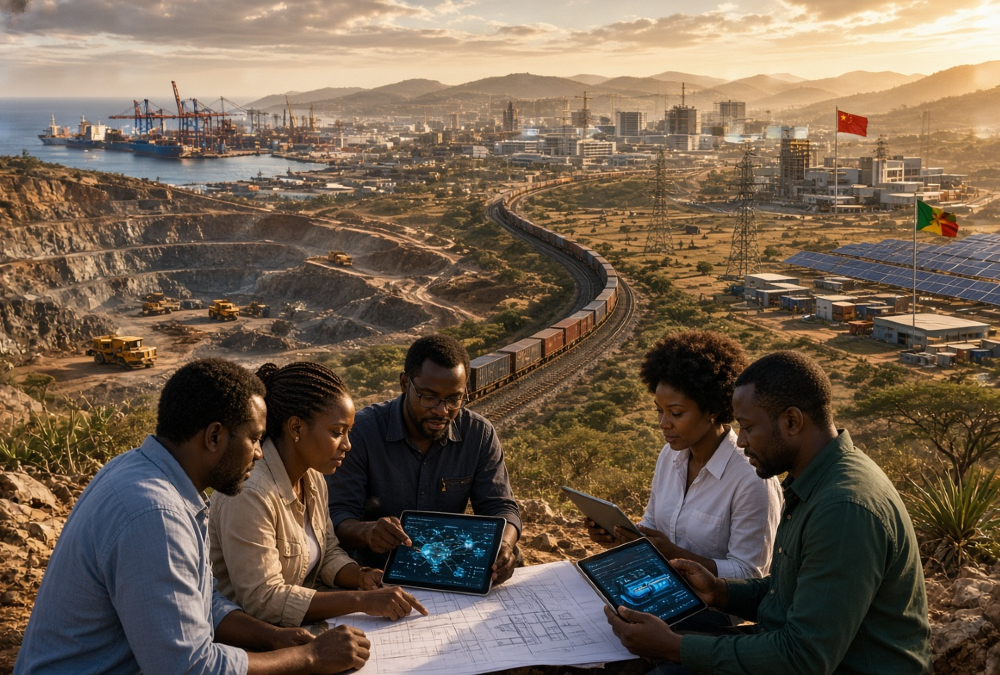
Something consequential is unfolding across Africa. The United States and China are competing for control of the physical foundations of the coming global economy: minerals, processing plants, railways, ports, power grids, data centers, artificial intelligence and defense manufacturing.
China has spent decades building its position in African mining and infrastructure. America is now pushing back. Its flagship effort is the Lobito Corridor, a rail and trade route that links the mineral-rich regions of Zambia and the Democratic Republic of Congo to Angola’s Atlantic coast. The stakes are plain. The Congo produces more than 70 percent of the world’s cobalt, a metal essential to batteries, electronics, aerospace and military systems.
Everyone Needs Africa
America needs Africa. So do China, Europe and, increasingly, the Gulf states. Electric vehicles, AI data centers and defense supply chains all depend on what lies beneath African soil and on the energy and infrastructure to bring it to market.
Yet the “giant warehouse” view of the continent is outdated and wrong. Africa is building, too. Across the continent, entrepreneurs, companies and governments are moving AI out of the pilot phase and into real-world operations, from banking and logistics to agriculture and health care.
So Africa’s opportunity is not merely to ship cobalt, copper, lithium and electricity to fuel someone else’s growth. It is to build the technology firms, intellectual property, processing capacity and wealth on top of those resources. Raw ore is the lowest-value rung of the ladder. The profits sit in refining, manufacturing and software.
The Missing Investor
One group is conspicuously absent from this conversation: Black Americans.
Black American households command roughly US$2 trillion in annual consumer spending, and they participate in trillions more through pensions, retirement accounts, corporations and institutional funds. Yet as governments and multinationals jockey for position in African minerals, rails, ports, power and technology, Black America is largely watching from the sidelines.
The cultural and historical bonds are deep. The economic ones are thin. This is not a case for charity. It is a case for ownership. Imagine Black American capital investing alongside African capital in the industries that will define the next several decades, not as donors or tourists, but as partners holding equity.
Competing on African Terms
Africa now holds something rare: leverage. America wants access. So does China, and so do Europe and the Gulf. Let them compete. But let them compete on African terms:
- African ownership and equity
- African processing and manufacturing
- African technology and intellectual property
- African wealth creation
The Question That Matters
The most important question is not whether America or China will “win” Africa. It is whether Africans will own enough of Africa to win either way.
Black America should ask one more: if everybody needs Africa, where exactly is our capital?
Black Americans do not need to relocate physically to Africa to participate in its economic growth. Cross-border investments, equity ownership, and strategic partnerships offer practical ways to build a lasting economic presence across the continent.
Carter Rankin is a retired serial entrepreneur, author, and independent business strategist in Northern California. He writes about economic ownership, wealth creation, entrepreneurship, emerging opportunities in Africa, and institution-building for lasting generational value. He shares his perspectives on LinkedIn under the theme “Playing Offense.”
