
Business
WHITE GOLD – Jamaica Looking To Earn Millions From Cotton
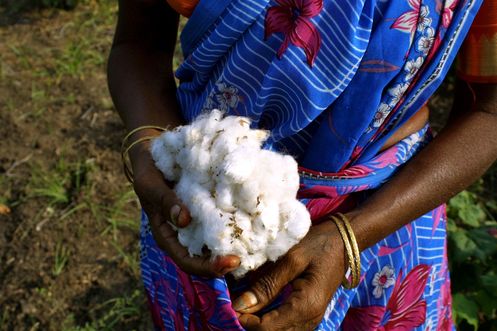
The Japanese government is investing just under US$107,000 (J$11 million) to resuscitate the local West Indian Sea Island Cotton industry, for which there is an annual global demand of six-million pounds of lint. Less than one per cent of that amount is being supplied now.
The money from the Japanese will be used to purchase a row-crop tractor, a high-crop tractor, two boom sprayers, and a cultivator which are vital to get Jamaica on track to tap into this lucrative market where it enjoys significant competitive advantages. Sea Island Cotton is grown commercially in Antigua, Barbados, Nevis and Jamaica. However, Jamaica is the only island capable of large production at this time.
Addressing the signing ceremony last Tuesday, Dalkeith Hanna, chairman of the Jamaica Agricultural Development Foundation (JADF), said that there is a niche to be filled. Hanna, who represents Jamaica on the Board of the West Indian Sea Island Cotton Association (WISICA), said there are few other crops which can compete with its potential for value addition.
At US$10 a pound for the lint it is by far the highest priced cotton in the world, five times the cost of the next best cotton, the Giza 45 out of Egypt. The plan as outlined by Vitus Evans, chief executive officer of the JADF, is to bring 5,000 acres of cotton under cultivation on a phased basis over a three-year period.
The ginning and exporting of lint will take place in the early stages and then move up the value chain to spin, weave and produce fabric and ultimately manufacture garments locally. “Byproducts such as cotton seed oil, which is in high demand and animal feed will be produced from the seed,” Evans explained.
“The approach which is being contemplated is to initially have a number of experienced farmers growing the cotton under contract and expanding the pool of farmers as production increases. Both small and large farmers will be encouraged to grow the cotton,” he added.
Certified seeds will be provided to registered growers to whom a pool of equipment will be made available for land preparation and crop care. Technical assistance and extension services will also be made available to the new growers, with a ginnery to be centrally located where the seed cotton will be ginned, stored and baled. In the meantime, persons in the industry are calling for an orderly development as Jamaica pushes to cash in.
