
Business
WHITE GOLD – Jamaica Looking To Earn Millions From Cotton
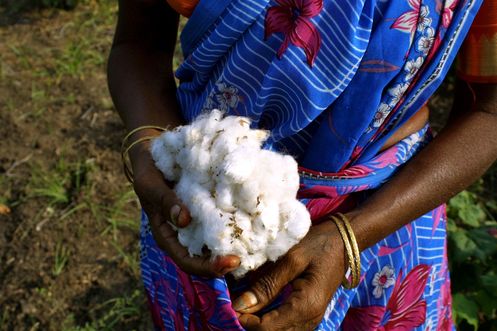
ONGOING ALLIANCE
Industry insiders say there needs to be a close and ongoing alliance between growers, purchasers and marketers, in order to increase production to satisfy demand. “We estimate that a vertically integrated West Indian Sea Island industry supported by 5,000 acres of cotton production when fully implemented will provide for over 2,000 persons full-time jobs, 15,000 on a seasonal basis and generate income in excess of US$800 million per year,” argued Evans.
Sea Island Cotton is the world’s best quality cotton based on its fibre length, silk-like quality, fineness and texture. There is a high demand internationally with buyers from Switzerland, Japan, the United States, Italy and the United Kingdom said to be interested. It is a crop for which the Caribbean has a natural geographic advantage with repeated efforts to grow similar quality cotton in India, China, the United States and Africa being unsuccessful.
Evans cited an example of the economic earning potential from West Indian Sea island Cotton. “For example, a pound of lint is sold for US$10 and it takes three ounces of lint to produce a shirt which is sold for an average of US$400 to US$500. And there is a market for lint, yarn and fabric. “It is for these reasons that the JADF strongly believes that a vertically integrated Sea Island Cotton Industry offers tremendous possibilities for economic growth for Jamaica.”
BEST AGRONOMIC PRACTICES
He was supported by Hanna, who said research conducted in collaboration with the University of the West Indies and the Ministry of Agriculture in all aspects of crop production, nutrition, pest control and irrigation systems has provided the requisite database to establish the best agronomic practices for growing the cotton. “I am satisfied that we have significantly reduced the risks associated with the crop through the work that we have done to date,” said Hanna.
Plans are already at an advanced stage to cultivate a minimum of 500 acres of cotton for the 2014-2015 crop – 200 acres in Clarendon, 100 acres in St Mary and 200 acres in St Catherine. Substantially, more land is, however, to produce the 200,000 pounds of lint buyers require for this crop year, which at best, project yields would require about 650 acres of land.
Copyright The Jamaica Gleaner 2014
