
Business
US debt will hurt diaspora remittances to Africa: Case in point, Kenya
As we approach D-day, no agreement is in sight to extend America’s credit line. A default in servicing US debt has moved from the unthinkable to the possible, though it is still in the realm of most unlikely. Although everyone is saying the US won’t default, they can’t default, it can never happen, no one knows exactly what will happen when the world’s largest economy runs out of money and potentially defaults on its debt payments.
So what is all this about? The US government, just like ours, borrows monies by issuing bonds. The government, like other good borrowers will have to pay back the money when the bonds mature. Because the revenue it collects is not sufficient, usually treasury borrows more money to pay back the maturing bonds.
Debt ceilings
By US laws, the treasury has debt ceilings set now and then and which currently is $14.3 trillion. It cannot therefore issue more bonds once it hits this limit. On August 2nd, US treasury debt will hit this limit and US govt runs out of money with no option to borrow.
So, any US treasury bonds maturing on August 2nd will have to be defaulted. To avoid this, US congress will have to sanction raising the credit limit, but congress is yet to do that because the Republicans are adamant about raising this limit, and time is running out. If there is still no agreement by Aug 2, the US administration will initially have to choose which items to pay for and when.
It is assumed that priority will be given to debt servicing so a default on Treasuries is very unlikely in the initial stages and would only happen if the impasse lasts long and the government exhausts any cash under the pillow. But other services such as social security, medical care, defense vendors, unemployment benefits, military pay and salaries will be hit, and increasingly so, as long as there is no deal.
As we approach 2nd August, there are two likely outcomes, one better than the other, but all having far reaching repercussions not only for the US economy but also the rest of the world.
First scenario is the debt ceiling will be raised and a comprehensive deal struck. In such a scenario, the global markets will have a breathing space to digest the details of such a deal.
A deal will however not necessarily mean that the US debt issue will disappear. Credit ratings agencies such as Standard & Poor’s and Moody’s will be going over the deal very carefullyand will study every detail. They have already warned that a downgrade is very much on the cards.
Temporary default
If they think the deal is not a viable one, it would be difficult for the US to avoid a “temporary default”. A deal for Greece did not necessarily mean default went out of the window. Fitch pushed Greek debt into “temporary default” even after the government agreed to austerity measures meant to satisfy European Union bailout requirements due to the terms of the bailout package. The same thing could happen in the United States.
The second scenario is that no deal is done. This is a recipe for disaster and the effects will be wide-ranging and faster than anyone can predict. How is this likely to impact us?
First, like most countries, we are exposed to the US government. The Kenya government (through the Central Bank of Kenya – CBK), and other local financial institutions hold US dollar assets as part of both foreign reserves and investments. As most of the country’s foreign exchange reserves are invested in US Treasuries, the ability to purchase imported goods and pay dollar-denominated debts could be affected should the US government default on its obligations.
An actual default raises the prospect of the government and the other local institutions having to take a “haircut” or being paid back only part of the amount of these assets. Even the prospect of a credit status downgrade would reduce the value of these assets.
Second, our economic growth prospects will be negatively impacted if the standoff or the eventual solution causes the US economy to stand still or relapse into recession. Whatever the final deal between Obama and congressmen, its centre-piece is certain to be deep cuts in government spending.
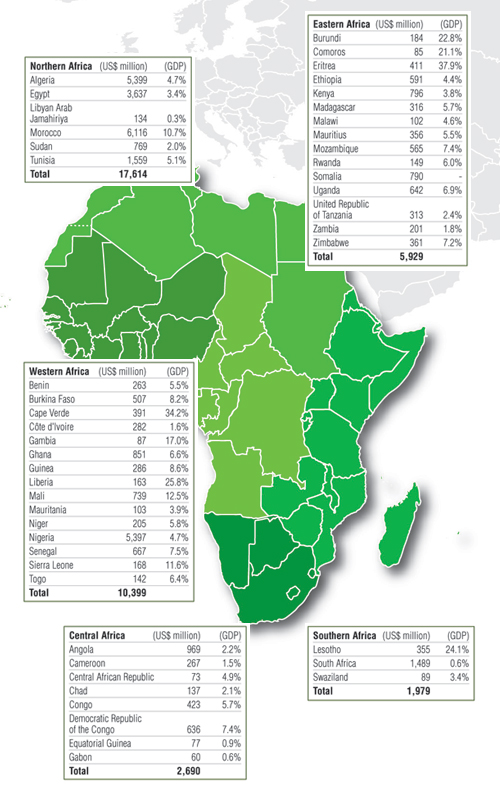
This will reduce effective demand in the US economy. It will negatively impact on jobs in the US and lead to lower remittances from Kenyans and by extension other immigrants living in the US.
