
Business
Uganda government signs agreements with several oil companies
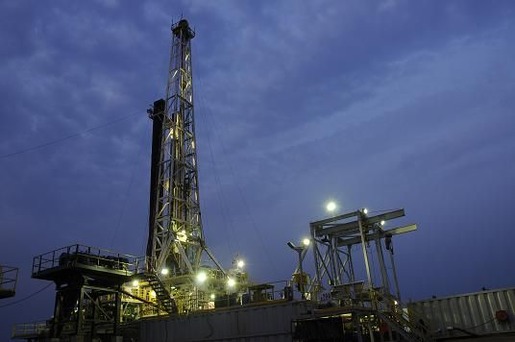
Uganda on Wednesday signed a Memorandum of Understanding (MoU) on the sustainable development of petroleum resources discovered in the country with licensed oil companies. The signing is seen as the first step in speeding up efforts to start oil production, while offering a road map for the commercialization of petroleum resources.
Irene Muloni, Energy and Oil Development Minister, read in a statement, “The purpose of the MoU is to provide a framework for achieving a harmonized commercialization plan for the development of the discovered oil and gas resources in the country.”
She also added, “The plan includes the use of petroleum for power generation, supply of crude oil to the refinery to be developed in Uganda by government and export of crude oil through an export pipeline or any other viable options to be developed by the oil companies.”
Among the companies which the government signed the MoU are CNOOC Uganda Limited, Total E&P Uganda, Tullow Uganda Operations Pty Limited and Tullow Uganda Limited. The MoU requires that the oil companies support government efforts to develop the refinery and publicly endorse the project. It also requires the government to provide support to the oil companies.
Government support to oil companies will include the acquisition of approvals for studies and surveys for an export pipeline as well as the initiation of discussions with neighboring countries in relation to cross border frameworks for the pipeline.
Uganda says it plans to develop a refinery with an input capacity of 60,000 barrels per day and the partners are expected to develop a pipeline or other viable options to export crude oil. The MOU also provides for the expansion of the refinery beyond 60,000 barrels per day in the event that additional resources are confirmed in the licensed areas.
In the short term and prior to the refinery coming on stream, the companies will supply crude oil from the contract areas to be used for power generation. All excess associated and non–associated gas will then be used for power generation or any other viable option.
