
Business
U.S. ‘Fiscal cliff’ talks drag on – markets remain stable
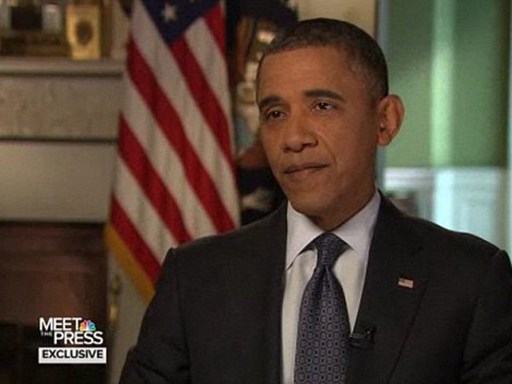
U.S. President Obama on MSNBC’s “Meet the Press” that aired on Dec. 30 2012
U.S. President Barack Obama has warned squabbling lawmakers that they must reach a deal on taxes and spending cuts or risk the consequences to the U.S. economy, as the clock ticked down to the drop over the dreaded fiscal cliff, which could see the United States slide back into recession.
The markets appeared Monday to be taking in stride the prospect that U.S. politicians will fail to agree a budget deal in time to avoid automatic tax increases and spending cuts that many economists think could tilt the world’s largest economy back into recession. With just hours to go before the U.S. falls off the so-called “fiscal cliff,” Republicans and Democrats remained divided over tax and spend, raising the prospect that markets will start 2013 without a clear idea of America’s budget policy. The main sticking point appears to be what level of taxes are imposed on higher incomes.
Discussions in the Senate broke off Sunday night without an agreement. The Senators will return to their offices Monday to try and hammer out a deal before the deadline.
It is not the first time that budget discussions in the U.S. have gone down to the wire, and investors remain confident that some sort of deal will be reached, if not Monday then in the coming days or weeks. As a result, they think that the potential damage wrought by higher taxes and spending cuts will be limited.
However, a backup proposal that would address only a few issues is expected to be presented by Senate Majority Leader Harry Reid, a Democrat, if a bipartisan deal is not reached.
The prospect of counter-measures to offset the “fiscal cliff” impact helps explain why markets were fairly calm in Europe and Asia, and Wall Street was poised to open higher.
In Europe, the FTSE 100 index of leading British shares was down 0.4 percent at 5,901 but the CAC-40 in France was 0.4 percent higher at 3,633. Most European indexes are only trading for half of the day ahead of the New Year break, while others including Germany’s DAX were closed.
