
Business
Transport infrastructure needed in Africa before development
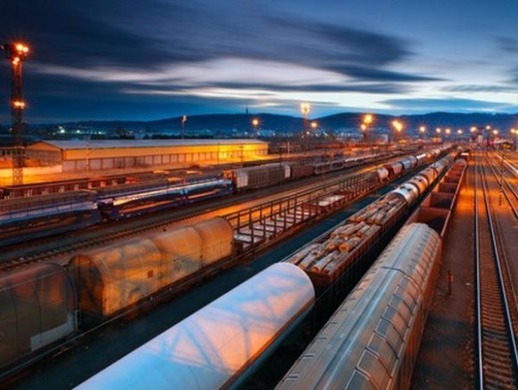
While African governments and development partners are investing more in roads and rails infrastructure much more needs to be done for any meaningful socioeconomic impact to be made. The Democratic Republic of the Congo (DRC), which sprawls over 905,000 square miles, is the second largest country in Africa.
Fifty four years after independence, the country has no roads connecting one end of the country to the other. Many other rail and road construction projects are underway across Africa The only way to travel between two distant points is by air. Many Congolese cannot afford air travel, and most feel as if their country is made up of different countries.
The benefits of a multi-lane tarred roads linking Kinshasa in western DRC to Goma in the east, or roads and railway lines from Cape Town in South Africa to Cairo in Egypt, and from Dakar in Senegal to Nairobi in Kenya, would be endless. Improving road and rail systems in Africa will boost the transportation of goods and raw materials, facilitate transactions and negotiations, boost tourism and positively impact ordinary lives in diverse ways such as ensuring that people get to the hospital quickly during emergencies, for example. Countless other activities depend on reliable roads and rails.
Most of Africa’s railway lines and roads are in bad condition and need huge investments, according to the Africa Development Bank (AfDB). The proportion of paved roads on the continent today is five times less than those in developed countries, notes the Bank. As a result, transport costs alone are 63 percent higher in Africa than in developed countries, hampering its competitiveness in the international and local markets.
The AfDB further points out that transport costs represent between 30 percent and 50 percent of total export value in Africa. These costs are even higher in 16 landlocked countries, including Zimbabwe, South Sudan, Mali, and Niger, and constitute up to three quarters of their total export value.
Poor roads and railways also have a negative impact on intra-African trade, which is currently just 11 percent of total trade. Development experts believe this figure might have been higher with better roads and railway lines. Trade among Southeast Asia’s 10 countries, at 37 percent, is much higher than in Africa, for example.
Railway lines in most African countries were built during colonial times to connect mines and other natural resources to ports. Most of the lines were constructed by mining companies. Currently, passenger services account for no more than 20 percent of rail traffic, says the AfDB. Over the years, passenger business has been shrinking steadily, viable only when road networks are inadequate or non-existent, it says.
According to the bank, the costs of maintaining rail tracks and signaling systems, and the level of spending needed to reach passenger speeds, run into millions of dollars and, if not subsidized, passengers would be unable to afford to pay for operating costs alone.
