
Business
Transport infrastructure needed in Africa before development
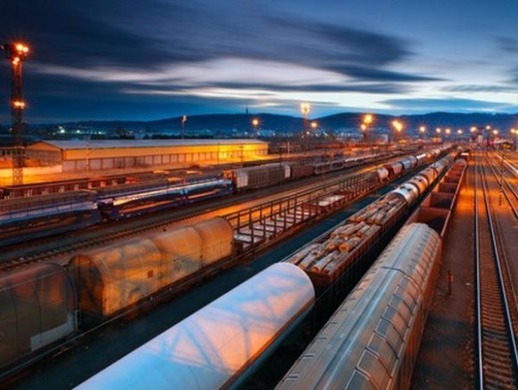
Most rail networks in Africa are as old as 100 years and have not been upgraded since they were first constructed in colonial days due to lack of funds. These networks cannot meet the demands of modern times, says the AfDB, “Most lines are low-speed, small-scale, under-capitalized networks carrying low axle loads.”
Big projects and China
China is throwing a lifeline for Africa’s railway infrastructure. Some 2,000 Chinese companies are in Africa and many of them are heavily involved in roads and rail construction, reports Der Spiegel, a German newspaper. A study by PricewaterhouseCoopers (PwC), a global finance company, says that China’s goal is to take advantage of the increasing growth of African markets.
In the DRC, two Chinese construction companies and a copper company, all state-owned, have signed a $9 billion contract for the construction of a rail and road network, which is more than the DRC’s entire national budget. Rail infrastructure in Angola, one of China’s top oil suppliers, is rapidly expanding as part of an ‘infrastructure-for-oil’ trade agreement between the two countries.
Kenya recently signed a $5-billion deal with China to construct a 952-km rail link from the city port of Mombasa to Malaba, a town near its border with Uganda. This is expected to be extended to Rwanda, Uganda and Tanzania and by 2018. In September 2012, the China Railway Construction Corp. (CRC) signed a $1.5-billion contract to rehabilitate a railway system in Nigeria.
The CRC has ongoing projects in Djibouti, Ethiopia and Nigeria worth about $1.5 billion in total. China South Locomotive and Rolling Stock Corporation, a major train manufacturer in China, is bringing $400 million worth of locomotives to South Africa. China’s Export-Import Bank is financing the Mombasa-Nairobi railroad line with $4 billion while the Addis Ababa-Djibouti line is being rehabilitated at a cost of $3 billion.
Investing in infrastructure
Raising enough finance for infrastructure development is one of the key challenges facing Africa’s expanding economies. Although most state-owned railroads have been privatized in recent times, and many conceded to program funded by international financial institutions, leading to increased traffic volumes, only a few railway systems are able to generate sufficient revenues to fund significant track maintenance.
