
Life
The potential impact of climate change on South Africa
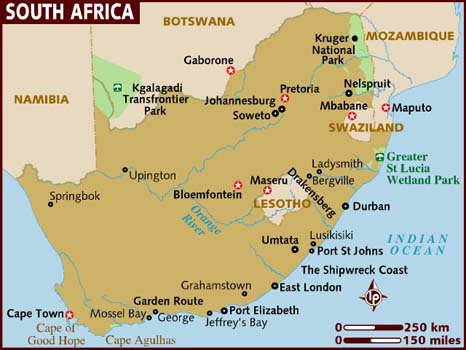
Already, he said, zebra and wildebeest numbers are declining in Kruger as their grazing areas disappear. The question is how much of the cause is due to high concentrations of carbon dioxide, and how much depends on other factors, including man’s encroachment.
Offshore, penguin expert Rob Crawford has looked at changes in the breeding grounds of African penguins and other seabirds, noting South Africa’s northernmost penguin colony went extinct in 2006. Crawford and his colleagues wrote in a 2008 paper that the movements “suggest the influence of environmental change, perhaps forced by climate.”
The African penguin, also known as the jackass penguin because of its braying call, is found only in southern Africa. A colony near Cape Town has long been a tourist draw.
One penguin parent stays behind to nest and care for offspring, while the other seeks food for the family. If the hunting partner is away too long, the nesting parent has to abandon the chick, or starve. Species like sardines, on which the penguins depend, have been displaced.
“If they don’t have sardines, they can’t feed their chicks,” Erasmus said. “And eventually the colonies just disappear.”
The numbers of African penguins have plummeted from up to 4 million in the early 1900s to 60,000 in 2010, according to the Southern African Foundation for the Conservation of Coastal Birds. Researchers blame humans, who collected penguin eggs for food until the 1960s. More recently, a new threat came with oil spills and commercial fishing’s competition for anchovies and sardines.
Erasmus said more research needs to be done, including studies on how plants and animals react to extreme conditions.
A colleague at his university, Duncan Mitchell, has taken up the challenge by tracking and studying antelope living in one of the hottest and driest corners of South Africa.
“We’re hoping to find that they have a capacity to deal with water shortage that they’re not having to use at the moment,” Mitchell said.
