
Life
The potential impact of climate change on South Africa
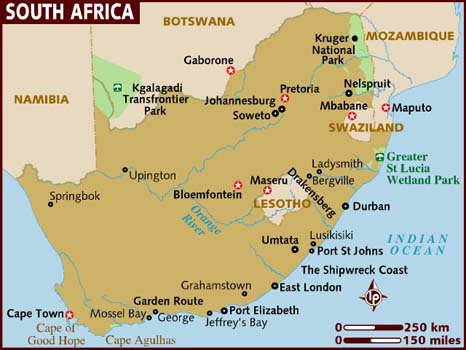
Imagine the savannas of South Africa’s flagship Kruger National Park so choked with brush, viewing what game is left is nearly impossible. The Cape of Good Hope without penguins. The Karoo desert’s seasonal symphony of wildflowers silenced.
Climate change could mean unthinkable loss for South Africa, which hosts talks on global warming that will bring government negotiators, scientists and lobbyists from around the world to the coastal city of Durban next week.
Guy Midgley, a top climate change researcher at the South African National Biodiversity Institute, said evidence gleaned from decades of recording weather data, observing flora and fauna and conducting experiments makes it possible for scientists to “weave a tapestry of change.”
Change is, of course, part of the natural world. But the implications of so much change happening at once pose enormous questions, said Midgley, who has contributed to the authoritative reports of the United Nations’ Nobel Prize-winning Intergovernmental Panel on Climate Change.
In the Karoo, for example, where plants found nowhere else in the world have adapted to long, dry summers and winter rainfall, the weather pattern is changing.
Scientists have noted large die-offs linked to the stress of drought among one iconic Karoo denizen, the flowering quiver tree, a giant aloe that often is the only large plant visible across large stretches of desert. Quiver trees attract tourists, and insects, birds and mammals eat their flowers.
“Any change in climate is going to affect the flowers,” said Wendy Foden, a southern African plant specialist with the International Union for Conservation of Nature (IUCN).
Barend Erasmus, an ecologist at Johannesburg’s University of the Witwatersrand, worked on some of the first efforts to model how Africa might be affected by climate change. He led a 2001 study that raised the possibility that up to two-thirds of the species studied might disappear from Kruger National Park.
Research done since has made Erasmus less fearful for Kruger’s animal population. But he predicts profound effects should a changing climate encourage the growth of thick shrubs, squeezing out zebra, antelope and cheetah.
