
Business
The Cheetah Generation: Young, rich and African
By Matt Wade
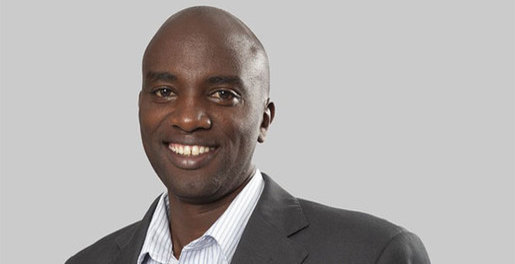
As rags to riches stories go, Dennis Makori’s is a doozy. He didn’t flick a light switch until he was 13 or touch a computer keyboard until his early 20s. But at the age of 34, the self-taught Kenyan programmer is a tech-millionaire. Amid the explosion of mobile-phone use in Africa over the past decade, Makori found ways to deliver services to businesses and consumers via that transformative technology. His company, Onfon Media, now operates in 5 countries.
The lavish Nairobi hotel where I meet him is a world away from the remote village where he spent his childhood with neither electricity nor running water. He arrives in a new BMW and orders French wine. “My father used to tell me, ‘You have to work hard so you do not live the kind of life I’m living’, ” he says. “My background was a motivating force. I knew I had to break out of the poverty cycle, so I worked very hard.”
Makori is an exemplar of what Ghanaian economist George Ayittey calls Africa’s “Cheetah Generation”: a cohort of young, business-savvy change-makers defying the continent’s stereotypes of hunger and war. He coined the term in a book called Africa Unchained and popularized it in a TED talk that has been viewed half a million times online. The Cheetah philosophy is simple: every social problem is a business opportunity. Government, far from being the solution, is part of the problem.
The Cheetah Generation is restless and ready for change. “They look at things differently,” says Ayittey. He contrasts the Cheetahs with Africa’s “Hippo Generation” – political elites born in the 1950s and ’60s who are reluctant to jettison the state-centered policies that have marked Africa’s post-colonial development. He claims this “stodgy, pudgy” cohort of leaders is hampering the continent’s progress. “We have been trying to reform Africa for a long time, but the ruling elites are just not interested in changing their economic and political systems,” says Ayittey. “They are laggards and they are always dragging their feet. We have a real contrast between the two – the Hippos and the Cheetahs.”
Not every Cheetah Generation member is wealthy, but they are entrepreneurial and willing to support themselves. “Whereas the Hippos constantly see problems, the Cheetahs see business opportunities,” says Ayittey. “The Cheetah Generation has no qualms about getting their hands dirty. Africa’s salvation rests on their backs.”
Kenya is one of half a dozen African nations where Ayittey says the Cheetah Generation is especially influential. So much so that a 23-year-old Kenyan television producer, Eugene Mbugua, has created a hit show about them called Young Rich. Each week, the program features a person under 40 who has made more than 30 million Kenyan shillings (about US$380,000). The concept for the show was triggered by a question Mbugua used to ask himself. “I would walk around and see young guys in big cars and I said to myself, ‘I want a big car’, ” he tells me during a meal at the swank Artcafe in Nairobi’s dress-circle neighborhood, Westlands. “So I started asking people, ‘How do you get a big car?’ and I realized that, here, the story of how the rich get rich is barely never told. So I thought, ‘Why don’t I do it?’ It combines two of my passions: money and film.
Young Rich has been a surprise hit, especially with young viewers. “It is now the most-watched business show in East Africa,” says Mbugua. The program aims to demystify the way people make money and to inspire viewers to have a go themselves. “We want people who watch the show to feel as if they can go out tomorrow and start a business,” says Mbugua. “We also want to send the message that entrepreneurship is not about enriching yourself: it is about changing lives.”
Sure enough, viewers are feeling inspired. “We have a lot of people who write in saying, ‘I am going to be on your program in the next few years’, ” says Mbugua. “It has become an ambition to be on the show.” The vast majority of Mbugua’s wealthy interview subjects have identified the same motivation for starting a business: the desire to escape poverty. “About 90 percent of them say they did not want to be poor any more,” he says. “They went to school bare foot and wanted something better.”
Tony Mwaura, a 26-year-old Kenyan college drop-out turned successful computer animator, puts it this way: “There’s nothing good about being poor. I have seen that fact generate a lot of passion for entrepreneurship among young people. Not being able to get access to basics like food and shelter because you don’t have money is a bad place to be. It is as simple as that.”
Members of the Cheetah Generation are easy to find in Kenya’s gridlocked capital, Nairobi. Twenty-eight-year-old magazine publisher Olive Gachara, for example, calls herself an “entrepreneur by birth”. Having founded a successful modelling agency and image consultancy, she launched a monthly magazine called Couture Africa in mid-2013. She wants the glossy to put the “East African fashion industry on the global map”.
