
Business
Tanzania Is Quietly Becoming East Africa’s Export Gateway. Here’s Why.
Most exporters still file Tanzania under “another East African market.” That is the wrong way to think about it. Tanzania is turning into the door to a much larger region – and the companies that notice first will have a decisive head start.

By John Kourkoutas
For years, Tanzania has been treated as a destination: a market of roughly 65 million people, worth entering on its own modest terms. That framing is now outdated. A more accurate description is a hub – a single point of entry into six other economies, most of which have no coastline of their own. Here is why the shift matters, and why it should change how exporters think about market entry.
1. Dar es Salaam Is More Than a Port
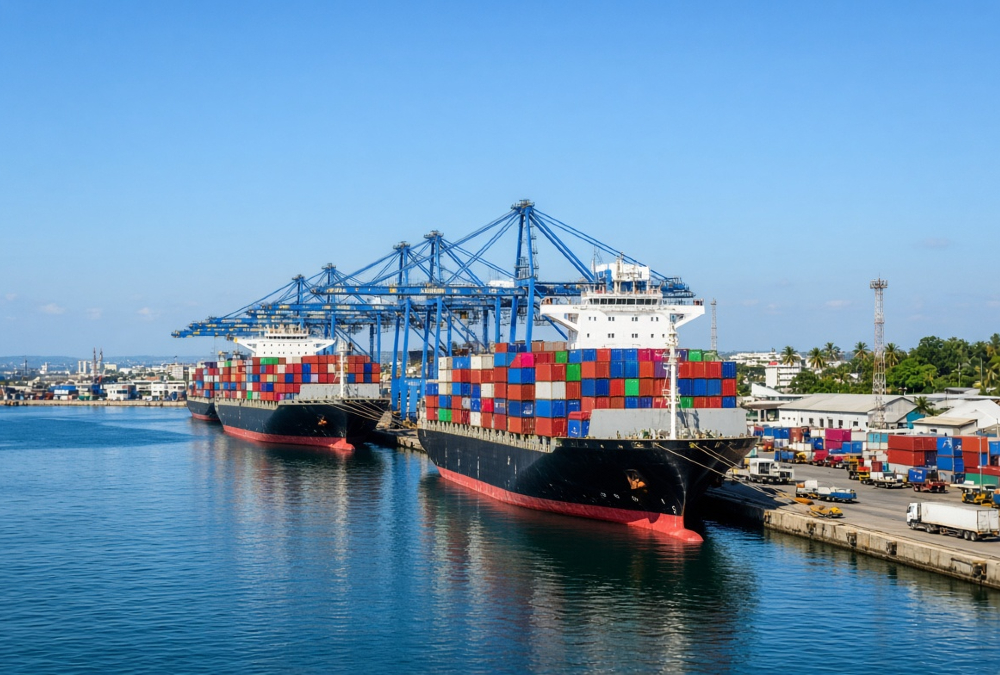
Dar es Salaam handles roughly 95 percent of Tanzania’s international trade, but its real significance lies beyond the country’s borders. The port is the primary maritime gateway for landlocked neighbors – Zambia, the Democratic Republic of Congo, Rwanda, Burundi, Malawi, and Uganda – all of which depend on it to reach global markets. A shipment landing in Dar es Salaam is rarely staying in Dar es Salaam.
2. The Central Corridor Changes the Arithmetic
What makes Tanzania distinctive is the infrastructure linking that port to the interior. The Central Corridor – a combination of road, rail, and port assets – connects the Indian Ocean directly to the Great Lakes region and Central Africa. For an exporter, this is the crucial detail: Tanzania is not just an end market. It can function as a regional distribution base, with goods flowing onward to markets an ocean freighter could never reach directly.
3. Port Capacity Is Expanding
Infrastructure investment is catching up with ambition. The Dar es Salaam Maritime Gateway Programme aims to lift port capacity to 28 million tonnes by 2027, alongside berths capable of handling larger vessels. That expansion matters because capacity constraints, not demand, have historically been the bottleneck limiting how much cargo the corridor can move.
4. Rail Is Becoming the Strategic Piece
The Standard Gauge Railway and the Kwala dry port are designed to solve the problem that quietly kills landed cost: congestion at the quay. By pulling cargo out of Dar es Salaam faster and pushing it inland by rail rather than road, Tanzania is addressing the single biggest source of delay and unpredictability in the corridor.
5. Tanzania Sits Inside Two Trading Blocs at Once
Few African countries can offer this: Tanzania is a member of both the East African Community Common Market and the Southern African Development Community Free Trade Area. That dual membership means a single warehouse in Tanzania can, in principle, serve two overlapping trade regimes – a structural advantage that is difficult to replicate elsewhere on the continent.
6. The Real Prize Is Bigger Than Tanzania
The market worth sizing is not Tanzania in isolation. It is Tanzania plus Rwanda, Burundi, Uganda, Zambia, Malawi, and the DR Congo – a combined population and purchasing base that dwarfs any single-country calculation.
The Question Exporters Should Actually Be Asking
The old question was: Can I sell my product in Tanzania?
The better question is: Can Tanzania serve as my East and Central Africa distribution hub?
That single reframing rewrites the entire market entry plan – sourcing, warehousing, logistics partners, and staffing all look different depending on which question you are answering. The shift applies with particular force to sectors where distribution economics matter most: agricultural machinery, construction equipment, water treatment systems, electrical equipment, industrial products, and food processing machinery.
The Part Nobody Puts in the Brochure
Here is the caveat serious operators need to hear. The corridor is only as good as the day you use it. Dar es Salaam clears cargo quickly in a good month and badly in a bad one, and the Zambian leg through Tunduma and Nakonde can add delays that no spreadsheet predicted. This is not a reason to avoid the opportunity – it is a reason to plan for it honestly. Build the time buffer into your logistics model, and the gateway still wins decisively over the alternatives. Assume the brochure numbers will hold every time, and the corridor will cost you money and credibility.
Picking the Right Gateway, Not Just the Right Country
The next wave of African trade growth will probably not be won by exporters who simply pick the right country. It will be won by those who pick the right gateway – and increasingly, that gateway runs through Dar es Salaam.
John Kourkoutas is business development expert that specializes in helping companies, export teams, and business leaders succeed in Africa’s dynamic and emerging markets.
