
Business
Solar Power firm vies for ‘Last-Mile’ customers in Kenya
By Maina Waruru
Kenya’s renewable energy sector is set for a boost in September when a solar microgrid company plans to become the country’s first licensed private utility to sell power to the public, ending a half-century monopoly by the state electricity firm.
Earlier this year, the Kenyatta administration granted Powerhive East Africa, an energy technology venture, a permit to supply electricity to rural homes in competition with 53-year-old grid giant Kenya Power.
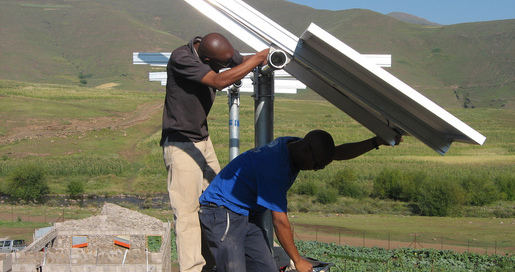
For over 2 years, Powerhive has been running pilot schemes in four villages in Kisii, providing around 1,500 people with solar power.
“Our goal, is line with that of the government – we want to connect and provide reliable service to as many rural communities as possible,” said Rik Wuts, Powerhive’s co-founder and vice president for business development.
Under the deal, the company will produce solar power and distribute it to rural off-grid communities, providing a clean, stable electricity supply on a “viable commercial basis”.
Powerhive will begin generating and distributing electricity under its new license to homes in the west Kenyan counties of Kisii and Nyamira from September.
The area has a high population density and concentration of homes, making it ideal for microgrid models that rely on short distances between the power source and target premises. The microgrids connect around 150 to 300 clients per locality, as well as serving public buildings like schools.
Leveraging the falling prices of solar photovoltaic panels and power storage equipment globally, Powerhive says it has succeeded in bringing the cost of microgrid power closer to that of mains electricity.
“In many places in the developing world, the cost of main grid extensions is simply too high to be feasible,” said Wuts.
“The cost decline in solar and power storage will continue bringing off-grid generation costs ever closer to grid levels, and we have developed innovative technology to optimize the cost of distribution and the design of the distribution systems,” he told reporters.
