
News
Senegal votes in a tightly contested presidential race after months of unrest
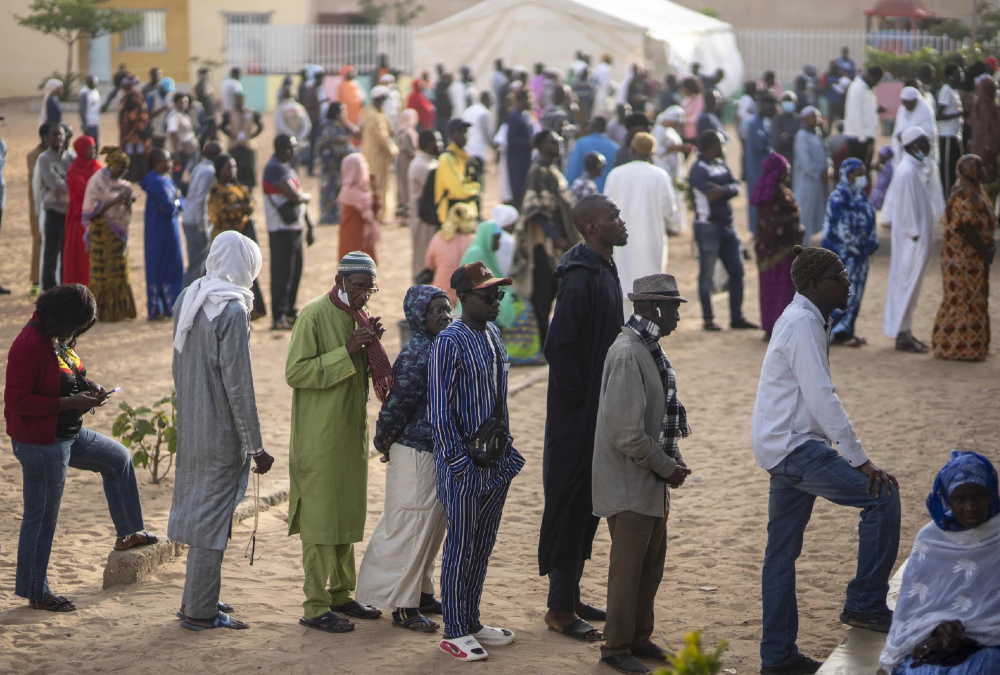
AP | Senegalese lined up to vote Sunday in a tightly contested presidential race following months of uncertainty and unrest that has tested the West African nation’s reputation as a stable democracy in a region shaken by a wave of coups in recent years.
The election comes after President Macky Sall unsuccessfully tried to postpone the February 25 vote until the end of the year, sparking violent protests. Sall is barred by the constitution from seeking a third term. As a result, the vote is taking place during Ramadan, the holy month when observant Muslims fast from dawn until dusk.
Lines formed outside polling stations around the capital Dakar. Official results are expected next week, but the leading candidates said they would already know first results Sunday night.
Observers said turnout among the more than 7 million registered voters appeared to be high in the morning, though more precise figures would be available later Sunday. Babacar Gueye, who heads Senegal’s COSCE civil society network of observers, said participation was important to give the election legitimacy.
“At the opening of polling stations today, I have never in the past 15 years seen so many people going to vote,” he told The Associated Press.
In the run-up to Sunday’s election, opposition leader Ousmane Sonko was released from prison last week, triggering jubilant celebrations on the streets of Dakar and renewed excitement about the contest. Sonko was barred from running due to a prior conviction for defamation, and is backing his key ally Bassirou Diomaye Faye, who was also freed from prison last week.
At the forefront of concerns for many Senegalese voters is the economy, which has been squeezed by high food and energy prices partly driven by the war in Ukraine. Almost a third of Senegal’s youth are unemployed, according to the independent researcher Afrobarometer, driving thousands to risk their lives on dangerous journeys in search of jobs in the West.
Senegal has stood apart in a region where the military has seized power from civilian governments in Mali, Niger and Burkina Faso. The election is set to be the nation’s fourth democratic transfer of power since it gained independence from France in 1960.
Despite Senegal’s record, the electoral process over the past year has been marred by violence and unrest, with dozens killed and hundreds of opposition protesters jailed. There are 19 candidates in the race, including one woman, the highest number in the nation’s history, although a couple dropped out to support the team backed by Sonko.
Analysts say no candidate is expected to win more than 50 percent of the vote, which means a runoff is likely and more coalition building could lie ahead. Along with Faye, aspirants include Amadou Ba, a former prime minister, Khalifa Sall, a former mayor of Dakar unrelated to the president, and Idrissa Seck, a former prime minister from the early 2000s who was the runner up in the 2019 presidential race.
Election observers said there were no reports of trouble around the country. Ba told voters after casting his ballot that day was passing peacefully, and the results would be known by the end of Sunday.
Faye also said results would be known in a few hours, expressing confidence their team would win. Sonko promised a resounding victory on his YouTube channel.
