
Business
Remittances to Africa Should be Maximized for More Bang for Their Buck
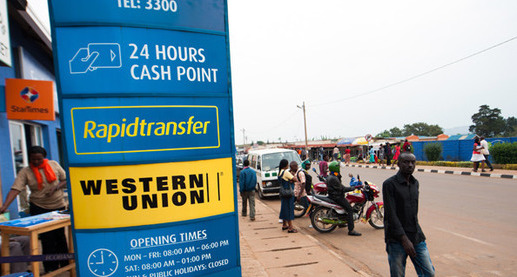
Although the crucial financial importance of money sent to African countries has long been documented, detailed research into the scale of remittances is lacking. Despite the vast figures involved, remittances represent almost a third of some African countries’ gross domestic product, few studies take into account the money repatriated outside of the banking sector.
World Bank figures suggest that Africans abroad sent around $60 billion to African countries in 2012, and they do not include unofficial channels such as hawala-style informal transfers. In the hawala system, a person seeking to send cash will typically meet an agent and hand over a remittance. This agent will then call a colleague in another country and instruct him to pay out the equivalent sum in the local currency.
When taking these transfers into account, the true level of remittances to Africa is likely nearer $100bn, says professor Donald Terry from Boston University School of Law. The challenge for African banks and governments is to persuade migrants to abandon these informal systems in preference for sending money through money transfer companies (MTCs) and banks, which is particularly difficult in countries where fewer people have access to banking services.
High costs are a principal obstacle. African Development Bank (AfDB) data say that while global remittance charges average around 6 percent, fees for transfers to sub- Saharan Africa are much higher, closer to 12 percent. Inter-Africa transfer fees can be even greater, with charges for transfers from Tanzania to Kenya reaching up to 20 percent.
Lack of competition is a key problem, with UK think tank The Overseas Development Institute estimating Western Union and Money-Gram account for two-thirds of all remittance transfers in Africa. With this in mind, the AfDB held a two-day conference in Tunis in March to discuss how to drive down the cost of sending money to Africa and how customers might be persuaded to channel remittances into the banking system, providing banks with more funds to offer as loans and opening up the potential for savers to access credit.
Terry advised, “According to the official figures, sub-Saharan Africa gets around $32 billion in remittances. That’s 49 countries, and Nigeria get around two-thirds of that, say $22 billion. That means all the rest of the countries send home only $10 billion. It’s an absurdity.”
