Business
Remittances to Africa Should be Maximized for More Bang for Their Buck
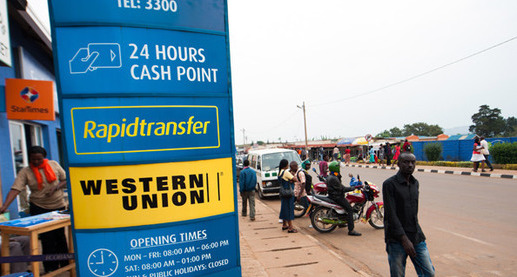
Although the crucial financial importance of money sent to African countries has long been documented, detailed research into the scale of remittances is lacking. Despite the vast figures involved, remittances represent almost a third of some African countries’ gross domestic product, few studies take into account the money repatriated outside of the banking sector.
World Bank figures suggest that Africans abroad sent around $60 billion to African countries in 2012, and they do not include unofficial channels such as hawala-style informal transfers. In the hawala system, a person seeking to send cash will typically meet an agent and hand over a remittance. This agent will then call a colleague in another country and instruct him to pay out the equivalent sum in the local currency.
When taking these transfers into account, the true level of remittances to Africa is likely nearer $100bn, says professor Donald Terry from Boston University School of Law. The challenge for African banks and governments is to persuade migrants to abandon these informal systems in preference for sending money through money transfer companies (MTCs) and banks, which is particularly difficult in countries where fewer people have access to banking services.
High costs are a principal obstacle. African Development Bank (AfDB) data say that while global remittance charges average around 6 percent, fees for transfers to sub- Saharan Africa are much higher, closer to 12 percent. Inter-Africa transfer fees can be even greater, with charges for transfers from Tanzania to Kenya reaching up to 20 percent.
Lack of competition is a key problem, with UK think tank The Overseas Development Institute estimating Western Union and Money-Gram account for two-thirds of all remittance transfers in Africa. With this in mind, the AfDB held a two-day conference in Tunis in March to discuss how to drive down the cost of sending money to Africa and how customers might be persuaded to channel remittances into the banking system, providing banks with more funds to offer as loans and opening up the potential for savers to access credit.
Terry advised, “According to the official figures, sub-Saharan Africa gets around $32 billion in remittances. That’s 49 countries, and Nigeria get around two-thirds of that, say $22 billion. That means all the rest of the countries send home only $10 billion. It’s an absurdity.”
Data gathering
Some countries are launching initiatives to gather better information about the sector. Ghana is launching a national remittances register to collate receipts from banks and MTCs. This register will also create a website to allow customers to compare remittance charges in an effort to drive down costs.
The Bank of Ghana began work on the National Remittances Credit Registry in 2012 and currently includes data from eight financial firms, says deputy governor Abdul-Nashiru Issahaku. He stated, “The project has proved a success and is part of a drive to increase competition and transparency. We recognize the importance of remittances in the Ghanaian economy.”
The next stage of the plan would see banks monitoring remittance flows to individuals and factoring in this income in order to calculate whether people would be eligible for credit. Remittance information is not shared with income tax revenue services, he adds.
Remittances analyst and chief executive of Developing Markets Associates, Leon Isaacs, adds that opening up lines of credit to people receiving remittances is a crucial factor in persuading migrants to switch from a hawala system to conventional banking. Issacs argued, “If you are receiving remittances every month into a bank account, then eventually that might mean you would be entitled to credit. That opens up all kinds of possibilities that are not available to people using informal transfers.” .
Subsidized charges
The Pakistan Remittances Initiative, launched in 2009, offers an alternative model in which the government subsidizes bank charges for remittances. The scheme has been a success, with remittances having steadily risen since the system was introduced. State Bank of Pakistan data shows receipts have risen by 11 percent since July 2013 to $10.2 billion.
However, this progress has come at a price. For example, the government paid banks $97 milllion for unpaid remittance charges in March. Meanwhile, significant obstacles remain in bridging the formal and informal sectors. Following the September 2001 terrorist attacks in the United States (US), European and US governments have introduced a series of regulations in an effort to combat money laundering and terrorism financing, meaning that money transfers for sums even as small as $200 receive additional scrutiny.
Rather than fall foul of the new regulations, banks are closing accounts of MTCs that send money to more volatile regions. In 2013, the courts temporarily blocked British bank Barclays from closing the accounts of Somali remittance firm Dahabshiil over fears the accounts did not comply with anti-money-laundering rules. The case goes to trial in October.