
Business
Race on to save Caribbean banana industry from impact of climate change
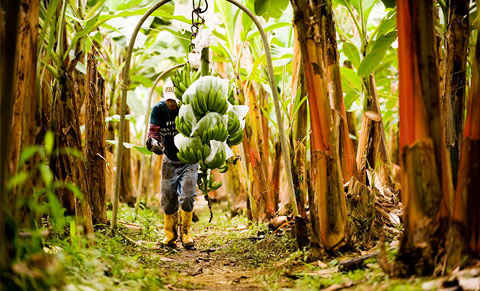
“Climate change and variability is disrupting the modus of operation of farmers and as a result their output volumes are unpredictable and sporadic,” he told IPS. “The variations in output are wide-ranging, from bumper harvests to zero yields for respective periods, and these stressors apply not only to crops but also to livestock production,” Lay added.
The World Bank reports that agriculture’s share of GDP in Dominica has fallen consistently with each major natural disaster, with the sector failing to recover previous levels of relative importance. Most of this decline is attributable to crop losses, and specifically the decline in banana production.
According to World Bank figures, agricultural production accounted for 12.2 percent of total GDP, and overall the sector is estimated to have declined by 10.6 percent in 2010 on the heels of a 1.5 percent growth rate for 2009. The performance of the crops sub-sector was severely affected by the extended drought in 2010, the World Bank said, adding that agriculture’s decline has been particularly marked since Hurricane Hugo in 1989.
Environment Minister Kenneth Darroux notes that for a country that could be self-sufficient and provide food to neighbouring countries, Dominica’s food imports constitute an increasing burden on the economy, and threaten food security.
He called for “adaptive measures [to] build resilience to the stressors of climate change in that a farmer will be better able to maintain predicted levels of production, thus protecting expected levels of livelihoods and sustenance,” Lay told IPS. These could include better farm management, pest control, and broader agricultural improvement programs.
Prime Minister Roosevelt Skerrit said Dominica’s vulnerability to climate change is exacerbated by its present economic performance, its particular socioeconomic structure and high concentration of infrastructure along the coastline. “The additional stress that climate change places on ecological and socioeconomic systems is not to be underestimated,” Skerrit said.
“Climate change is predicted to have severe, if not catastrophic, consequences over the short to medium term across sectors such as infrastructure, agriculture, energy, human settlements and water, if immediate action is not taken to reduce greenhouse gas (GHG) emissions 50 percent by 2050 from 1990 levels.
“Climate change is clearly the greatest development challenge of the 21st century,” Skerrit said. His St. Vincent and the Grenadines counterpart, Prime Minister Dr. Ralph Gonsalves, told IPS regional countries will be pushing to strengthen their institutional arrangements to deal with the impact of climate change.
